9 Long Shift NightShift Living Productivity Practices
>> Productivity NightShiftLiving>> 9 Long Shift NightShift Living Productivity Practices
9 Long Shift NightShift Living Productivity Practices
Not everyone can work the night shift. Your body fights you. Your family operates on a separate schedule. The outside world is asleep when you’re supposed to be sharp, focused and productive.
But here’s the truth — millions of night shift workers not only get through their shifts, they flourish on them. The difference? Productivity routines that adapt to your schedule instead of the other way around.
In this guide, we’re going over 9 practical, reliable routines that you can start implementing today. Whether you’re working 8-hour nights or cranking out back-to-back 12-hour shifts, these tips should keep you energized, focused and healthy.
Why Night Shift Workers Have Trouble With Productivity
Before breaking down the routines, it’s helpful to explain why long night shifts are so exhausting.
Your body operates on a natural 24-hour internal timeline known as the circadian rhythm. It knows when you should sleep, eat and be alert. Night shift work turns this rhythm on its head — and your body does not appreciate it.
The result? Brain fog. Poor focus. Fatigue. Irritability. Sleep cycles that have been thrown off over time can even affect your long-term health.
The good news is, you can definitely retrain your body and mind to be most productive at those hours through NightShift Living productivity habits.
Routine #1 — Create a Pre-Shift Wind-Up Ritual
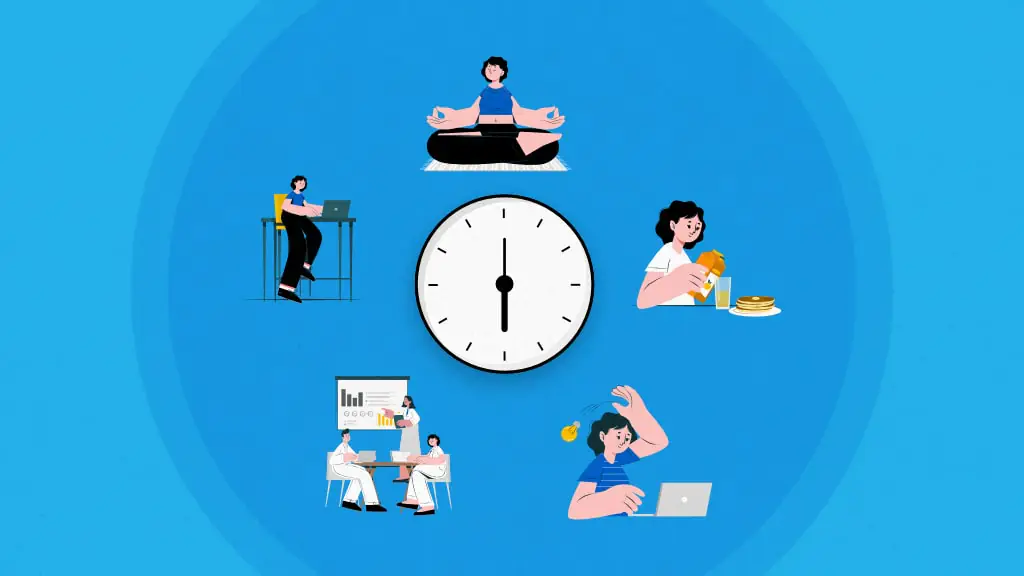
A morning routine is the norm for most of us. Night shift workers require a wind-up routine — a series of actions that you perform before each shift, which essentially tells your mind: now is the time to be alert.
How a Good Wind-Up Should Look
Start your wind-up about an hour and a half before your shift begins. Here is a simple example:
- Go for a 10-minute walk outside (even if it’s dark out — fresh air helps).
- Eat a light, protein-rich meal.
- Take a quick shower using cool or lukewarm water.
- Review the tasks or objectives you need to achieve for the shift.
It is one of the most underrated NightShift Living productivity tools at your disposal. It puts a mental block between “rest mode” and “work mode.”
Consistency Is the Key
Do the same routine every single day. Eventually your body catches on to the pattern. The ritual itself becomes a cue for alertness. You learn to rely on more than just willpower.
Routine #2 — Get Your Sleep Schedule Right First
You can’t build a productive night shift routine on a broken sleep foundation. Sleep is the engine that drives everything else.
The Night Shift Sleep Problem
Most night workers sleep whenever they can — and that unpredictability ruins their energy. Irregular sleep times disturb the body. Your hormones never know when to release melatonin (the sleep hormone).
Fix It With Anchor Sleep
Try anchor sleeping — setting a consistent 4 to 5-hour window when you sleep every single day, regardless of anything else. Then add extra sleep before or after as needed.
For example: If you work midnight to 8 AM, sleep from 9 AM to 2 PM every single day without deviation. Then nap from 6 PM to 8 PM before your shift.
This NightShift Living productivity approach stabilizes your circadian rhythm over time, even for those who never fully flip it.
Routine #3 — Eat for Energy, Not for Comfort
Night shift workers often fall into the trap of stress eating — munching on chips, candy or fast food when the tiredness hits hard. The brief lift lasts about 20 minutes. Then the crash comes.
The Night Shift Nutrition Trap
Your digestive system also runs on a circadian schedule. At 3 AM, your gut is not designed to handle a heavy meal. Eating large amounts overnight can lead to bloating, sluggishness and serious long-term health issues.
What to Eat Instead
Focus on small, frequent meals spread throughout your shift. Aim for foods that release energy slowly.
| Food Group | Good Night Shift Choices | Why It Helps |
|---|---|---|
| Protein | Eggs, grilled chicken, Greek yogurt | Steady energy, keeps you full |
| Complex carbs | Oats, brown rice, whole-grain bread | Slow energy release |
| Healthy fats | Almonds, avocado, peanut butter | Brain fuel |
| Hydration | Water, herbal tea, electrolytes | Fights fatigue and headaches |
| Avoid | Sugary snacks, energy drinks, heavy fried foods | Causes crashes and bloating |
This way of eating is a foundational pillar of smart NightShift Living productivity — what you put in your body directly determines how sharp your mind will be.
Routine #4 — Hack Your Alertness With Light
Light is the most potent cue your brain uses to determine whether you should be awake or asleep.
Bright Light = Wake Signal
During your shift, maximize exposure to bright, cool-toned light. Blue-white tinted LED lights send a wake-up signal to your brain’s sleep center (the suprachiasmatic nucleus, if you want the science).
If your workplace has dim lighting, consider:
- A portable LED desk lamp set to cool white.
- A 10,000 lux light therapy box used during your first hour of work.
- Doing your most mentally demanding tasks near a well-lit area.
Block Light When Heading Home
This is where a lot of night shift workers go wrong. Driving home in bright morning sunlight signals the brain to stay awake. By the time they finally crawl into bed, sleep eludes them.
Wear blue-light-blocking sunglasses on your commute home. Install blackout curtains in your bedroom. These simple steps make a massive difference in your NightShift Living productivity cycle.
Routine #5 — Organize Your Shift in Blocks
Without structure, long shifts feel endless. Time blocking is the fix.
What Is Time Blocking?
Time blocking means dividing your shift into focused work periods with intentional breaks built in. Think of it as designing your own workday — within the scope of the shift.
Sample 12-Hour Night Shift Block Plan
| Time Block | Activity | Duration |
|---|---|---|
| Hour 1 | Review tasks, set priorities, catch up | 60 min |
| Hours 2–4 | Deep focus work (hardest tasks first) | 120 min |
| Hour 4.5 | Short break — snack, walk, stretch | 20 min |
| Hours 5–7 | Medium-difficulty tasks | 120 min |
| Hour 7.5 | Main meal break | 30 min |
| Hours 8–10 | Routine or repetitive tasks | 120 min |
| Hour 10.5 | Short break — hydrate, move | 15 min |
| Hours 11–12 | Wind-down, handoffs, documentation | 60 min |
This structure is the backbone of strong NightShift Living productivity. When you know exactly what you’re doing at each point in your shift, you stop wasting energy making decisions at 3 AM when your brainpower is pretty much at zero.
Work on Hard Things When You Are at Your Peak
Most night shift workers get a short window of energy approximately 1 to 2 hours into their shift. Use that period for your most challenging work.
Routine #6 — Be Proactive About Your Mental Health
Working nights can take a toll on more than just your body. The social isolation, missing family events, and the stigma of being “the night person” all add up.
Recognize the Signs of Night Shift Burnout
Watch for these warning signs:
- You dread your shift before even starting it.
- You feel isolated from friends and family.
- Small issues at work seem absolutely overwhelming.
- You need caffeine or stimulants just to feel functional.
These are signs that your mental health needs attention, not only your sleep cycle.
Include Social Anchors in Your Week
You can maintain meaningful connections even on a shifted schedule. Schedule at least one social activity per week during your off hours. A weekend morning brunch. A regular phone call with a friend. An afternoon hobby group meeting.
NightShift Living productivity is not just about being efficient at work — it’s about building a life that feels sustainable and full, even when your calendar looks nothing like a typical one.
Routine #7 — Get Your Body Moving During the Shift
Fitting exercise into a 12-hour night shift may seem challenging. It is not.
Micro-Movement Is Your Best Friend
You do not need a gym. You need 5 minutes of movement every hour or so.
Try these:
- Take a brisk walk around your floor or building for five minutes.
- Do 10 to 15 bodyweight squats or jumping jacks.
- Stretch your neck, shoulders and back at your station.
- Take the stairs instead of the elevator whenever possible.
Movement pushes blood to your brain, fights the drowsiness that peaks at 3 to 4 AM, and helps your body manage the stress hormone cortisol.
Pre- and Post-Shift Exercise
If you can squeeze in a workout before or after your shift, even better. A 20-minute walk before your shift starts, or a light yoga session after you get home, can dramatically improve both the quality of your sleep and your daytime energy levels.
It’s one of the most physically grounding NightShift Living productivity habits you can develop. According to the Sleep Foundation, regular physical activity is one of the most effective tools for improving sleep quality in shift workers.
Routine #8 — Deploy Caffeine Strategically, Not Constantly
Caffeine is the night shift worker’s most devoted companion. But most people use it wrong.
The Common Caffeine Mistake
Many workers down coffee or energy drinks all night long. By the end of the shift they are wired and cannot wind down, much less sleep. It creates a vicious cycle of lousy sleep, more caffeine and declining health over time.
The Right Way to Use Caffeine
Follow the caffeine timing rule:
- Have your first caffeine dose about 30 minutes into your shift.
- Take your second dose (if needed) no later than 3 to 4 hours before your shift ends.
- Stop all caffeine at least 5 to 6 hours before your planned sleep time.
Caffeine has a half-life of 5 to 6 hours — meaning half of it is still active in your blood that many hours after you drink it. A coffee at 5 AM means half a cup of caffeine still circulating through your system at 11 AM when you want to sleep.
Sticking to this NightShift Living productivity rule around caffeine will noticeably improve your sleep quality within the first week.
Routine #9 — Establish a Post-Shift Decompression Ritual
Your shift ends. Now what?
Most night shift workers make one of two mistakes: they go straight to bed and lie there wide awake, or they stay up too long and mess up their sleep window.
Why Decompression Matters
Your nervous system is still in “high alert” mode when you clock out. You need to actively signal to your brain that it is safe to relax.
A Simple Post-Shift Decompression Sequence
Try this after your shift:
- Wear blue-light glasses on your commute home. Block that morning sunlight.
- Eat a small, warm snack. Something like warm oatmeal or a banana with nut butter.
- Take a warm shower. The subsequent drop in body temperature helps signal sleepiness.
- Do 10 minutes of light stretching or deep breathing. This activates your parasympathetic nervous system — your body’s rest-and-digest mode.
- Avoid screens for 20 minutes before bed. Put your phone in another room if needed.
- Sleep in a cool, dark, quiet room. Use a sleep mask and earplugs if light or sound is an issue.
This decompression process is the final piece of a complete NightShift Living productivity system. Without it, even the best daytime sleep habits fall apart.
Putting It All Together
Below is a quick reference overview of all 9 NightShift Living productivity routines:
| # | Routine | Core Action |
|---|---|---|
| 1 | Pre-shift wind-up ritual | 90-min routine that primes the brain for alertness |
| 2 | Master your sleep schedule | Anchor sleep at a fixed daily window |
| 3 | Eat for energy, not comfort | Small, protein-rich, slow-release meals |
| 4 | Hack alertness with light | Bright light during shifts, block it on the way home |
| 5 | Plan shifts in time blocks | Structure your shift so you always know what to do |
| 6 | Protect your mental health | Spot burnout early and keep social connections alive |
| 7 | Move your body during shifts | 5-minute micro-movements every 60–90 minutes |
| 8 | Use caffeine strategically | Time your caffeine — cut off 5–6 hours before sleep |
| 9 | Post-shift decompression | Wind down with light blocking, warm food, breathing |
Night Shift Productivity: What Does the Research Actually Say?
There is science to support these NightShift Living productivity principles. A few highlights worth knowing:
Workers with a consistent sleep schedule — even an unusual one — report substantially fewer health complaints than those with irregular sleep.
Research on night shift workers shows that bright light therapy leads to measurable increases in alertness, mood and task accuracy when used strategically during shifts.
Studies published in sleep science journals consistently indicate that correctly timed caffeine — not continuous intake — results in superior cognitive performance across a night shift.
And perhaps most importantly: workers who exercise regularly — even lightly — report 37% lower burnout rates than sedentary night shift workers in several occupational health surveys.
FAQs About NightShift Living Productivity Routines
Q: How long does it take to adjust to night shift work?
2 to 4 weeks is about how long it takes to become partially adapted to a regular night shift schedule. Full adaptation varies by person and may never be 100% complete — but the right routines significantly speed up the process and reduce the difficulty.
Q: Is it okay to sleep at different times on my days off?
This is called “social jet lag” and it is one of the greatest pitfalls night shift workers face. It’s best to stay as close to your anchor sleep time as possible even on off days. Full reversals on weekends make Monday-through-Friday adjustments a lot harder.
Q: What period of a night shift is the hardest to stay alert?
Most people hit their lowest alertness point between 3 AM and 5 AM. This is when body temperature drops and melatonin is still elevated. Scheduling lighter tasks, using bright light, taking a brief walk, or having a small snack during this window can help you push through.
Q: Should you nap during a long night shift?
If your workplace allows it — absolutely yes. A 20-minute nap (a power nap) taken around the midpoint of your shift can significantly restore alertness without causing grogginess. Set an alarm so you do not sleep through into deep sleep cycles.
Q: Does night shift work permanently damage your health?
Short-term night shift work is unlikely to cause lasting damage if you manage your sleep, diet and exercise properly. Long-term night shift work over years to decades has been linked to higher risks of conditions like cardiovascular disease and metabolic syndrome. The best defense is building strong NightShift Living productivity habits and getting regular health check-ups.
Q: What is the single most important routine to start with?
If you can only pick one, start with fixing your sleep schedule (Routine #2). Everything else — your energy, your focus, your mood — flows from the quality and consistency of your sleep. Once your sleep is stable, adding the other routines becomes much easier.
Q: Are energy drinks safe for night shift workers?
In moderation, energy drinks are generally okay. But many contain extremely high caffeine levels plus added stimulants that raise blood pressure and disrupt sleep far more aggressively than coffee. Stick to plain coffee or tea when possible, and always follow the caffeine timing rules in Routine #8.
The Bottom Line
Night shift work does not have to mean living in survival mode.
Every single person who works nights faces the same challenges — the 3 AM wall, the social sacrifices, the sleep battles. The ones who handle it well are not superhuman. They just have better systems.
These 9 NightShift Living productivity routines are those systems.
Start with one. Master it. Add another. Within a few weeks, you will notice that your shifts feel more manageable, your energy lasts longer and your life outside of work starts to feel like an actual life — not just the hours between shifts.
Night shift living is not a punishment. With the right approach, it can be one of the most productive, peaceful and personally rewarding ways to work.
Related Post

11 Epic Productivity Tips for Busy Nights (NightShiftLiving)
It's not easy to work the night shift. Your body wants to sleep. Your brain…