6 Powerful NightShiftLiving Productivity Upgrades for Work
>> Productivity NightShiftLiving>> 6 Powerful NightShiftLiving Productivity Upgrades for Work
6 Powerful NightShiftLiving Productivity Upgrades for Work
There’s a quiet moment during every night shift when time slows down.
Maybe it’s 2:17 AM. The world outside is asleep. Your energy dips. Your focus drifts. Even simple tasks feel heavier than they should.
You check the clock more often. You reach for another coffee. You try to push through.
But here’s the truth most people don’t talk about:
Night shift productivity isn’t about working harder—it’s about working smarter with your body.
If you’ve ever felt like your performance drops at night, it’s not a lack of discipline. It’s biology. Your brain simply isn’t wired to operate at peak levels in the middle of the night.
But that doesn’t mean you’re stuck.
With the right system, you can stay focused, energized, and efficient—even during the toughest overnight shifts.
Let’s walk through 6 powerful NightShiftLiving productivity upgrades that actually work in real life.
Why Productivity Feels Different at Night
Before we fix productivity, we need to understand why it drops.
Night Shift Productivity Challenges
- Natural energy dip between 2 AM – 5 AM
- Reduced alertness due to circadian rhythm
- Mental fatigue from poor sleep
- Distractions caused by low stimulation or boredom
Day vs Night Productivity Comparison
| Factor | Day Workers | Night Shift Workers |
|---|---|---|
| Peak Focus Time | Morning | Early shift only |
| Energy Consistency | Stable | Fluctuating |
| Mental Alertness | High | Reduced overnight |
| Distractions | External | Internal (fatigue) |
| Motivation Levels | Predictable | Unstable |
This means you need a different productivity strategy, not the same one day workers use.
1. Design Your “Peak Hours” System
Not all hours of your shift are equal.
Trying to treat them the same is a mistake.
Step 1: Identify Your Energy Zones
| Time Range | Energy Level | Best Use |
|---|---|---|
| Start of shift | High | Deep work, complex tasks |
| Mid shift | Medium | Routine work |
| Late shift | Low | Simple, repetitive tasks |
Step 2: Match Work to Energy
- Do important tasks early
- Save low-effort work for later hours
Why This Works
Instead of fighting your energy levels, you work with them.
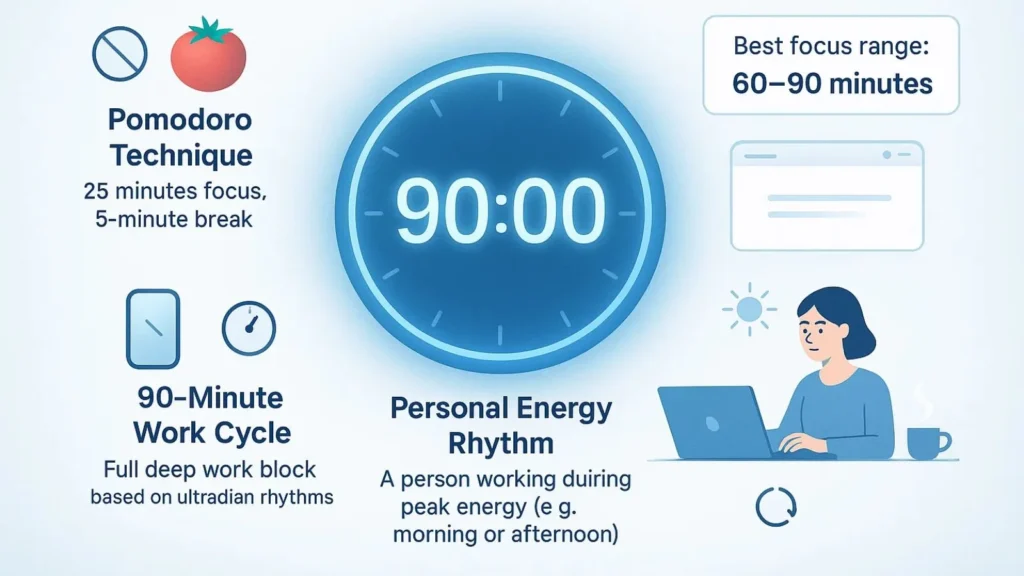
2. Use the 90-Minute Focus Cycle
Your brain isn’t built for endless focus.
It works best in cycles.
The 90-Minute Method
- 70–90 minutes of focused work
- 10–15 minutes break
Repeat.
Focus Cycle Chart
| Cycle Step | Duration | Activity |
|---|---|---|
| Deep Work | 70–90 mins | Focused tasks |
| Break | 10–15 mins | Walk, stretch |
During Breaks
- Move your body
- Drink water
- Avoid scrolling social media
This keeps your brain fresh.
3. Control Your Environment for Focus
Night shifts can either be too quiet… or oddly distracting.
Your environment matters more than you think.
Simple Environment Upgrades
- Use noise-canceling headphones
- Keep your workspace clean
- Adjust lighting (not too dim, not too bright)
- Keep essentials within reach
Focus Environment Checklist
| Element | Ideal Setup |
|---|---|
| Lighting | Bright but soft |
| Noise | Controlled or minimal |
| Desk | Clean and organized |
| Temperature | Slightly cool |
Hidden Tip
A slightly cooler environment helps you stay alert.
4. Fuel Your Brain the Right Way

What you eat during your shift directly affects your focus.
Productivity Killing Foods
- Sugary snacks → energy crash
- Heavy meals → sluggishness
- Too much caffeine → anxiety + crash
Brain-Friendly Foods
| Food Type | Benefit |
|---|---|
| Nuts | Sustained energy |
| Fruits | Quick natural boost |
| Yogurt | Light and protein-rich |
| Dark chocolate | Improves focus (small dose) |
Smart Eating Schedule
| Time | Meal Type |
|---|---|
| Before shift | Balanced meal |
| Mid shift | Light snack |
| Late shift | Small protein |
5. Micro-Movement = Macro Productivity
Sitting too long kills focus.
Movement brings it back.
Simple Movement Ideas
- 2–5 minute walk
- Stretch your back and neck
- Light mobility exercises
Movement Impact Chart
| Activity | Effect on Productivity |
|---|---|
| Walking | Boosts energy |
| Stretching | Reduces fatigue |
| Standing | Improves alertness |
Rule to Follow
Move every 60–90 minutes.
6. Build a “Low Energy Survival Plan”
This is your secret weapon.
Because no matter how optimized you are—
there will be low-energy moments.
Your Backup Plan Should Include:
- Easy tasks list
- Quick energy snacks
- Short walk routine
- Motivating playlist
Low Energy Action Plan
| Situation | Action |
|---|---|
| Feeling sleepy | Walk + water |
| Low focus | Switch to easy task |
| Mental fatigue | Take short break |
Why This Matters
Instead of losing productivity completely, you adapt instantly.
Weekly Productivity Tracker
| Day | Focus Hours | Breaks Taken | Energy Level | Output |
|---|---|---|---|---|
| Monday | ||||
| Tuesday | ||||
| Wednesday | ||||
| Thursday | ||||
| Friday | ||||
| Saturday | ||||
| Sunday |
Track patterns—not perfection.
Common Productivity Mistakes Night Workers Make
- Doing hard tasks during low-energy hours
- Skipping breaks
- Overusing caffeine
- Sitting for too long
- Eating heavy meals at night
Fixing these alone can boost your output significantly.
Final Thoughts
Night shift productivity isn’t about pushing harder.
It’s about understanding your energy, your limits, and your rhythm.
If you apply just a few of these upgrades:
- Plan your peak hours
- Work in cycles
- Optimize your environment
- Eat smart
- Move regularly
- Prepare for low energy
You’ll notice something surprising…
Work feels easier.
Time moves faster.
And you finish your shift feeling less drained.
FAQs
1. How can I stay productive during night shifts?
Focus on energy management, structured work cycles, and regular breaks.
2. What is the best time to do important work?
At the start of your shift, when your energy is highest.
3. How often should I take breaks?
Every 70–90 minutes for optimal focus.
4. Does food affect productivity at night?
Yes. Heavy and sugary foods reduce focus, while light and balanced meals improve it.
5. How do I avoid feeling sleepy at work?
Stay hydrated, move regularly, and avoid caffeine late in your shift.
6. Is caffeine good for productivity?
In moderation, yes—but avoid it close to your sleep time.
Related Post

9 Long Shift NightShift Living Productivity Practices
Not everyone can work the night shift. Your body fights you. Your family operates on…