11 Epic Productivity Tips for Busy Nights (NightShiftLiving)
>> Productivity NightShiftLiving>> 11 Epic Productivity Tips for Busy Nights (NightShiftLiving)
11 Epic Productivity Tips for Busy Nights (NightShiftLiving)
It’s not easy to work the night shift. Your body wants to sleep. Your brain feels foggy. And your world keeps spinning in a different time zone.
But here’s the thing — night shift workers are some of the most resilient, hard-working human beings. Nurses, warehouse employees, security guards, remote workers, freelancers — they all keep the world going while everyone else slumbers.
The problem? The bulk of productivity advice was written for 9-to-5 people. It just fails to work after midnight.
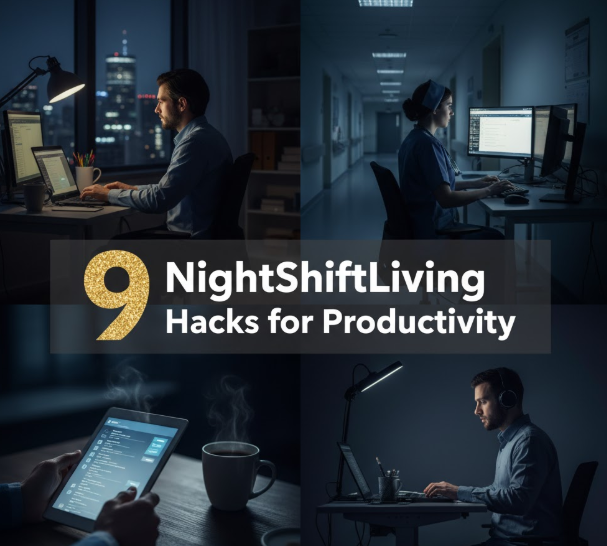
That’s where NightShiftLiving comes in — your go-to resource for thriving on overnight schedules. This is one of 11 real, practical, battle-tested productivity tips built for people who work when the sun goes down. So whether you’re brand-new to nights or an old and weary owl, these suggestions will help you work smarter, come out feeling better — and even enjoy your shift.
Let’s get into it.
1. Create a Pre-Shift Ritual That Gets Your Brain Going
Consider this a warmup ahead of a big game. You wouldn’t run a mile without stretching first, would you?
A ritual before starting a shift signals to your brain, “Now it’s time to focus.” It pushes you out of rest mode and into work mode — even if it’s 10 PM.
How to do a pre-shift routine properly:
It doesn’t have to be anything complicated. Limit it to 30–60 minutes prior to your shift start time.
- Engage in a short, lukewarm shower to facilitate increased alertness
- Have a light meal with protein and complex carbohydrates
- Steer clear of heavy, greasy foods that lead to energy crashes
- Go outside for 5–10 minutes of fresh air
- Check your list of things to do for the night
The goal is consistency. Every shift, you do the same things in the same order. Your brain gradually learns to connect the ritual with productivity.
2. Light Is Your Most Important Tool
This is one of the most underutilized NightShiftLiving secrets. Light directly influences your body’s internal clock — your circadian rhythm.
When it is dark, your body makes melatonin (the sleep hormone). In bright light, melatonin falls and you feel alert.
How to use light to your advantage:
At work: Keep your workspace as bright as you can. Stick to cool white or blue-toned lighting. These wavelengths mimic daylight and communicate to your brain that it should remain awake.
On your commute home: If you drive home at 6 AM, when the sun is coming up, wear blue-light-filtering sunglasses. This makes it hard for your brain to interpret the morning sun as a cue to “get up” — you’re trying to wind down, not rev up.
At home before bed: Go dark. Use blackout curtains. Set screens low or in night mode. The darker your surroundings, the faster you are able to sleep.
| Light Type | Effect on Alertness | Best Used When |
|---|---|---|
| Cool white / blue light | High alertness boost | During your shift |
| Warm yellow light | Gentle, calm energy | Early in your shift |
| Red/orange light | Prepares body for sleep | Coming home after shift |
| Darkness / blackout | Signals sleep time | Sleeping after shift |
3. Stick to a Sleep Schedule (Yep, Even on Weekends)
Sleep is the bedrock of all NightShiftLiving productivity advice. Nothing else matters without quality sleep.
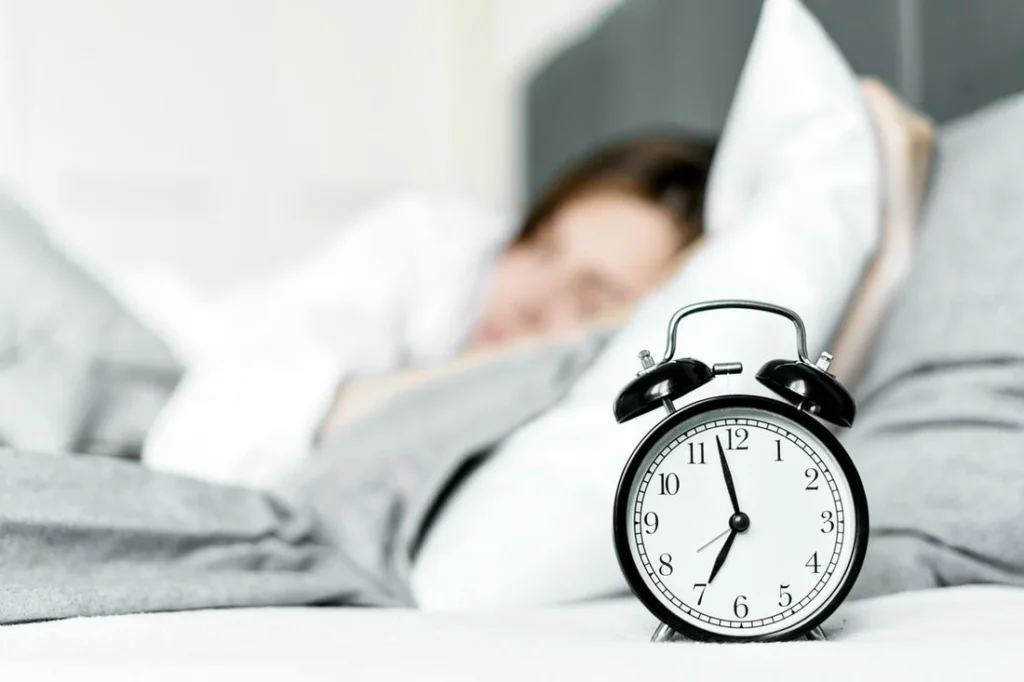
The one thing night shift workers get wrong? Reverting to a “normal” sleep schedule on days off. What this leads to is called social jetlag, and it destroys your productivity.
A sleep schedule that actually works:
Decide on a sleep window and stick to it — including on your days off. For instance, if you sleep from 8 AM to 3 PM on a work week schedule, try to maintain the same habit on days off.
It doesn’t have to be perfect. But staying within 1–2 hours of your usual sleep time solves the problem of resetting your body clock every week.
Tips for better daytime sleep:
- Use blackout curtains or an eye mask
- Try using earplugs or a white noise machine
- Communicate your sleep hours to household members
- Silence phone notifications during sleep time
- Make sure your bedroom is cool (about 65–68°F / 18–20°C)
4. Master the Art of Strategic Snacking
What you eat during your shift makes a huge difference. The wrong foods can cause you to crash hard at 3 AM.
Foods that keep you going:
The trick is to stay off the blood sugar rollercoaster. Foods with high sugar content, like candy, soda, and chips, produce a quick energy burst — but a brutal crash an hour later.
Instead, opt for foods that provide you with slow, steady energy:
- Protein: Hard-boiled eggs, Greek yogurt, chicken, nuts
- Complex carbs: Oats, whole grain crackers, sweet potato
- Healthy fats: Avocado, peanut butter, almonds
- Hydration foods: Cucumber, watermelon, celery
Foods to avoid on shift:
- Fried foods (heavy, long digestion = sluggishness)
- High-sugar snacks (energy spikes followed by crashes)
- Too much caffeine, particularly after mid-shift
- Pre- or post-shift alcohol (ruins sleep quality)
Pro tip: When you leave the house, pack your meals and snacks. When you’re exhausted at 2 AM, you’ll grab anything close by. Make the healthy choice the easy choice.
5. Caffeine Has a Strategy — Here’s How to Learn It
Caffeine is the best friend of night shift workers. But most people use it wrong.
Used the wrong way, coffee can make you feel more tired, interfere with your post-shift sleep, and leave you needing it just to feel normal.
NightShiftLiving smart caffeine strategy:
Timing is everything. The half-life of caffeine is approximately 5–6 hours. That means if you drink a coffee at 4 AM, half of that stays in your system until around 9–10 AM — the time when you’re attempting to sleep.
Best caffeine windows:
- Beginning of a shift (e.g., 10 PM) — yes, coffee is acceptable here
- Mid-shift (e.g., 1–2 AM) — this is where strategic caffeine has the most benefit
- Late shift (after 3–4 AM) — if you plan on sleeping within 6 hours, avoid this
Caffeine amounts:
- 1 cup of coffee = approximately 95mg of caffeine
- The average person does well with 100–200mg at a time
- Don’t exceed 400mg per day
Also think about caffeine naps — drink a coffee, then take an immediate 20-minute nap. The caffeine kicks in just as you wake up, leaving you refreshed and alert.
6. Break Your Shift Into Power Blocks
8+ hours of work ahead of you feels overwhelming. The trick is to never think of it that way.
Instead, divide your shift into power blocks — short bursts of focused work followed by purposeful breaks in between.
The night shift power block structure:
This is a modification of the popular Pomodoro Technique, repurposed for overnight work.
| Block | Duration | Activity |
|---|---|---|
| Work Block | 50 minutes | Deep, focused work |
| Short Break | 10 minutes | Get up, hydrate, stretch |
| Work Block | 50 minutes | Continued work |
| Short Break | 10 minutes | Light snack, eyes off screen |
| Long Break | 20–30 minutes | Meal, fresh air, recharge |
Do this cycle throughout your shift. You will be surprised by how much more you get done compared to grinding along without structure.
Why this works for night shift specifically: Between 2–4 AM is when you naturally feel your energy dip. If you’re in a power block, you’re more likely to muscle through. You’ll succumb to fatigue if you’re simply “working.”
7. Get Moving — Even Tracking Your Steps Matters
Sitting still for hours at night is brutal — you will feel dead on your feet. Your circulation slows down. Your muscles stiffen. And your brain receives less oxygen.

Movement is one of the quickest, most free energy boosts you can get.
Simple movement ideas for your shift:
You don’t need a gym. You just need a few minutes.
- Walk to the farthest bathroom or break room instead of the closest one
- Do 10 squats or jumping jacks during a break
- Stretch your neck, shoulders, and back every hour
- Take walking meetings or phone calls
- Use stairs instead of elevators
Even a 5-minute walk during breaks can refresh your focus for the next 30–60 minutes.
For desk workers in particular: Set a timer to get up at least once an hour. Sitting up late at night is more taxing on your body than sitting during the day — your metabolism slows naturally at night.
8. Protect Your Mental Health on the Night Shift
This is one that doesn’t get talked about enough. Because of the hours, you may feel lonely working a night shift. You’re awake while the world is asleep. Social events get missed. Relationships can feel strained.
In the long term, this can contribute to anxiety, depression, or even burnout.
Mental health care is not optional — it’s a must-have for NightShiftLiving.
Mental health habits that really work:
Stay connected: Make time with friends and family a priority, even if that means a 15-minute video call before your shift. Human connection matters.
Give yourself something to look forward to: Plan enjoyable things on your days off. A meal out, a movie, a hobby. Give yourself something to anticipate.
Rein in the doom-scrolling: Late nights + social media = anxiety spiral. Keep your phone breaks purposeful. Open messages and then put your phone down.
Journal or reflect: Writing down 3 things that went well during your shift — big or little — has been shown to improve mood and lower stress over time.
Don’t be afraid to ask for help: If you’ve been feeling persistently low, anxious, or burned out, speak with a doctor or mental health professional. Mental health issues related to night shift work are real, recognized, and treatable.
9. Design a Workspace That Fits Your Needs at Night
Your environment shapes your output. An untidy, dark, and uncomfortable work environment saps your energy before you even get started.
Night shift workspace checklist:
Lighting (revisited): Layer your lighting. A bright overhead light and a desk lamp put you in control. Avoid glaring fluorescent lights directly overhead — they cause eye strain and headaches.
Temperature: Research has shown that people perform best in slightly cooler temperatures (approximately 68–72°F / 20–22°C). If you work in a cold warehouse or hot kitchen, dress in layers so you can regulate.
Noise management: Use noise-canceling headphones when you’re in a chaotic environment. In quieter settings, lo-fi music, white noise, or binaural beats can help keep your brain engaged without distraction.
Ergonomics matter: Night shift workers often suffer back pain, neck strain, and wrist problems. Ensure your chair supports your back, your screen is at eye level, and your keyboard and mouse are in a comfortable position.
Keep it tidy: A clean workspace reduces mental load. Spend 5 minutes getting your station in order before your shift starts. You’ll feel less anxiety and be better prepared to do your job.
10. Manage Your Social Life Without Ruining Your Sleep
One of the toughest things about NightShiftLiving is balancing work with real life. Birthdays, dinners, family events — they all happen while you’re sleeping.
Saying yes to everything is exhausting. Saying no to everything is isolating. You need a middle ground.
Social life tips for night shift workers:
Be clear about your schedule: Many people don’t realize how night shift sleep works. Explain that your “morning” may be their afternoon. Set boundaries kindly but firmly.
Create your own social slots: Don’t force yourself into daytime events that wreck your sleep — suggest alternatives. “I’m not available for Sunday brunch, but I can do dinner at 8 PM on Saturday.” Provide a solution, rather than simply a no.
Have a social recovery plan: If you break your schedule for a big event (and sometimes you should — life is short), have a plan to get back on track within 1–2 days.
Find your people: Online communities, local night shift worker groups, or even coworkers on the same schedule can be incredibly supportive. You’re not alone in this lifestyle.
11. End Your Shift With a Wind-Down Routine
Just as a pre-shift ritual gets you going, a post-shift wind-down prepares your body and brain for sleep mode.
The most common mistake night shift workers make is jumping straight into bed from high-alert work mode. And then they wonder why they can’t sleep.
A 30-minute wind-down that works:
Step 1 (10 minutes): Debrief. List 3 tasks you completed this shift. Close your to-do list. Tell your brain “work is done.”
Step 2 (10 minutes): Transition your environment. Wear blue-light-blocking glasses on your commute home. Lower the lights at home. Change out of work clothes.
Step 3 (10 minutes): Calm your nervous system. Try deep breathing, gentle stretching, or a warm (not hot) shower. Avoid screens during this step.
What to avoid after shift:
- High-intensity exercise (temporarily energizing — save it for another time)
- Having a huge meal (digestion = alertness)
- Checking social media or news
- Discussions that raise your stress or excitement levels
The more consistently you wind down this way, the faster you’ll fall asleep — and the better sleep you’ll get.
Quick Reference: 11 NightShiftLiving Tips at a Glance
| # | Tip | Core Benefit |
|---|---|---|
| 1 | Pre-shift ritual | Mentally primes you for work |
| 2 | Strategic light use | Controls alertness and sleep signals |
| 3 | Consistent sleep schedule | Prevents social jetlag |
| 4 | Smart snacking | Avoids energy crashes |
| 5 | Caffeine strategy | Maximizes alertness, protects sleep |
| 6 | Power block method | Sustains focus all night |
| 7 | Regular movement | Boosts circulation and energy |
| 8 | Mental health habits | Prevents burnout and isolation |
| 9 | Optimized workspace | Reduces fatigue and distraction |
| 10 | Social life balance | Maintains relationships without burnout |
| 11 | Post-shift wind-down | Speeds up sleep onset and quality |
Why NightShiftLiving Productivity Doesn’t Look Like Traditional Productivity
Here’s something most productivity gurus won’t admit: their advice was designed for daylight workers.
Ideas like “wake up early,” “morning routines,” and “get sunlight first thing” are utterly irrelevant — or even detrimental — to night shift workers.
NightShiftLiving productivity is built on your terms, not against your biology. It acknowledges that you do not run on standard time. It aligns with your circadian rhythm rather than waging war on it. And it focuses on the constant challenges you face — fatigue at 3 AM, social isolation, daytime noise while sleeping, and the mental weight of living out of sync with the rest of the world.
That’s why these 11 tips are not generic. They’re relevant to the life you are actually living.
According to research from the Sleep Foundation, shift workers are significantly more likely to experience sleep disorders and chronic fatigue — making structured routines and sleep hygiene not just helpful, but essential for long-term health.
Frequently Asked Questions (FAQs)
Q1: What hours of sleep should a night shift worker aim to get? No matter when they sleep, most adults require 7–9 hours per day. Night shift workers tend to get less due to daytime interruptions — noise, light, social commitments. Prioritize 7 hours minimum. Invest in blackout curtains and earplugs to protect your sleep window.
Q2: Is it unhealthy to work night shifts for a long time? Working nights over a long period of time has been correlated with some health risks, including increased likelihood of cardiovascular problems, metabolic disturbances, and mood disorders. But most of these risks can be significantly reduced if night shift workers maintain good sleep hygiene, exercise regularly, eat healthfully, and have a stress management strategy. Discuss your particular situation with your doctor.
Q3: What should I eat before a night shift to stay energized? 1–2 hours before your shift, try to have a well-balanced meal consisting of lean protein (chicken, eggs, fish), complex carbs (brown rice, oats, sweet potato), and a small amount of healthy fat. Refrain from extremely heavy or greasy meals, which cause lethargy. Stay hydrated throughout.
Q4: How do I stay awake during the hardest part of the night (2–4 AM)? This is the natural low point of your circadian rhythm. Fight it with strategic caffeine consumption before this window, a 10–15 minute brisk walk, cold water on your face, bright lights, or a brief conversation with a coworker. Try to schedule lower-priority tasks during this window if possible, and save complex work for your peak hours — early and late shift.
Q5: Can I ever switch back to a day schedule on my days off? You can, but it comes at a cost — it’s called social jetlag. Small shifts (1–2 hours toward day) are manageable. Going back to a full day schedule and then flipping back to nights every week is very hard on your body. The more consistent your schedule is across all days, the better you’ll feel and perform.
Q6: Is the NightShiftLiving lifestyle applicable to remote workers and freelancers? Absolutely. These tips can apply to anyone who works regularly at night — whether in a hospital, warehouse, or from their home office. Remote and freelance night workers can actually have more flexibility to optimize their environment, sleep schedule, and routine, which can be a big advantage.
Q7: How long does it take to get used to the night shift? It usually takes people 2–4 weeks before they start to feel more adjusted. Full circadian adaptation can take longer and varies from person to person. Be consistent with the tips above — especially around light management and keeping a fixed sleep schedule — during this adjustment period.
Wrapping It Up
Night shift life is tough. But it doesn’t have to feel like survival mode every single night.
By employing these 11 NightShiftLiving productivity tips — establishing rituals, controlling light exposure, sleeping smart, eating right, moving your body, and protecting your mental health — you will have created a system that works with your schedule instead of against it.
You don’t need to be perfect. Begin with two or three tips that seem most relevant to your situation. Build from there. Small, incremental changes add up to huge results after weeks and months.
Related Post
Night Shift Living: 5 Productivity Boosters for Focus
Night work, however, is not for the feeble. While the rest of the world is…