7 NightShiftLiving Sleep Hacks That Actually Work for Deep Daytime Rest
>> Sleep NightShiftLiving>> 7 NightShiftLiving Sleep Hacks That Actually Work for Deep Daytime Rest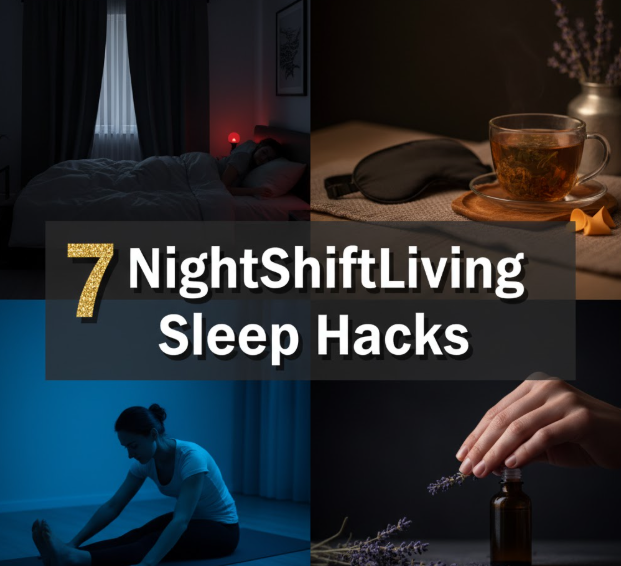
7 NightShiftLiving Sleep Hacks That Actually Work for Deep Daytime Rest
You finished your shift. The sun is already up. Your brain sends you the message “time to go” but your body has a different agenda.
Sound familiar? If you’ve tried the night-shift life, you know firsthand just how cruel daytime sleep can be. Noise, sunlight, social schedules — the world is not designed for people who sleep while others work.
That’s where NightShiftLiving sleep hacks come in. These aren’t the tips you’ve heard already. These are tried-and-true strategies that actual shift workers use to achieve deep, restorative sleep — even with the sun beating down outside.
Whether you’ve worked night shifts for years or just started, something here will help.
Why Daytime Sleep Feels So Different (And Harder)
Before diving into the hacks, it’s useful to understand why daytime sleep is more difficult than sleeping at night.
Your body has an innate 24-hour clock known as the circadian rhythm. It dictates when you feel sleepy and when you feel awake. This clock is synced to sunlight. When it’s light outside, your brain releases chemicals that keep you awake. At night, darkness activates your brain’s release of melatonin — the “sleep hormone.”
If you work night shifts, you’re at war with this system every time you want to sleep.
What disrupts daytime sleep
☀️
Sunlight: Inhibits melatonin and instructs your brain to wake up — even through closed eyes.
🔊
Noise: Activity outside (traffic, neighbors, family) spikes cortisol and disrupts sleep cycles.
🧠
Cortisol: Peaks in the morning naturally — which makes it difficult to fall asleep immediately after a shift.
📱
Social pressure: Calls, messages, and obligations seep into your sleep window.
The result? Some night-shift workers lose out on 1–3 hours of sleep each day compared to a day worker. Over time, this adds up to a real “sleep debt” that affects memory, mood, immunity, and even heart health.
The good news? Each of the NightShiftLiving sleep hacks below addresses one or more of these root problems directly.
Hack #1 — Build a Blackout Cave, Not Just a Dark Room

NightShiftLiving Sleep Hack 1
Darkness is not just a nice-to-have — it’s a biological requirement for good sleep. Even small doses of light creeping past thin curtains can inhibit your melatonin by 50% or more.
Go beyond regular curtains
Regular curtains don’t cut it. You should get blackout curtains — ones that block 99–100% of incoming light. Choose ones labeled “total blackout” or “room-darkening.” Install them to cover the entire window frame, not just the glass.
The blackout cave checklist
- Blackout curtains or blackout blinds on all the windows
- Seal door gaps with tape or foam if light is coming in
- Tape over LED standby lights on devices (black electrical tape works well)
- Try a good sleep mask as well — opt for contoured ones that don’t touch your eyelids
- Hide or turn away glowing digital clocks
Pro tip: Do a “light audit” before going to bed. With your eyes adjusted to the dark, stand in your darkened room for 2 minutes. Cover any light source you notice.
Hack #2 — Own Your Wind-Down Window Before Sleep
NightShiftLiving Sleep Hack 2
The biggest mistake most shift workers make: going directly from an intensely stimulating work environment to bed. Your nervous system doesn’t just turn off like a light.
You need a wind-down window — a 30 to 60-minute ritual that tells your brain “sleep time is approaching.”
What a wind-down window should look like
| Time before sleep | Activity | Why it helps |
|---|---|---|
| 60 min before | Dim lights at home; avoid bright overhead lighting | Triggers early melatonin release |
| 45 min before | Eat a light snack if needed (avoid heavy meals) | Prevents blood sugar dips mid-sleep |
| 30 min before | No screens, or switch to blue-light filter mode | Reduces cortisol and mental stimulation |
| 20 min before | Light stretching, reading, or journaling | Activates parasympathetic nervous system |
| 10 min before | Deep breathing (4-7-8 method or box breathing) | Lowers heart rate and anxiety |
The key is consistency. Perform the same sequence every day. Your brain will begin to pair these steps with sleep — making it easier to drift off even when it’s 8 AM outside.
Avoid: Work emails, social media scrolling, or intense shows in your wind-down window. These spike cortisol at exactly the time you need it to drop.
Hack #3 — Use Sound Strategically (White Noise Is Not the Only Option)
NightShiftLiving Sleep Hack 3
Daytime is loud. Even if you’ve blocked out light perfectly, your neighbor’s lawn mower, a barking dog, or delivery trucks can rip you from sleep just when you’re drifting off.
Sound masking — how it really works
The issue isn’t the sheer volume of sounds. It’s the sudden changes in sound that rob you of sleep. A car honking at 70dB is more disruptive than a constant 60dB hum. Sound masking fills your auditory space with a consistent sound that drowns out those jarring spikes.
Your sound options compared
| Sound type | Best for | Potential downside |
|---|---|---|
| White noise | General masking, most common | Can feel harsh or “hissy” to some |
| Pink noise | Deeper relaxation, richer tone | Less effective at masking high-pitched sounds |
| Brown noise | Heavy traffic areas, deeper sleepers | Very low frequency — not for everyone |
| Nature sounds | Stress relief and falling asleep | May not mask sudden noises as well |
| Ear plugs | Extreme noise environments | Uncomfortable for some; can cause ear issues if overused |
Start with pink noise at a moderate volume (50–60 dB, roughly the level of normal conversation). Apps like Calm or Sleep Sounds work well, and so does a simple fan.
Bonus hack: Place a box fan in the room. It generates pink-ish noise AND keeps the room cool — both of which help with deep sleep.
Hack #4 — Use Temperature as Your Secret Weapon for Better Sleep
NightShiftLiving Sleep Hack 4
To fall asleep and stay asleep, your body temperature has to drop by about 1–2°F (0.5–1°C). During nighttime, this happens naturally. During the day it doesn’t — your body believes it’s supposed to be warming up and staying awake.
Controlling your bedroom temperature is one of the most underrated NightShiftLiving sleep hacks out there.
The sweet spot
Research consistently suggests that 65–68°F (18–20°C) is the ideal sleep temperature for most adults. Cooler than 60°F or warmer than 72°F will interrupt sleep cycles.
How to cool down for sleep
- Pre-cool the AC or fan before you get into bed — don’t wait until you are already hot
- Take a warm shower 30–60 minutes before bedtime — the post-shower cool-down actually reduces core temperature
- Use breathable cotton or bamboo sheets, not synthetics
- Keep a light blanket within reach — you might need it as your body cools down during sleep
- Do not work out within 2 hours before sleep, as it raises core body temperature
Cold feet = hard to sleep. If you tend to have cold feet, wear light socks. This helps widen blood vessels in the feet and actually speeds up core temperature drop.
Hack #5 — Treat Your Sleep Window Like a Business Meeting

NightShiftLiving Sleep Hack 5
No one cancels a meeting with their boss. But how often do you deny yourself sleep because someone needs a favor, a delivery is arriving, or you “just want to check one thing”?
One of the most important NightShiftLiving sleep hacks isn’t a product or a technique — it’s a change in mindset.
Setting boundaries that actually stick
- Tell family and housemates your exact sleep hours — put them on a shared calendar if necessary
- Put your phone on Do Not Disturb with a custom message: “I sleep from 8 AM to 4 PM. For emergencies only, call twice.”
- Use a door sign and agree with household members: no knocking, no loud activities
- Move daytime appointments when possible — doctor visits, calls, errands
- Batch errands and chores into your waking hours, not your sleep window
Handling guilt
Many shift workers feel guilty about “sleeping all day.” But remember: your sleep is non-negotiable health care. You wouldn’t skip dialysis just because you felt guilty. Your sleep matters just as much.
Common mistake: Staying awake for a “normal” daytime activity and then trying to sleep at an unusual time. This wrecks sleep quality for 24–48 hours. Protect your window.
Hack #6 — Time Your Caffeine Properly, Not Like a Zombie
NightShiftLiving Sleep Hack 6
Caffeine is the night-shift worker’s best friend — and worst enemy. Used properly, it’s a potent tool. Used incorrectly, it ruins your sleep for hours more than you realize.
How long caffeine lingers in your system
The half-life of caffeine is 5–7 hours. So if you drink a coffee at 4 AM, half of that caffeine is still in your system when you try to sleep at 9–11 AM. According to the Sleep Foundation, caffeine can reduce total sleep time and deep sleep even when consumed several hours before bed.
The smart caffeine schedule for night shift
| Time (example shift: 10 PM – 6 AM) | Caffeine action | Reason |
|---|---|---|
| 9:00 PM (pre-shift) | One cup of coffee or tea | Promotes alertness for first half of shift |
| 1:00 AM (mid-shift) | Half cup or low-caffeine option | Maintains alertness without overdoing it |
| 3:00 AM onward | Cut off all caffeine | Limits sleep disruption after shift ends |
| Post-shift (6 AM+) | Zero caffeine — switch to herbal tea | Stops caffeine blocking sleep |
Try L-theanine (found naturally in green tea) late in your shift as an alternative. It gives you calm, focused energy without the sleep-disrupting spike of regular caffeine.
Hidden caffeine sources to watch out for
Energy drinksPre-workout supplementsChocolateCertain pain relieversBlack and green teaSodaSome protein bars
Hack #7 — Use Light to Reset Your Body Clock
NightShiftLiving Sleep Hack 7
Light is the most powerful tool your body uses to set its internal clock. And if you are a night-shift worker, you can use this tool deliberately — to stay alert at work or cue sleep when you get home.
Light therapy during your shift
Bright light in the first part of your shift (especially 10 PM – 2 AM) tells your brain to stay alert and helps suppress sleep pressure. Some shift workers use a 10,000 lux light therapy box at their workstation. Even moving to a well-lit area of the workplace helps.
Light avoidance on the way home
Once your shift is over, the goal reverses. You want to avoid bright light — particularly morning sunlight — to keep your body clock from resetting to “daytime mode.”
- Wear wraparound blue-light-blocking glasses on your commute home
- Use the car visor to block direct sunlight
- Walk or commute on the shaded side of streets when possible
- Get inside as quickly as possible once your shift ends
Light management timeline
| Time | Light strategy | Goal |
|---|---|---|
| Start of shift (10 PM) | Seek bright light; use light therapy box | Boost alertness and suppress melatonin |
| Mid-shift (2–4 AM) | Maintain normal work lighting | Stay alert and focused |
| Last hour of shift (5–6 AM) | Dim lights if possible | Start signaling wind-down |
| Commute home | Blue-light blocking glasses; avoid sun exposure | Protect melatonin production |
| At home (pre-sleep) | Dim lighting; blackout bedroom | Trigger strong melatonin release |
Light therapy boxes range from $30–$80 and are one of the best investments a shift worker can make. Use it at the beginning of your shift, not at the end.
Putting It All Together — Your NightShiftLiving Sleep System
None of these hacks are nearly as effective in isolation as they are together. Think of them as a system.
| Hack | Primary problem solved | Time to see results |
|---|---|---|
| 1. Blackout cave | Light disruption | First night |
| 2. Wind-down window | Elevated cortisol, racing thoughts | 3–7 days |
| 3. Sound masking | Noise disruption | First night |
| 4. Temperature control | Difficulty dropping core body temp | 1–3 days |
| 5. Sleep window protection | Social interruptions | Ongoing (habit-based) |
| 6. Caffeine timing | Caffeine blocking sleep | 2–4 days |
| 7. Light management | Circadian misalignment | 1–2 weeks |
Frequently Asked Questions
How much sleep do night-shift workers really need?
When they sleep, adults of all ages require 7–9 hours of sleep per 24-hour cycle. Night-shift workers typically get 4–6, resulting in a sleep debt over time. Try to get 7–8 hours of daytime sleep using the hacks above.
Would melatonin supplements help me sleep during the day?
Yes, melatonin can signal to your body that it’s time for sleep. Take a low dose (0.5–1 mg) about 30 minutes before your desired sleep time. Higher doses are not necessarily more effective and can lead to grogginess. Always talk to a doctor before taking supplements.
What should I eat after a night shift before going to sleep?
Keep it light. A small snack with some carbohydrates and a little protein works well — whole grain toast with peanut butter or a banana with a handful of nuts. Steer clear of heavy, greasy, or spicy foods, which can cause discomfort and interfere with sleep.
Is it okay to exercise before daytime sleep?
Do not perform vigorous exercise within the 2 hours before your sleep window. It raises core temperature and cortisol. A bit of light stretching or a brief walk is fine. In many cases, getting exercise done after waking up may work better with a shift worker’s schedule.
How do I manage sleep on days off when I have things I want to do during the day?
This is the most difficult part of shift life. If you can, adjust your schedule gradually (1–2 hours at a time) instead of flipping it completely. Don’t pull all-nighters on days off. If you prefer daytime activities, try splitting your sleep: 4–5 hours after your shift, a social period, then a nap before the next shift.
Do blue-light blocking glasses really work for night-shift workers?
Research supports their use for shift workers — especially on the commute home. They aren’t a replacement for blackout curtains or a proper sleep environment, but they do significantly reduce the amount of alerting light that reaches your eyes before sleep.
How long before you’re fully adapted to night-shift work?
The human body never fully adjusts to night shifts — our circadian rhythm is hard-wired to the sun. Yet, with a consistent sleep schedule and these NightShiftLiving sleep hacks in action, the average worker experiences significant improvement in sleep quality within 2–4 weeks.
Related Post

9 Sleepless Sleep Tactics for Defeating Fatigue Forever — Smart Strategies for NightShiftLiving
While a good chunk of the world is sleeping, you're clocking in. And when the…