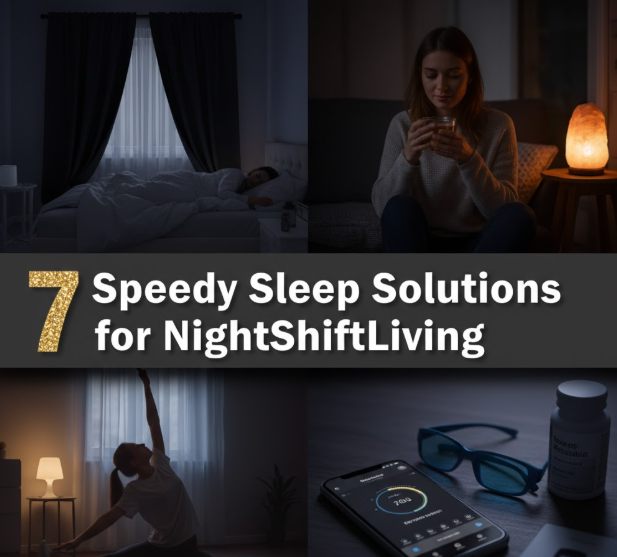
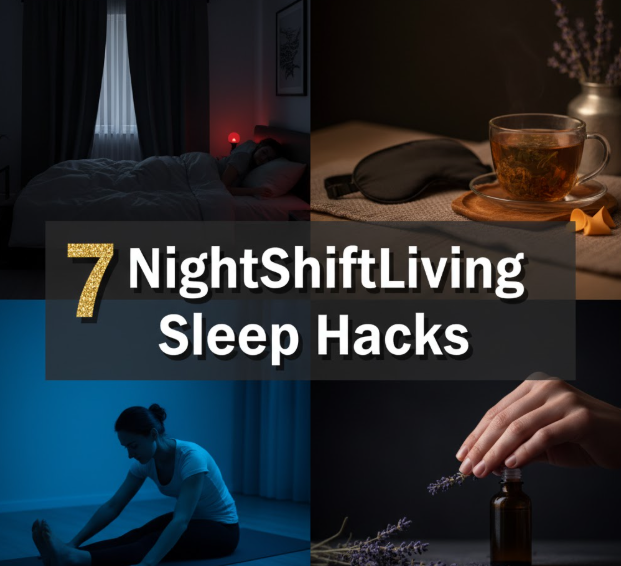
11 NightShiftLiving Sleep Tips for Shift Workers
>> Sleep NightShiftLiving>> 11 NightShiftLiving Sleep Tips for Shift Workers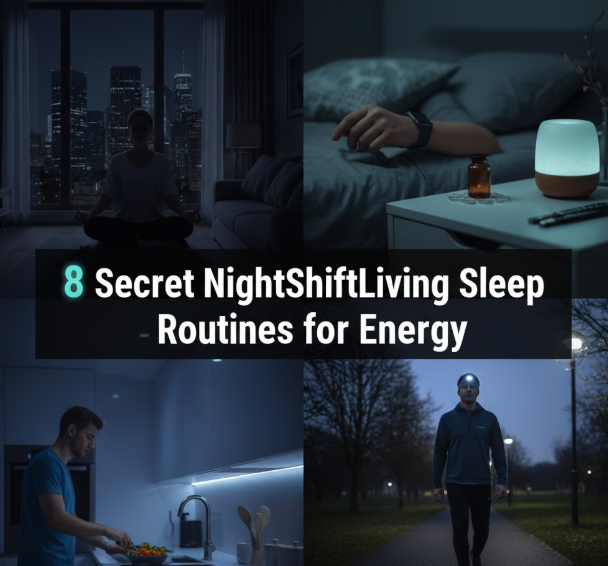
11 NightShiftLiving Sleep Tips for Shift Workers
Working the night shift is a battle against your own body every day.
Your alarm rings when the sun is out. The world beyond is loud and bright, wide awake. But your brain is all, Please sleep. You drag yourself to bed, roll around for two hours, and wake up feeling like you got none.
Sound familiar?
Here’s the deal: Most night shift workers aren’t floundering because we’re weak or have bad habits. They are flailing because no one ever taught them how to sleep in reverse. The rules are completely different. The hacks that work for 9-to-5 people do not apply at all.
That is precisely what this article corrects.
Here are 5 secret NightShiftLiving sleep routines that support real sleep science. These are not generic tips. These are tailored, step-by-step strategies for people who work as the world sleeps — and require a serious dose of energy to do it well.
Why Night Shift Destroys Your Energy to Begin With
Before we get into the routines, let’s take a moment to see why this is so difficult.
Your body operates on an internal 24-hour clock known as the circadian rhythm. It’s like a biological alarm system. It relies primarily on sunlight to determine when you should wake up and feel sleepy, as well as what hormones like melatonin and cortisol to release.
Nights make you turn everything the other way around. When your body would have you asleep, you are awake. You sleep in daytime-hormone suffusion. The result? Poor sleep quality, brain fog, low energy and — down the line — serious health risks.
The good news is that your circadian rhythm is trainable. With the right routines in place, you can train your body to operate better on a night schedule. That is the entire premise of NightShiftLiving — smart, science-based habits that play nicely with your biology instead of against it.
Routine 1 — Bright Anchoring: Hack Your Circadian Rhythms With Light
Of all the tools at a night shift worker’s disposal, light is the biggest and most powerful tool that 99 percent of people completely ignore.
Light is the No. 1 signal that your brain uses to set your internal clock. More light = stay awake. Darkness = sleep time. When you know this, you can use it strategically.
How to Use Light Before Work
Pre-exposure to bright light for 30 to 60 minutes prior to your shift. This might be sunlight (if you wake up early enough) or it could be a light therapy lamp — a device that emits 10,000 lux of light mimicking natural daylight.
What this does is release a signal to your brain: “Time to stay alert.” It crowds out melatonin, increases serotonin and forces your cortisol to peak at the time of day aligned with your schedule — not the daytime schedule.
A good 10,000-lux light therapy lamp with a dose of 20 to 30 minutes before your shift can feel like an espresso shot without the crash.
Post-Shift Plans
This step is equally important — and it’s one most people omit entirely.
As you leave work in the morning, wear wraparound blue-light-blocking glasses. This looks a little goofy, but it works. Morning sun shining in your eyes on the drive home cues your body that it is time to be awake. That’s not the message you want at this moment.
Block that light, and your melatonin levels will start to rise naturally, making it a lot easier for you to fall asleep when you get home.
Quick summary of light anchoring:
- Before the shift: bright light therapy for 20–30 minutes
- After shift: blue-light-blocking glasses as soon as you step outside
- Bedroom: blackout curtains + eye mask for when you are sleeping
- Phones and screens: night mode or blue-light filter after midnight during shifts
Just this one routine can help you sleep way better within just a few days of practicing it regularly.
Routine 2 — The 20-Minute Power Nap Method You Are Probably Using Wrong
Most night shift workers have experimented with napping. Almost all of them say it makes them feel worse. Here’s why — and how to remedy it.

The Sleep Inertia Problem
When you sleep for too long, you go into deep sleep (also known as slow-wave sleep). But if you are pulled out of deep sleep before it has fully run its course, you wake up feeling groggy and confused — in fact worse off than when you lay down. This phenomenon is known as sleep inertia, and it can last 30 to 60 minutes.
The trick is to nap for no more than 20 minutes. At that length, you remain in the lighter stages of sleep — Stage 1 and Stage 2. You get rest, mental recovery and a boost of alertness without the groggy hangover.
When to Nap on Night Shift
Timing matters a lot. The optimal times for a strategic nap during a night shift are:
- Before your shift — A 20-minute nap taken 1 to 2 hours before leaving for work is the pre-game pump-up. You enter rested rather than already depleted.
- During a mid-shift break — If you work a 10–12 hour shift and get a 30-minute break, take 20 minutes to nap. Even sitting in your car will do.
- After your shift, before your main sleep — If you return home feeling completely wired (common due to adrenaline from the job), a brief 20-minute nap can help ease you into deeper sleep later.
The NASA Nap Trick
NASA research found that pilots who napped for only 26 minutes improved performance by 34 percent and alertness by 54 percent. Night shift workers are essentially running a version of the same thing. Your brain does not know you are flying a plane or running a hospital floor. Short, well-timed sleep works.
Set an alarm without fail. The problem with napping is that you might oversleep, which will just make everything worse and eat into your primary sleep window.
Routine 3 — Meal Timing Reset: Eat for Your Shift, Not the Clock on the Wall
What you eat matters. But when you eat is even more important for shift workers.
Your digestive system has a circadian rhythm too. Enzymes, stomach acid, sensitivity to insulin — all these ebb and flow with time of day. Eating a massive meal at 3 AM is actually tougher on your system than eating it at noon, because your gut hasn’t quite geared up to do the job.

That doesn’t mean you should never eat at night. It just means you have to be smart about it.
The 3–4 Hour Eating Window Approach
Instead of eating one huge meal during your shift, spread your food out every 3 to 4 hours. This approach:
- Stabilizes your blood sugar (no energy crashes)
- Avoids the food coma that descends after a heavy 3 AM meal
- Aids digestion even at off hours
Think of it like a steady cadence of smaller logs on the fire instead of throwing in a gigantic log that smothers the flames.
What to Eat During Your Shift
Foods that will keep your energy up for a night shift:
- Complex carbs such as oats, sweet potatoes, and brown rice for sustained energy
- Lean protein such as eggs, chicken or Greek yogurt to stave off hunger and keep you focused
- Healthy fats like nuts and avocado for brain function
- Lots of water — dehydration is a major hidden contributor to fatigue
Foods to avoid mid-shift:
- Sugary snacks and energy drinks (the crash by hour 6 will wreck you)
- Heavy fried food (your gut will revolt)
- Any alcohol (ruins sleep quality, even many hours later)
The Pre-Sleep Meal Matters Too
What you eat prior to your primary sleep block has an impact on how deeply you sleep. Something light and easy to digest — like a banana with peanut butter or a small bowl of oats — about 45 minutes before bed will help promote melatonin production and fuller, deeper sleep.
Avoid heavy proteins and spicy food right before sleep. They keep digestion working overtime and can upend your rest.
Routine 4 — Temperature Hacks: How to Fall Asleep Faster During the Day
Your bedroom could be undermining your sleep without you even realizing it.
As we fall asleep, our core body temperature dips by 1 to 2 degrees as a natural part of the sleep process. This drop signals your brain that it is time for sleep. The problem for day-sleepers? The house is warm, the sun has heated everything up, and your body temperature stays too high to trigger deep sleep easily.
The Cold Shower Trick
Take a cool or lukewarm shower right before bed. Not freezing — just cooler than you might typically prefer. This quickly reduces your surface body temperature, which triggers your brain to initiate the sleep cascade sooner.
Most night shift workers who do this say they fall asleep much faster — sometimes halving their sleep onset time.
How to Turn Your Bedroom Into a Sleep Cave
The ideal sleep environment for a day-sleeper looks like this:
- Temperature: 65–68°F (18–20°C) — the science-backed sweet spot for sleep
- Darkness: Complete. Blackout curtains plus an eye mask. Zero light leakage.
- Sound: White noise machine, fan or earplugs to drown out daytime sounds
- Phone: On Do Not Disturb, with only emergency contacts allowed through
Do not underestimate noise. Daytime has garbage trucks, lawn mowers, neighborhood kids and delivery drivers. A white noise machine set to a low hum can block all of it out — and after a few weeks of daily use, it also becomes a powerful sleep cue in its own right.
The Two-Hour Wind-Down Protocol
Your brain also requires an adjustment period between being in “on duty” mode and sleep mode. Start a 2-hour wind-down before your intended sleep time:
- Hour 2: Stop eating, dim all lights, switch off bright screens
- Hour 1: Light stretching, calm music or reading (physical book, not tablet)
- 20 minutes out: Cool shower, blackout curtains drawn, phone on silent
When you go through this sequence consistently, your nervous system gets trained to detect the pattern and starts shutting down automatically. After a week or two, simply starting the sequence will make you feel sleepy.
Routine 5 — The Social Sync Shield: Protecting Your Sleep on Days Off
This is the hardest routine on this list. And it is the one that derails the most night shift workers.
Here is the problem: on your days off, the whole world pulls you back to a daytime schedule. Family wants to do things during the day. Banks and doctors are only open during business hours. Social events happen in the evenings. So you stay up late, sleep in, try to enjoy your time off — and then your night shifts become brutal again because you have effectively given yourself jet lag.
Why “Flipping Back” Destroys Your Energy
Every time you switch back to a day schedule on your days off and then return to nights, your body has to readjust. That readjustment generally takes about 2 to 4 days of disrupted sleep and lower energy. If you do this every week, you are spending almost half of your working life in a jet-lagged state.
The research is clear: consistency is the single most important factor in circadian health for shift workers. The workers with the most regular sleep schedules — on days off included — show dramatically better energy levels, mood and cognitive performance.
Three Practical Options for Days Off
Most night shift workers cannot maintain their night schedule entirely on days off. But there is a middle ground:
Option A — Anchor sleep means keeping your bedtime and wake time within 2 hours of your work schedule on days off. So if you normally sleep from 9 AM to 5 PM on workdays, you might sleep from 10 AM to 4 PM on days off. Not perfect, but close enough that no significant readjustment is needed.
Option B — Gradual shifting involves slowly moving your sleep window earlier across your days off and then back again before the return of nights. It’s more complex but gives you some overlap with daytime life.
Option C — Communication and planning means discussing your schedule honestly with family and friends. When feasible, schedule important appointments and events for the afternoon or evening. Plan social activities on your transition days instead of mid-rest block.
Building Your “Sleep Shield” Habits
Whichever option you choose, protect your sleep with these habits:
- Share your sleep hours with your household and ask for noise reduction
- Hang a “Sleeping — Do Not Disturb” sign on your door (yes, it really works)
- Batch errands and appointments into one day a week to reduce disruption
- Create a weekend routine that still incorporates your wind-down protocol, even if the timing shifts slightly
The Social Sync Shield is hard because it requires the support of people around you. But once your family and close friends understand why it matters — that your sleep is not laziness but a genuine health necessity — most people are surprisingly supportive.
Putting All 5 Routines Together: A Sample NightShiftLiving Day
Here is how a typical night shift worker might stack all five of these routines into one practical daily routine:
| Time | Action |
|---|---|
| 5:00 PM | Wake up, light therapy lamp for 20–30 minutes while eating a small balanced meal |
| 6:30 PM | Begin shift prep; get dressed, take a 10-minute walk outside (last natural light exposure before a 7 PM shift) |
| 6:45 PM | Put on blue-light-blocking glasses for the commute to work |
| 7:00 PM – 7:00 AM | Night shift; eat small portions every 3–4 hours, take a 20-minute nap during a break if possible |
| 7:00 AM | Leave work with blue-light blockers on; drive home in glasses |
| 7:30 AM | Begin 2-hour wind-down; dim lights, light healthy snack, no screens |
| 8:00 AM | Cool shower, blackout curtains drawn, white noise machine on |
| 8:30 AM | In bed, phone on Do Not Disturb |
| 9:00 AM | Asleep |
Is this perfect every day? No. Life happens. But even following these routines 80 percent of the time produces tangible, real-world effects on how rested and energized you feel. Night shift workers who build these habits consistently report sleeping deeper, waking up less groggy, and feeling more actively present for their off-hours life.
FAQs About NightShiftLiving Sleep Routines
Q: How long does it take to notice a difference with these routines? Most people will see an improvement in sleep quality after 5 to 10 days of doing even just 2 or 3 of the strategies. Full circadian adaptation to a regular night schedule can take between 2 to 4 weeks.
Q: Which routine is most important to start with? Routine 1 — Light anchoring — gives the fastest and most noticeable results for most people. Bright light before your shift followed by blue-light blocking afterward directly resets your circadian rhythm and makes everything else easier.
Q: Can I drink coffee on night shift? Yes, but strategically. Caffeine has a half-life of around 5 to 6 hours, meaning half of it remains active that long after you consume it. Avoid caffeine 6 hours before your planned sleep time. One cup at the start of your shift is fine. A cup at 5 AM if you need to be asleep by 9 AM is not.
Q: My kids wake up during my sleep hours. What can I do? This is one of the hardest challenges of working nights as a parent. Earplugs plus a white noise machine can help block sound. Also, having a clear family conversation where even young children understand “Mum/Dad is sleeping — this is their night time” can be incredibly powerful. If possible, switching caregiving duties with a partner or family member for a few hours is also worth exploring.
Q: Are these routines safe for long-term night shift workers? Yes. These routines are designed to reduce the health burden of shift work, not add to it. They draw from sleep science principles used in hospitals, military settings and aviation. However, long-term night shift work does carry health risks regardless of routines, so regular check-ins with a doctor are always worthwhile.
Q: What if I rotate between day and night shifts? Rotating shift schedules are the hardest on the body because there is no stable rhythm to build. In that case, go heavy on light anchoring (Routine 1) and meal timing (Routine 3), as these have the fastest reset effects when your schedule changes. Also push for forward-rotating schedules (day → afternoon → night) with your employer if possible, as research shows forward rotation is less disruptive than backward rotation.
Final Thoughts: Your Energy Is Not Gone — It Just Needs a Different System
Working nights is not a sentence to exhaustion.
Millions of people around the world thrive on night shift schedules — not just endure, but actually feel good, stay sharp and protect their health. The difference between those who struggle and those who succeed almost always comes down to systems, not willpower.
The 5 NightShiftLiving sleep routines in this article — light anchoring, strategic napping, meal timing reset, temperature hacking and the social sync shield — are that system. They treat the root causes of shift work fatigue instead of just managing symptoms with more caffeine.
Start with one. Repeat it until it becomes second nature. Then add the next.
Your body is not broken. It just needs the right signals. And now you know exactly how to send them.
Related Post

9 Sleepless Sleep Tactics for Defeating Fatigue Forever — Smart Strategies for NightShiftLiving
While a good chunk of the world is sleeping, you're clocking in. And when the…