
8 Wise Tips On NightShiftLiving Lifestyle For Harmonious Life
>> Lifestyle NightShiftLiving>> 8 Wise Tips On NightShiftLiving Lifestyle For Harmonious Life
8 Wise Tips On NightShiftLiving Lifestyle For Harmonious Life
Working the night shift is no small task. While the rest of the world sleeps, you are putting in hours, staying vigilant and performing tasks that have kept hospitals, factories, transportation systems and emergency services operational.
But here’s the truth no one will tell you up front — working at night really messes with your body and your brain if you don’t care for yourself.
The good news? You can even have a healthy, balanced life working the night shift. You just got to have habits down right.
Check out our 8 practical NightShiftLiving tips that will work for you. These aren’t vague suggestions. They’re steps you can take today — no matter how long you’ve been working nights.
Why NightShiftLiving Is in Need of a New Playbook
Your body operates on something called a circadian rhythm — a 24-hour internal clock that regulates when you sleep, eat and be alert. It mostly follows sunlight.
Night-work shifts combat that clock. You’re awake when your body anticipates dark. You’re sleeping when it’s hot out there. That friction creates actual problems down the line.
Research revealed that night shift workers are at higher risk of:
| Health Risk | How Night Shift Makes It Worse |
|---|---|
| Sleep disorders | Body clock confusion scrambles deep sleep |
| Digestive issues | Eating at unusual times puts stress on the gut |
| Heart disease | Long-term sleep deprivation drives up blood pressure |
| Depression & anxiety | Social isolation and exhaustion build up |
| Weight gain | Hormonal imbalance induces eating |
Understanding these risks isn’t intended to frighten you. The intention is to spur you into forming habits that counteract it. This is what NightShiftLiving stands for.
Tip 1: Stick to the Same Sleep Schedule — Even on Days Off
The worst thing night shift workers do is attempt to “flip back” to a normal schedule over the weekend or on days off. It sounds nice in theory. It effectively demolishes your sleep quality week in, week out.
Your body craves routine. Even if that schedule looks different from everyone else’s, committing to a routine is more important than fitting in with others.
What to actually do:
- Choose a sleep time that works post-shift — 8 AM to 4 PM, for example — and adhere to it every day.
- If you need to change your schedule on days off, don’t stray more than 1–2 hours from when you usually wake up.
- Use blackout curtains, a white noise machine, or earplugs to tell your brain “sleep time.”
- Take your phone off Do Not Disturb. Let family and friends know your sleep hours.
Treat your sleep window like it’s an appointment you never miss. You wouldn’t cancel a doctor’s appointment — don’t cancel your sleep.
Tip 2: Master Light and Darkness
Light is the strongest signal your brain uses to determine whether it should be awake or asleep. Something intentional like that is needed for NightShiftLiving to be successful.
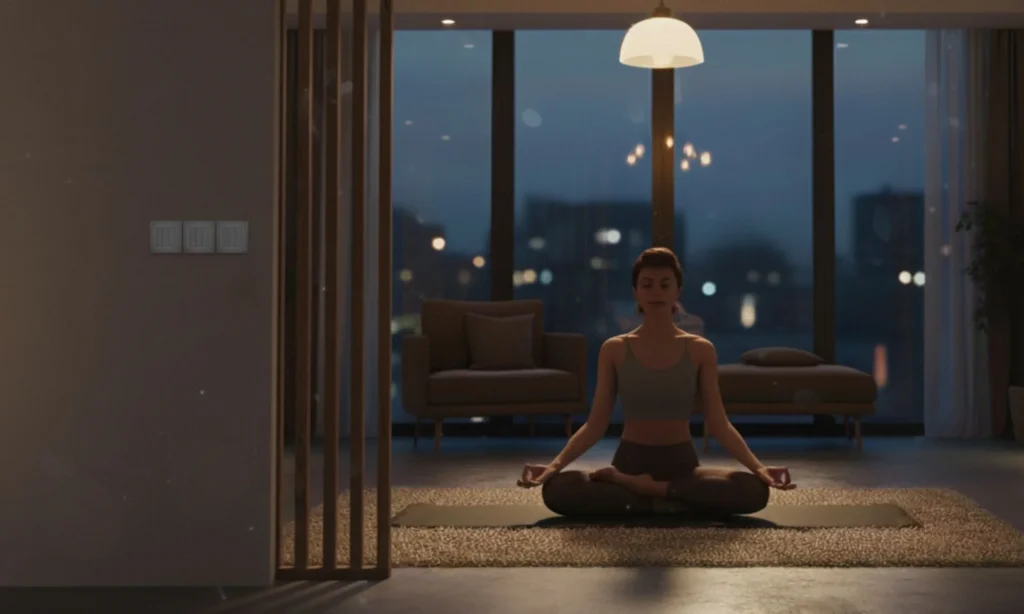
During your shift:
Bright light — and in particular cool-toned white light — keeps you alert and focused at night. Use well-lit workspaces. Some night shift workers even use light therapy lamps on breaks to blast through the sleepiest hours.
On your way home after your shift (driving and decompressing):
This is where things get dangerous. If you’re exposed to bright morning sunlight after work, your brain gets a “wake up!” signal. That makes getting to sleep feel downright impossible.
Practical fixes:
- Wear blue light-blocking glasses during your drive home after a night shift.
- Dim your home as you settle down — no bright overhead lights.
- Put blackout curtains up in your bedroom. Thick ones. Not just regular blinds.
- If you can, wear a sleep mask — even a cheap one will do wonders.
Before your shift:
Catch a hit of natural light late afternoon or early in the evening. A 15-minute walk outdoors before your shift is a great way to reset your alertness and boost mood.
Tip 3: Do Your Meal Timing Like a Pro
The majority of people eat whenever they get hungry. Night shift workers must sometimes make that sacrifice. Your hunger cues are out of whack from your flipped schedule, and eating at the wrong times can disrupt digestion, energy, and weight.
The golden rule for NightShiftLiving eating:
Have your biggest meal before you start your shift. Then have lighter snacks and meals during your shift. After your shift, eat a snack — easy to digest, not a full meal just before sleep.
| Meal Timing | What Works Best |
|---|---|
| Pre-shift (evening) | Balanced meal: protein + complex carbs + vegetables |
| Mid-shift snack | Something light: nuts, fruit, yogurt, a boiled egg |
| Post-shift (morning) | Small snack only — avoid heavy meals before sleep |
| “Breakfast” on waking | Think of this as your real dinner — eat a proper meal |
Foods to prioritize:
- Lean proteins (chicken, fish, legumes) — no crash, steady energy
- Whole grains (oats, brown rice) — gradual release of energy
- Fruits and vegetables — vitamins your evening schedule might be robbing
- Water — the majority of shift workers are chronically dehydrated
Foods to avoid during shifts:
- Heavy fried foods — causes unnecessary sluggishness
- Sugary snacks — fast spike, faster crash
- Ultra-processed foods — convenient but leave you feeling awful
Tip 4: Keep Your Body Moving
When you’ve been at work all night, the temptation is to disregard exercise. But regular movement is one of the most powerful tools in the NightShiftLiving toolkit.

Exercise improves sleep, battles depression, increases energy and helps with weight control — all the things that night shift workers struggle with more than the average person.
When should you exercise?
Depending on your schedule, but here are two approaches that work well:
Option A — Work out before your shift. Exercising three to four hours prior to your shift raises then tapers your body temperature, and this can actually help you feel more awake at the beginning of your shift.
Option B — Work out after you sleep. Just wake up for your “day” — exercise as part of your waking routine, like most people who exercise in the morning.
What kind of activity is best?
You don’t need a fancy gym. Just 20–30 minutes of movement is valuable:
- Walking or jogging
- Bodyweight exercises (push-ups, squats, lunges)
- Yoga or stretching — especially good for stress relief
- Swimming or cycling
The key is consistency. Three or four sessions a week are much better than one hard workout every two weeks.
Tip 5: Regularly Check In On Your Mental Health
Working the night shift doesn’t simply exhaust your body. It takes a toll on your mental health, too.
There is a disconnect between your hours and the rest of life. You miss family dinners, hanging out on the weekends and the normal rhythms of social life. In the long run, that can lead to isolation, irritability, anxiety or even depression.
According to the National Sleep Foundation, night shift workers are significantly more likely to experience mood disorders and mental fatigue compared to daytime workers — making mental health care a critical part of any shift worker’s routine.
Warning signs to watch for:
- Having little interest or pleasure in doing things
- Taking things out on people you love
- Disinterest in hobbies you once enjoyed
- The sense of always “running on empty”
- Difficulty concentrating even after resting
These aren’t signs of weakness. They’re cues that your mental health needs attention — the way a sore muscle is a cue that your body needs some downtime.
What helps:
- Talk to someone. A friend, a therapist, or a support group for shift workers.
- Write for 5 minutes before sleep. Getting thoughts out of your head helps to settle your brain.
- Limit screen time and doom-scrolling after your shift — it spreads stress without you realizing it.
- Book at least one thing a week that you really want to do.
Mental health care is not a luxury in NightShiftLiving. It’s a survival skill.
Tip 6: Maintain Your Social Life Without Losing Sleep
The hardest thing about night shift life is the social cost. Birthdays, family gatherings, friend hangouts — they all take place when you’re sound asleep.
You can have both sleep and relationships. You do, however, need to plan ahead.
Strategies that work:
Articulate your schedule and communicate it early. Tell people in your life when you sleep and when you’re awake. Once they get it, most people will respect it.
Create “overlap windows.” Discover time slots that work for you and them. Perhaps Sunday mornings are best for brunch. Perhaps a Wednesday evening chat with a friend works.
Shift your definition of “socializing.” A 20-minute call on the phone, a text conversation, a stroll with a pal at the end of the day — this all counts. Connection doesn’t have to look like a long night out.
Be selective about social events. You can’t attend everything. Prioritize what matters most. Better to show up rested for one dinner than exhausted for five.
And always remember — it’s okay to say no. Protecting your sleep doesn’t make you antisocial. It’s self-respect.
Tip 7: Use Caffeine Thoughtfully, Not Just Reflexively
Caffeine is a staple of survival for most night shift workers. Coffee, tea, energy drinks — they get you through the 3 AM slump and keep your eyes open during long stretches.
But there’s a significant difference between using caffeine wisely and using it out of habit.
The NightShiftLiving caffeine guide:
Use it early in your shift. Caffeine can take 5–7 hours to leave your body. If you consume coffee at 4 AM, that could still be influencing your system when you attempt to sleep around 9 AM.
Refrain from caffeine 4–6 hours before your desired sleep time. This is the most important rule.
Don’t use it to substitute for sleep. Caffeine disguises exhaustion — it does not eliminate it. If you’re relying on five cups to get through a shift, it’s a red flag that the quality of your sleep needs work, not more caffeine.
| Caffeine Source | Avg. Caffeine (mg) | Time It Stays Active |
|---|---|---|
| Espresso shot | 63 mg | 5–6 hours |
| Drip coffee (8 oz) | 95 mg | 5–7 hours |
| Black tea | 47 mg | 4–5 hours |
| Energy drink (250 ml) | 80 mg | 5–6 hours |
| Green tea | 28 mg | 3–4 hours |
A good guideline: limit yourself to 1–2 doses of caffeine per shift, and keep it early.
Tip 8: Create a Supportive Surrounding to Fit Your Lifestyle
Being a night shift worker can be lonely. Every successful person in NightShiftLiving has one thing in common — a strong support system.
At home:
Your household can make or break your sleep quality. Communicate honestly with your partner, housemates or family about your schedule. Request minor changes — quiet during your sleep hours, no noisy activities scheduled for the morning.
If you have children, come to an arrangement with your partner or a family member so you can sleep through the morning.
At work:
Network with other nighttime colleagues. They understand it in a way daytime workers simply do not. A small sense of comradeship on shift really helps morale and resilience.
If your schedule is truly unsustainable, speak up to your employer. Workplaces are often more flexible than workers think — but only if you ask.
On the internet and in the wider world:
Night shift communities exist online — forums, Facebook groups, Reddit threads — where people share similar struggles. Occasionally, simply seeing that someone else solved your exact problem is enough to alter the way you approach it.
A Day-in-the-Life NightShiftLiving Routine (Sample)
Here is an example of a balanced night shift day. Adapt the times to conform to your actual shift hours.
| Time | Activity |
|---|---|
| 6:00 PM | Wake up. Drink water. Light meal or “breakfast.” |
| 6:30 PM | Exercise or a walk outside for natural light. |
| 7:30 PM | Winding down preparation: food prep, set intentions for the evening. |
| 8:00 PM | Start shift. Bright light exposure if possible. |
| 11:00 PM | First caffeine if needed. Light snack. |
| 2:00 AM | Second light snack. Short walk or stretch break. |
| 4:00 AM | No more caffeine from now on (if shift ends at 7 AM). |
| 7:00 AM | Shift ends. Blue-light glasses on. Drive home with dim light. |
| 7:30 AM | Small snack at home. Wind-down routine (no screens). |
| 8:00 AM | Sleep in dark, white-noise room. |
| 6:00 PM | Wake up. Repeat. |
It looks rigid on paper. In the real world, just following 60–70% of this kind of routine will already make you see a noticeable change in a few weeks.
FAQs About NightShiftLiving
Q: How long does it take to adapt to working nights? Most people take 2–4 weeks for partial adjustment. The full adjustment — which may or may not happen — can take months. The key is consistency. Going back to a daytime schedule on days off resets that adjustment process and makes it significantly harder.
Q: How safe is working the night shift long term? Night shifts do pose health risks for workers over the long haul, but many of those risks are manageable with good habits. Following the tips in this guide — consistency with sleep, controlling light, eating smartly, getting exercise and supporting mental health — can lessen those risks considerably.
Q: Is it possible to ever make up for lost sleep? Short answer: partially. A few poor nights of sleep can be recovered with a few good nights. But chronic sleep debt — weeks or months of lousy sleep — is more difficult to remedy. And that is why, in NightShiftLiving, preventing sleep loss to begin with is so important.
Q: How can I sleep during the day without being interrupted? Use blackout curtains, a sleep mask, earplugs or white noise, and set your phone on Do Not Disturb. A “do not disturb” sign on your door and a discussion with the members of your household goes quite far as well.
Q: Can working night shifts make you gain weight? It can contribute to it, yes. Irregular meal timing, after-hours snacking, disrupted metabolism and less exercise are all key factors. But with mindful eating and consistent movement — both covered in this guide — maintaining a healthy weight is certainly doable.
Q: Should I take melatonin to help me sleep during the day? Melatonin can assist some people in falling asleep at unusual times. Taking a low dose (0.5–1 mg) about 30 minutes before you plan to sleep may help. That said, before adding any supplement to your regimen, have a conversation with your doctor — especially if you’re already on other medications.
Q: What do I do about people not getting my schedule? Communication is everything. Night shift is not what most people think it is. Simply explain it — “I sleep from 8 AM to 4 PM, just like you do at night. If you call me at 10 AM, it’s like calling you at 2 AM.” Once it’s framed that way, most people understand immediately.
Wrapping It All Up
NightShiftLiving is not merely surviving your schedule. It’s about actually living within it — with vigor, wellness, connection and meaning.
The eight tips in this guide — consistent sleep, light management, smart eating, regular movement, mental health care, a protected social life, mindful caffeine use and a strong support system — combine to form a complete toolkit.
You don’t have to master all eight at the same time. Start with one. Maybe it’s the blackout curtains. Perhaps it’s avoiding caffeine four hours before bed. A series of small wins leads to large shifts.
Night shift workers tend to be the most committed, toughest people in the workforce. You deserve a life that lives up to that strength — even if it runs a few hours behind schedule from the rest of the world.
Related Post

5 Night Owl Lifestyle Tricks You Don’t Know About NightShiftLiving
So you're a night owl. The world goes silent, the clock strikes midnight and somehow…