8 Smart NightShift Living Lifestyle Routines for Healthy Living
>> Lifestyle NightShiftLiving>> 8 Smart NightShift Living Lifestyle Routines for Healthy Living
8 Smart NightShift Living Lifestyle Routines for Healthy Living
Night shift work can be hard on the body. Your body clock — known as the circadian rhythm — is genetic, and it’s coded to keep you awake while there’s light outside and asleep when it gets dark. When you upend that schedule, something as basic as your circadian rhythms — which help regulate everything from sleep to digestion — gets turned on its head.
But the good news is this: if you do NightShift Living right, it can change all of that.
Millions of nurses, factory workers, security guards, truck drivers and emergency responders clock in around the clock. Many suffer fatigue, weight gain, mood swings and poor health. Yet increasing numbers are taking charge — by creating smarter lifestyle habits that complement their schedule rather than fight against it.
In this guide, you’ll discover 8 science-backed NightShift Living routines that could help you sleep better, eat smarter, remain active and safeguard your mental and physical health — all while keeping your career on track.
Why Your Body Resists the Night Shift
Before we dive into the routines, it’s worth understanding why night shift work is so challenging for the body.
Your circadian rhythm regulates when you get sleepy and alert. It responds to light. When sunlight strikes your eyes in the morning, your brain gets a message: It is daytime, stay awake. When it turns dark, your brain secretes a chemical called melatonin that makes you sleepy.
Night shift workers are always battling this system. You are awake when your brain wishes you would sleep. You’re driving home under bright morning sunlight right about the time your melatonin is peaking. You’re trying to sleep while everyone else makes noise.
The result? Interrupted sleep, bad eating habits, low energy and long-term health risks.
But routine is powerful. The more you follow your NightShift Living rituals, the more they become ingrained as habits and the better your body learns to adapt.
Routine #1 — Establish a Steel-Minded Sleep Schedule
The single most important thing a night shift worker can do is to go to bed and wake up at the same time every single day — even on days off.

The average person thinks to themselves “I’ll catch up on sleep during the weekend.” But that strategy backfires. Getting up late on your days off further disrupts your body clock, so that Monday night’s shift seems more difficult than it needs to be.
How to Build It
- Set the same bedtime upon getting off your shift. For instance: sleep from 8:00 AM to 3:00 PM.
- Follow that schedule without deviation 7 days a week and on weekends.
- Wake up with alarms — even if you want to sleep more.
- Don’t nap during your sleep windows for long periods.
Consistency trains your brain. Within a couple of weeks, your body comes to expect sleep at that hour — and it becomes much simpler to drift off and remain asleep.
| Day Type | Best Practice |
|---|---|
| Work nights | Sleep as soon as your shift is over |
| Days off | Stay in the same sleep window (no exceptions) |
| Transition days | Shift bedtime by 1–2 hours gradually |
| Vacation | Try to stay within a 2-hour window of your normal time |
Routine #2 — Take Charge of Light Exposure
Light is the most potent signal your body uses to set its internal clock. Night shift workers need to manage light aggressively — getting the right light at the right time and blocking it when necessary.
Bright Light = Stay Awake
Expose yourself to bright light during your shift, particularly in the early hours. Fluorescent office lighting, outdoor light while on a break or even a light therapy lamp at your workspace can help communicate to your brain that it’s time to be awake.
Block Light Before Bed
If you’re going home after a night shift — the typical time would be morning — you’re walking directly into the brightest part of the day. Your eyes are bathed in sunlight when your body needs to slow down for sleep.
Try these strategies:
- Wear blue-light-blocking glasses during your commute home. Both sunlight and screens emit blue light, which suppresses melatonin.
- Put blackout curtains in your bedroom. It is crucial to be in complete darkness for your daytime sleep.
- If some light gets past the curtains, get a sleep mask to cover your eyes.
- Keep your bedroom dark and cool — 65–68°F (18–20°C) is considered best.
Just one morning of bright light exposure can shift your body clock by 1–2 hours and disrupt your sleep. Consistency with light management is one of the great NightShift Living principles.
Routine #3 — Create a Plan for Pre-Shift Meals
One of the biggest traps night shift workers fall into is eating at the wrong times or eating the wrong foods. Your digestive system, too, has a circadian rhythm — it’s made to break down food while the sun is out, not at 3 AM.
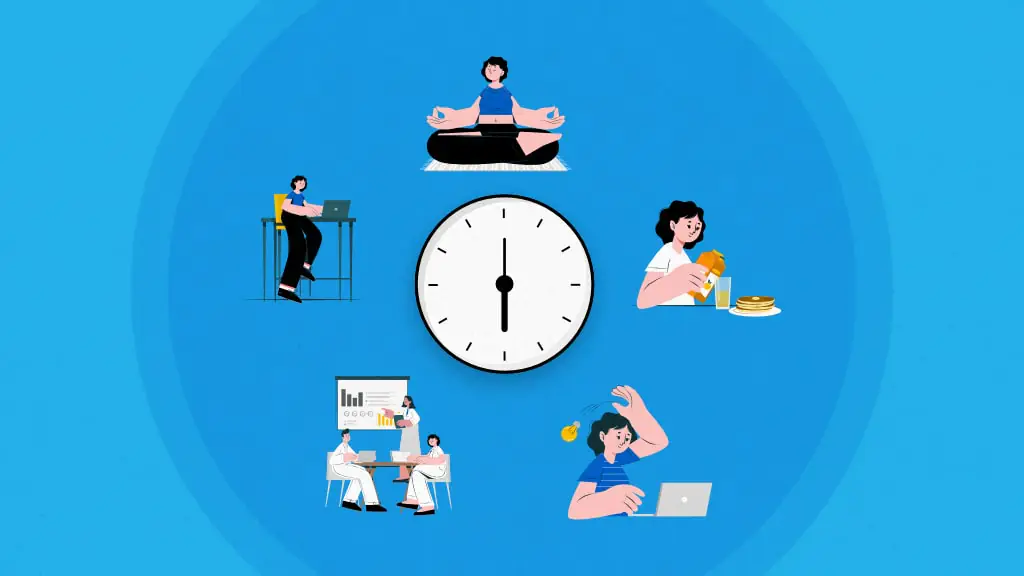
This means meals eaten at night will be digested less efficiently. They can cause bloating, weight gain, blood sugar spikes and poor energy.
The Smart Eating Framework for Night Workers
Before your shift (your “breakfast”): Have a balanced meal 1–2 hours before your shift. Include protein, complex carbohydrates and healthy fats. This is your primary fuel for the night.
During your shift: Consume smaller, lighter snacks — not a full meal. Fruit, nuts, Greek yogurt, hard-boiled eggs or hummus and vegetables are great choices. Steer clear of heavy, fatty or sugary foods.
After your shift: Keep this meal light. Consider it a mini “dinner” even if it’s morning. Skip the heavy breakfast — it will disrupt your sleep and strain your digestive system.
| Meal Timing | What to Eat | What to Avoid |
|---|---|---|
| Pre-shift | Balanced meal with protein + complex carbs | Heavy, fried or sugary foods |
| Mid-shift snack | Fruit, nuts, yogurt, eggs | Fast food, chips and candy |
| Post-shift | Small, light meal | Large breakfast foods or heavy carbs |
| During sleep window | Nothing — let your gut rest | Late-night snacking |
Routine #4 — Establish a Caffeine Cut-Off Rule
Coffee and energy drinks are a night shift worker’s best friend — until they aren’t. Caffeine has a half-life of 5–7 hours. So if you drink a coffee at 3 AM, half of that caffeine is still in your bloodstream by 8 or 9 AM when you’re trying to sleep.
The NightShift Caffeine Strategy
- Use caffeine in the first half of your shift — not the second.
- Establish a personal caffeine cut-off time. If you finish a shift around 7 AM, cut out caffeine by 1–2 AM.
- In the final hours of your shift, switch to water, herbal tea or decaf.
- Stay away from energy drinks altogether past midnight — they typically contain hidden caffeine that lasts even longer.
If you’re struggling to stay awake without late-shift caffeine, look for the root cause: it’s usually poor daytime sleep. Getting your sleep on track (Routine #1) will naturally decrease your need for stimulants.
Routine #5 — Move Your Body at the Right Time
Few tools pack as much potential for improving sleep quality, mood and energy as exercise. But when you work out may be almost as important as whether you do.
For night shift workers, the point is to avoid exercising right before your sleep window — exercise raises your core body temperature and releases adrenaline, both of which disrupt sleep.
Ideal Exercise Windows
- Best option: Exercise 2–4 hours before your shift begins. This provides energy for the upcoming shift while also allowing your body to gradually cool down.
- Second best: Hit the gym on a break, mid-shift. Even a brisk 10-minute walk can reset your alertness.
- Avoid: Strenuous exercise 2–3 hours before sleep.
What Type of Exercise Is Most Effective?
You don’t need a gym. Many night shift workers are already on their feet all day (or night). But structured movement is more beneficial than incidental activity.
- Cardio: Walking, jogging, cycling or swimming three to five days a week for 30 minutes.
- Strength training: Two to three sessions a week using bodyweight or light weights.
- Stretching/yoga: A good pre-sleep choice — it won’t elevate heart rate but does release physical tension.
Regular movement also enhances insulin sensitivity, which is especially critical for night workers whose metabolisms are already under stress.
Routine #6 — Conquer the Wind-Down Ritual
Switching off after a shift is one of the hardest things about working nights. Your adrenaline is still going, your mind is active and the sun is rising — everything says to your brain that now it’s time to wake up.
A wind-down ritual is a sequence of soothing activities you perform consistently after every shift to help communicate to your brain: it’s time for sleep.
How to Create Your Wind-Down Routine
The ritual should take 30–45 minutes and be performed every single day after your shift. What makes it work is consistency.
Sample Wind-Down Sequence:
- Wear blue-light-blocking glasses on your way home.
- Shower or change clothing — this physically signals “shift is over.”
- Eat a light snack if you feel hungry.
- Do some light stretching, or meditate for 10–15 minutes.
- Read a physical (not screen) book for 15 minutes.
- Black out the room, and wear earplugs or use white noise to muffle daytime sounds.
Gradually, your brain learns to link these steps with sleep. The ritual serves as a trigger — your body begins releasing melatonin and relaxing before you even close your eyes.
Tools That Help
- White noise machines or apps to mask daytime sounds
- Earplugs (especially useful if you have children or live in a noisy community)
- Sleep masks for added darkness
- Lavender essential oil or chamomile tea — both mild, natural relaxants
Routine #7 — Safeguard Your Social Life and Relationships
Perhaps the most under-recognized side effect of NightShift Living is its toll on relationships. Night shift workers can feel invisible — they’re asleep when family is awake, off on random days and not available for evening events.
Over time, isolation creeps in. Friendships wither. Family relationships become strained. And that social disconnection carries real health consequences — loneliness is associated with higher rates of depression, heart disease and even a shorter lifespan.
How to Maintain Connections on a Night Shift Schedule
Be proactive and intentional. Social connections don’t maintain themselves. You must treat them like appointments and schedule them.
- Find your overlap hours — the times when you’re awake and family/friends are there too. It could be the late afternoon or early evening.
- Carve out one reliable weekly anchor event — a standing dinner, phone call or outing that happens without negotiation each week.
- Communicate your schedule clearly. Most loved ones of night shift workers have no idea they sleep during the day. Setting expectations reduces friction.
- Use technology wisely. Voice notes, scheduled texts and video calls allow you to remain close without needing the same-time availability.
| Challenge | Solution |
|---|---|
| Missing family dinners | Schedule a “pre-shift” family meal before you leave |
| Friends planning evening events | Suggest weekend mornings or afternoons |
| Kids’ school activities | Ask teachers for recordings, go to morning events |
| Partner growing apart | Have a shared 30-min catch-up daily |
Routine #8 — Check In With Your Mental Health Every Single Day
Working the night shift is tough on the brain. Disrupted sleep negatively impacts mood, emotional regulation and mental clarity. According to the CDC’s research on work schedules and health, night shift workers experience higher rates of anxiety, depression and burnout than daytime workers.
Yet mental health doesn’t decline overnight — it’s a gradual process, marked by small signs that are easy to overlook.
Daily Mental Health Check-In
Integrate a quick 5-minute check-in into your daily routine — ideally immediately before or after your shift. Ask yourself:
- How did I sleep today?
- How am I feeling emotionally? (Anxious? Irritable? Numb?)
- Have I reached out to someone I care about today?
- Did I move my body at some point today?
- Am I eating reasonably well?
If you’re answering no consistently on 3 or more of these, then it’s a sign to take action — not ignore it.
Warning Signs to Watch For
- Continued low mood lasting longer than two weeks
- Disinterest in things you once enjoyed
- Being more easily annoyed or angry at things that usually wouldn’t bother you
- Withdrawing from social contact
- Reaching for alcohol or substances to relax
- Difficulty concentrating even with ample sleep
If you experience these symptoms, talk to your doctor or a mental health professional. There’s no shame in needing support — and catching problems early makes them much easier to address.
Simple Mental Health Tools for Night Workers
- Journaling: 5 minutes of writing in an actual notebook a day.
- Mindfulness apps: Apps such as Calm or Headspace can easily fit into pre-sleep wind-down routines.
- Peer support: Seek out other night shift workers, whether in online communities, workplace support groups or simply a coworker who understands.
- Sunlight breaks: A 10-minute outdoor break at the beginning of your shift can dramatically boost mood.
Putting It All Together — Your Weekly NightShift Living Blueprint
None of these 8 routines require a perfect life or endless willpower. They require consistency. Begin with one or two that seem attainable, and develop from there. Most night shift workers feel a noticeable difference in energy and mood after about 2–3 weeks of committing to even just 3 of these habits.
The central insight behind NightShift Living is this: your biology can’t be changed, but you can work with it. The small and consistent becomes your body’s new normal.
Common Questions About NightShift Living Lifestyle Routines
Q: How long does it take for the body to adjust to night shift work?
The average person takes 2–4 weeks to reset meaningfully to a night shift schedule — and that’s if you’re sticking to consistent sleep, light and meal routines. Without structure, the adjustment may never feel complete.
Q: Is it bad to sleep at irregular hours on my days off?
In a perfect world, no. Sleeping at different times on your days off creates what researchers have termed “social jet lag” — it’s as disruptive as actual travel across time zones. On days off, try to keep your sleep window within 2 hours of normal.
Q: Will I ever truly adapt to night shift work?
Research indicates the circadian clock never completely aligns to night shift work — it remains somewhat anchored to daytime. But consistent routines can greatly lessen the health risks and discomfort of working nights.
Q: What is the ideal diet for night shift workers?
Eat well-balanced whole-food meals before you start your shift, smaller snacks mid-shift and a light meal afterward. Cut back on processed sugar, limit caffeine to the first half of your shift and eat high-fiber foods to support digestion, which runs slower at night.
Q: What is the ideal amount of sleep for a night shift worker?
The recommendation is 7–9 hours for adults, no matter when that sleep occurs. Daytime noise and light are the bane of many night shift workers. Blackout curtains, white noise and a regular schedule can help you hit that goal.
Q: Can exercise improve sleep for night shift workers?
Yes — regular aerobic exercise greatly increases sleep quality and decreases time to fall asleep. The secret is timing: exercise earlier in your “day” (before or at the beginning of your shift) rather than immediately before you want to sleep.
Q: Do supplements support night shift workers?
Taking melatonin 30–60 minutes before your planned sleep time may help tell the body that it is sleep time. Magnesium and vitamin D (because night workers get little sunlight) are also often suggested. Always consult with your doctor before trying any supplement.
Q: How can I communicate my schedule to family or friends?
Be direct and specific. Tell them your sleep window the way you would a work meeting: “I sleep from 8 AM to 3 PM — that’s non-negotiable for my health.” Most people respect boundaries better when they understand the reason behind them. If necessary, share resources about shift work health.
The Bottom Line — You Can Live a Healthy Life on the Night Shift
Night shift work will always be difficult. Your body clock will always prefer the daytime. But that doesn’t mean you have to accept fatigue, poor health and isolation as the price of your career.
The 8 NightShift Living routines detailed in this guide — maintaining a consistent sleep schedule, managing light exposure mindfully, timing meals wisely, respecting caffeine limits, exercising strategically, winding down intentionally, protecting social time and checking in on your mental health every day — are all research-backed practices of night shift workers who’ve figured out how to actually thrive.
You don’t have to do all 8 at once. Select the two or three that resonate most with your current struggles and begin there. Keep what works. Adjust what doesn’t.
Your health is worth fighting for — regardless of what time the clock reads.
Related Post

8 Wise Tips On NightShiftLiving Lifestyle For Harmonious Life
Working the night shift is no small task. While the rest of the world sleeps,…