
5 Night Owl Lifestyle Tricks You Don’t Know About NightShiftLiving
>> Lifestyle NightShiftLiving>> 5 Night Owl Lifestyle Tricks You Don’t Know About NightShiftLiving
5 Night Owl Lifestyle Tricks You Don’t Know About NightShiftLiving
So you’re a night owl. The world goes silent, the clock strikes midnight and somehow you come alive. But here’s the issue — the world wasn’t really created for you.
When you look at most health guidance, work calendars or meal plans, they are geared toward early risers. If you have been trying to shove yourself in that mold, I would bet you are feeling exhausted, foggy, and just… off. That’s not a character flaw. That’s a mismatch.
NightShiftLiving is a lifestyle philosophy that revolves around working in tandem with your natural rhythm — not fighting it. It’s about realizing that being a night owl is not a habit to be cured. It’s a wiring to honor.
In fact, in this article you’ll find five secret NightShiftLiving tricks that most night owls never get to hear about. These aren’t generic tips, like “drink more water” or “sleep on a schedule.” These are targeted, science-backed strategies specifically for people who live, think and thrive during the dark hours.
If you work night shifts, choose to stay up late or just can’t get to sleep before 2 a.m., these tricks will rewrite how you feel, focus and function.
Why NightShiftLiving Is a Legit Lifestyle — Not Just a Sleep Routine
Before getting into the tricks, it’s worth clearing something up.
This is biological: being a night owl. Researchers refer to it as a chronotype — your body’s internal inclination for when to rise and when to slumber. Night owls tend to have a delayed circadian rhythm. Their body temperature peaks later. Their melatonin kicks in later. Most peak mentally between 9 p.m. and 1 a.m.
But forcing night owls into early-morning routines is more than just uncomfortable. It does, in fact, induce what scientists refer to as “social jetlag” — a chronic misalignment between your body clock and your daily regimen. Social jetlag is associated with heightened stress, poorer metabolic health and decreased cognitive performance.
NightShiftLiving flips that script. Instead of wrestling against your biology, you create a lifestyle that honors it. The five tricks you can see below are the main pillars of doing this well.
Trick No. 1: Anchor Your Wake Time — Not Your Bedtime
This is the biggest mistake that night owls keep making.
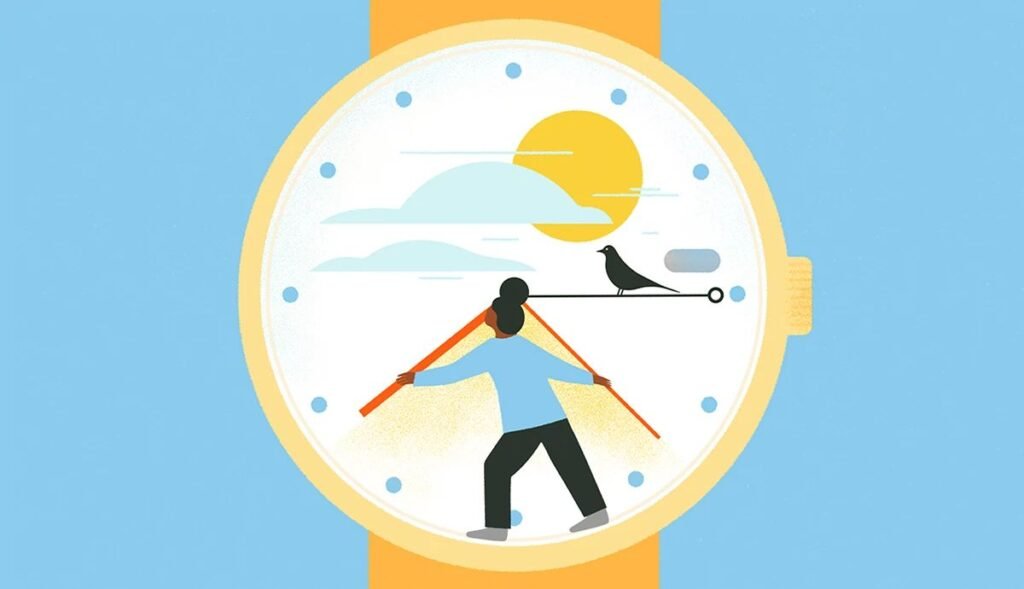
They attempt to correct their sleep by manipulating bedtime. “I will be in bed by 11 o’clock” sounds rational. But lying in bed just breeds anxiety if your body isn’t ready to sleep at 11 p.m. You stare at the ceiling. Your mind races. You check your phone. And all of a sudden it’s 2 a.m. anyway.
The Anchor Method Explained
NightShiftLiving flips this approach entirely. Instead of determining when you go to sleep, you determine when you wake up — and that time remains the same every day of the week, weekends included.
Here’s why this works. Your body’s circadian rhythm gets driven by timing cues known as zeitgebers (German for “time givers”). Light is the most powerful, but the second strongest is a consistent wake time. When you wake up at the same time each day, your body learns to do things in reverse — hunger and alertness and sleepiness all start to converge around that anchor.
This anchor doesn’t need to be 6 a.m. if you’re a night owl. Later than 9 a.m., or maybe 10 a.m. — even noon if you can manage it. The key isn’t the hour. The key is the consistency.
How to Apply This Tonight
Choose a wake time that you can realistically sustain seven days per week. Set your alarm. When it sounds — even if you stayed up late — rise and expose yourself to bright light within 10 minutes. Natural sunlight is best. It can also be a bright light therapy lamp.
Do this for two weeks with no exceptions. Most people who start doing this notice a substantial improvement in energy stability and sleep quality within 10 to 14 days.
Quick Tip: Avoid advancing your wake time by more than 15–20 minutes per week. Forceful change leads to resistance and burnout. Small, steady shifts stick better.
Trick #2: Design Your Light Environment Like the Pros
Light is the single most potent biological signal your body takes in. It tells your brain whether it is day or night. And for night owls living among overhead lights and screens — a bright kitchen at midnight, anyone? — this signal gets scrambled quickly.
NightShiftLiving considers light a tool — something you proactively manage, not passively.
The Two-Phase Light Strategy
Phase 1 — Morning: Get Bright Light Early
Get bright light into your eyes within 30 minutes after waking. This gives a strong “day has begun” signal to your brain. It dampens down on remaining melatonin, stimulates cortisol (in a healthy, natural manner) and resets your circadian clock for the day.
Best sources, ranked by effectiveness:
- Sunlight (outdoors — 10–30 minutes with no sunglasses)
- Light therapy (10,000 lux lamp — 15–20 minutes)
- Strong indoor overhead light (not much better than nothing, but it helps)
Phase 2 — Evening: Reduce Blue Light Dramatically
Blue light — the same type of light produced by phones, laptops and LED lights — suppresses melatonin production. For night owls, whose melatonin is already arriving late in the day, this can push sleep back an hour or two.
Beginning 90 minutes before your desired bedtime:
- Set your phone to night mode or use a blue-light filter app
- Switch to warm-toned lamps instead of overheads
- Use blue-light blocking glasses (the best are amber colored)
- Dim all of your screens to the lowest comfortable brightness
Why Most Night Owls Skip This
Most night owls are aware of blue light, but few take it seriously. The problem is subtle. You won’t feel the melatonin suppression happening. You’ll just feel less sleepy when you “should” be sleepy and think, oh, it must be my chronotype. Often, it’s partially your screens.
Trick No. 3: Time Your Meals to Your Real Clock — Not the Clock on the Wall
Here’s a NightShiftLiving hack that is rarely mentioned — but could radically reshape your energy, digestion, and perhaps even the quality of your sleep.
Your body has a second internal clock system in your digestive organs. It is called the peripheral clock, scientists say. It operates on the timing of food — that is, when you have your first and last meal of the day.
For those with a night-owl orientation, this peripheral clock is already delayed. So eating during “normal” hours (breakfast at 7 a.m., dinner at 6 p.m.) can lead to internal confusion — your gut clock says it’s hardly morning, but your stomach is being asked to digest a full meal.
The Night Owl Eating Window
NightShiftLiving suggests that you should eat during your actual waking hours. Here’s a practical framework:
| Night Owl Wake Time | First Meal | Last Meal | Total Eating Window |
|---|---|---|---|
| 8:00 a.m. | 9:00–10:00 a.m. | 7:00–8:00 p.m. | ~10 hours |
| 10:00 a.m. | 11:00 a.m. | 9:00–10:00 p.m. | ~10 hours |
| 12:00 p.m. (noon) | 1:00 p.m. | 10:00–11:00 p.m. | ~10 hours |
| 2:00 p.m. (late shift) | 3:00 p.m. | 11:30 p.m.–12:00 a.m. | ~9–10 hours |
The target is about a 10-hour eating window that starts roughly an hour after waking, and concludes at least two to three hours before you go to sleep.
How Eating Late at Night Hurts Night Owls in Particular
Night owls are more likely to fall victim to something called metabolic misalignment. When you eat big meals two hours before sleep — no matter if sleep is at 2 a.m. — your body processes those calories less efficiently. Blood sugar regulation worsens. Insulin sensitivity drops temporarily. Your sleep quality suffers because the digestive system continues to work at a time when it should be resting.
That does not mean you cannot have a midnight snack. It means your biggest, most calorie-dense meals should come front-loaded in the earlier part of your waking window. A rich protein-and-fat meal at 3 p.m. sits well. That same meal at midnight weighs heavy and steals sleep.
Trick No. 4: Establish a Pre-Sleep Wind-Down Ritual That Works
The most common sleep advice is “have a bedtime routine.” Great. But for night owls, the typical routines fall short because they don’t match how a night owl’s brain actually winds down.
Night owls are prone to thinking more at night. Ideas flow. Creativity peaks. The brain is buzzing — great for work, bad for getting to sleep.
A NightShiftLiving wind-down is not about switching your brain off. It’s about redirecting it.
The 60-Minute Night Owl Wind-Down Structure
Minutes 60–45 before bed: Complete all active tasks
Close work. Stop responding to messages. Save anything you’re working on. Your brain needs a clear signal that it’s done with problem solving. If you don’t close that loop, your brain will continue to process those loose ends behind the scenes — which is why so many night owls find themselves lying awake doing mental to-do lists.
Minutes 45–20 before bed: Dim, warm and quiet
Switch to warm lighting. Turn your phone face down or put it in another room. This is when the blue-light-blocking strategies from Trick No. 2 really come into play. Low stimulation works best here — light reading (print books, not screens), journaling, stretching or listening to calm music.
Minutes 20–0 before bed: Cognitive offloading
This is the underappreciated part of NightShiftLiving sleep prep. Night owl brains stay active because they’re trying to recall things or clean up unsorted thoughts. The solution is simple: get it out of your head and onto paper.
Take five to ten minutes and note the following:
- Anything you are afraid to forget tomorrow
- Leftover thoughts and feelings from the day
- A couple of things you’re genuinely looking forward to
This practice — also known as a brain dump — can significantly decrease racing thoughts at night. Writing a to-do list for tomorrow before you sleep can help people fall asleep nine minutes faster, according to research from Baylor University. For those who simmer with thoughts late into the night, the effect can be even greater.
What Not to Do During Your Wind-Down
Some things that seem soothing actually stimulate your nervous system:
- Movies full of fast action or suspense (high emotional arousal)
- Social media scrolling (variable reward = dopamine loop)
- Heated debates or emotional conversations
- Eating big meals (thermogenic effect increases core body temperature)
- Doing intense exercise within two hours of sleeping
Trick #5: Protect and Optimize Your Cognitive Peak Hours
This might be the strongest NightShiftLiving technique of all.

The night owl has a cognitive advantage that most early risers can’t fully appreciate: their peak-performance window — the time when mental clarity, creativity and problem-solving ability are at their absolute max — is in the late evening as the world quiets down and distractions fade away.
But this is where most night owls squander that gift.
They waste their peak times on low-value work. Checking emails. Scrolling social media. Watching TV. Having unfocused conversations. By the time they settle in to do actual work, their window is halfway closed or they’re too distracted to get into deep focus.
Map Your Personal Peak Window
Before you can protect your peak times, you need to know exactly when they are.
For one week, at three points during your day, assess your mental clarity on a scale of 1–10:
- Shortly after waking
- Mid-afternoon
- Evening/night
Most night owls see their scores look similar to this:
| Time of Day | Typical Night Owl Mental Clarity Score |
|---|---|
| Within 1 hour of waking | 3–5/10 (slow start) |
| Early afternoon | 5–7/10 (building) |
| Late afternoon | 4–6/10 (slight dip) |
| Evening (7–10 p.m.) | 7–9/10 (rising fast) |
| Late night (10 p.m.–1 a.m.) | 8–10/10 (peak zone) |
| After 2 a.m. | 5–7/10 (declining) |
The Night Owl Deep Work Protocol
Once you know your peak hours, treat them like gold.
When you are in your peak window, follow these NightShiftLiving rules:
Rule 1: No multi-tasking. Peak hours are reserved just for single-focus, heavy-lifting work. Save admin work, emails and chores for when you’re at your lowest.
Rule 2: No passive consumption. Social media, YouTube and news are off-limits during your peak window. They are designed exactly to devour the kind of attentional energy that you’re trying to harness.
Rule 3: Environment design. Organize your space before peak working hours. Remove friction. Have water. Close unnecessary browser tabs. Put your phone in a drawer. The aim is to go into deep focus immediately with no setup time.
Rule 4: Create a shutdown ritual. Just the same way a computer needs a proper shutdown, your brain needs one too. At the end of your work session, take a minute to assess — write down what you got done, note three things you’ll do tomorrow and say out loud, “Work is done.” This psychological signaling trains your mind to stop processing work-related thoughts during sleep.
NightShiftLiving Lifestyle at a Glance
All five tricks work together. Here’s how they connect:
The five tricks aren’t stand-alone habits. They form a system. Anchoring your wake time gives light exposure an anchored moment to work from. Your circadian clock is set by light exposure. Your circadian clock signals your digestive system to anticipate food. A timely eating window reduces nighttime digestive activity, which supports your wind-down ritual. And a consistent schedule allows your peak hours to be more predictable, allowing you to plan deep work around them.
Each piece supports the others.
Common NightShiftLiving Mistakes Night Owls Make
There are several traps into which many people fall early in their NightShiftLiving journey, even with great tools.
Mistake No. 1: Attempting to be a morning person. NightShiftLiving isn’t about having to love mornings. It’s about building a consistent, positive lifestyle around your true chronotype. Don’t try to become a different person — try to make the person that you are work better.
Mistake 2: Weekend drift. Sleeping until noon on Saturdays and Sundays after getting up at 9 a.m. all week is like flying to another time zone and back every weekend. It takes your body days to acclimate each time. The anchor wake time has to hold on weekends too — within 30 to 60 minutes of your weekday time, at least.
Mistake 3: Failing to make the wind-down a priority. When in flow, most night owls skip the wind-down. “I’ll just get this one thing done.” Two hours later, it’s 3 a.m. and you’re wired. The wind-down is non-negotiable on nights when you must be functional the next day.
Mistake 4: Neglecting social connection. Night owls may become isolated because their schedule doesn’t match most people’s. Don’t let NightShiftLiving be an excuse to distance yourself from your relationships. Plan time with friends and family in your mid-afternoon or early evening — before your peak hours fire up.
How Long Will It Take to See Results?
A fair and honest answer:
| Change | Expected Timeline |
|---|---|
| More stable morning energy | 7–14 days of consistent wake time |
| Easier sleep onset | 10–21 days of light + wind-down habits |
| Better digestion and gut comfort | 2–4 weeks of consistent meal timing |
| Noticeably sharper peak hours | 3–6 weeks of protected deep work sessions |
| Full lifestyle rhythm alignment | 6–12 weeks of stacking all five tricks |
Small results come fast. Full results take time. Don’t quit after a week.
FAQs About NightShiftLiving for Night Owls
Q: Can I do NightShiftLiving if I have a normal 9-to-5?
Yes, but it requires more creativity. The trick is reserving those evening peak hours for personal projects, creative endeavors or heavy-duty thinking — even if your “job hours” don’t match your chronotype. The light, meal timing and wind-down tricks all hold true regardless of your work schedule.
Q: Is night owlism genetic, or can it be changed permanently?
Many studies suggest that your chronotype is at least partially genetic. You can nudge your schedule, to some degree, using behavioral tools like enforcing light exposure or consistent wake times, but you cannot permanently rewire a true evening chronotype into a morning one. NightShiftLiving flows with your chronotype instead of battling against it.
Q: I do real night shifts (11 p.m.–7 a.m.). Does NightShiftLiving apply to me?
Absolutely — and perhaps even more so. Circadian disruption is most severe in shift workers. The central principles still hold: anchor your wake time to whatever your shift is, employ blackout curtains and eye masks to recreate nighttime conditions during daytime sleep, put on light therapy upon waking (even if it’s 3 p.m.) and protect the meal window you have around working hours.
Q: Should I take melatonin as a night owl?
Taking low-dose melatonin (0.5 mg to 1 mg) an hour and a half before your desired sleep time can help night owls signal to their body that sleep is approaching. This is a nudge, not a sleeping pill. Higher doses (5–10 mg) are not more effective and may lead to morning grogginess. Always consult a doctor before embarking on any supplement routine.
Q: What if I try these tricks and still can’t drift off before 2 or 3 a.m.?
Some people have a disorder known as Delayed Sleep Phase Disorder (DSPD), where the circadian delay is so extreme that it needs to be medically addressed. If behavioral strategies have not improved your sleep quality after six to eight weeks of consistent effort, a sleep specialist can assess whether DSPD, light therapy protocols or chronotherapy could be helpful.
Q: Can NightShiftLiving work for teenagers?
Yes. The reality is that teenagers are biologically wired to be night owls — puberty pushes the circadian clock back, a well-established phenomenon. The light engineering and wind-down tricks in particular are super effective for teens who have a hard time getting up early for school.
A Final Thought — Your Night Owl Existence Deserves a Genuine System
The world will continue to tell you to get up earlier, do more in the mornings and better align your sleep schedule. And to early birds, that advice isn’t a bad idea. But you’re not a morning person. You’re a night owl, and that requires a different playbook.
NightShiftLiving gives you that playbook.
Anchor your wake time. Engineer your light environment. Sync your meals with your real clock. Create a wind-down ritual that actually works. And most of all, preserve those precious late-night hours when your brain is up and running.
You don’t have to be somebody else. You just need to create a life that fits who you are.
Start with one trick. Just one. Choose the one that seems to speak most clearly to you and use it consistently for two weeks. Then add another. Layer by layer, the NightShiftLiving system will change how you sleep, how you work and how you feel — not someday, but starting tonight.
Related Post
9 NightShiftLiving Lifehacks for Work-Life Balance
Working nights is tough. Your body fights you. Your social life shrinks. And sleep is…