

7 Quick NightShiftLiving Health Fixes for Low Energy Nights
>> Health NightShiftLiving>> 7 Quick NightShiftLiving Health Fixes for Low Energy Nights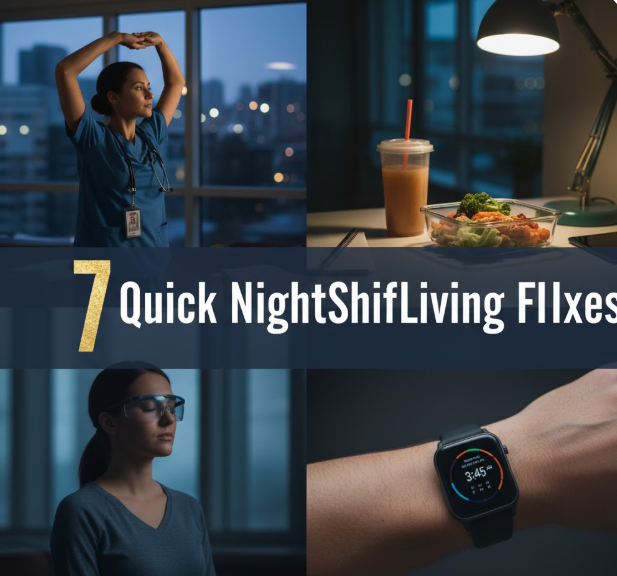
7 Quick NightShiftLiving Health Fixes for Low Energy Nights
It’s 3am. You’re four hours into your shift.
Your eyes feel heavy. Your legs feel like cement. And you’ve got hours more ahead of you before you can even consider heading home.
Sound familiar?
Feeling lethargic on overnight shifts is not only miserable — it’s hazardous. Whether you’re monitoring patients, running machinery, driving a vehicle, or overseeing a warehouse floor, running on empty puts you and everyone around you at risk.
The issue isn’t that you’re weak or lazy. The problem is biology. Your body was wired to be asleep at this hour. Fighting that requires an actual strategy — not just another cup of coffee.
That is precisely what this guide is for.
These 7 fast NightShiftLiving health fixes genuinely work whenever you begin to crash from energy during long, low nights. These aren’t vague tips. They are concrete, actionable tactics you can try tonight.
Why You Crash at Night — and Why Coffee Can’t Fix It
Before leaping to the solutions, it helps to know what’s really going on in your body.
Your circadian rhythm — your body’s internal 24-hour clock — regulates your energy levels over a 24-hour cycle. It’s hardwired to make you feel alert during the day and sleepy after dark.
When you work nights, every single shift, you’re paddling upstream against this flow.
In addition, your body releases a hormone called adenosine over the course of the day. Adenosine builds up the longer you’re awake — and the sleepier you get. That is why caffeine temporarily blocks adenosine receptors. But after the caffeine has worn off, that adenosine floods back in all at once. That’s the dreaded caffeine crash.
The effect is twofold: circadian pressure guiding you to sleep and adenosine accumulation urging you to rest. No wonder 3am feels brutal.
Night Shift Energy Loss in Numbers
| Time Into Shift | Typical Energy Level | Peak Risk Period |
|---|---|---|
| Hours 1–3 | Moderate to good | Low risk |
| Hours 4–6 | Noticeably declining | Moderate risk |
| Hours 7–9 | Significantly low | High risk |
| Hours 10–12 | At its lowest | Critical risk |
Midnight to 4am is statistically the most dangerous working window for shift workers. Mistakes, accidents, and near-misses increase during these hours. Re-establishing your energy isn’t simply about comfort — it’s about protection.
Now let’s fix it.
Fix #1 — Don’t Eat for Comfort, Eat for Energy
When energy falters, most night shift workers reach for the wrong things — snacks from a vending machine, sugary drinks, heavy fast food heated in the break room microwave.
These foods cause a rapid increase in blood sugar. But what rockets up comes crashing down. Then you crash even harder within 30–60 minutes.
This is a NightShiftLiving health error that people make and barely notice.
What to Eat During Your Shift for Sustained Energy
The goal is stable blood sugar. That means pairing slow-digesting carbs with protein and healthy fat.
Here’s a practical breakdown:
| Food Choice | Why It Works | When to Eat It |
|---|---|---|
| Hard-boiled eggs + whole grain crackers | Protein + complex carbs = slow, steady energy | Mid-shift snack |
| Greek yogurt with berries | Protein + natural sugar + antioxidants | Early in shift |
| Peanut butter on whole wheat toast | Healthy fat + protein + fiber | Pre-shift meal |
| Mixed nuts and dried fruit | Fast + slow energy combo | Energy dip snack |
| Hummus with veggie sticks | Fiber-rich, light on digestion | Late-night snack |
| Banana with almond butter | Potassium + magnesium + natural carbs | Mid-shift boost |
What to Avoid During Your Shift
- Candy and sugary energy bars
- Greasy fried food (slows digestion, causes sluggishness)
- White bread, white rice (makes blood sugar rise too quickly)
- Large meals eaten all at once (your body diverts energy to digestion)
Eat smaller amounts more frequently. Think 3–4 small fuel stops rather than one big meal during your shift.
Fix #2 — Use the Strategic Nap (Yes, Even at Work)
This one surprises a lot of people. But taking naps during your shift — when the company allows it — is one of the most potent NightShiftLiving health tools available.

In one NASA study, a 26-minute nap resulted in 34% better performance and 100% more alertness among study subjects. The military, hospitals, and aviation industries all use strategic napping protocols for precisely this reason.
You don’t need an hour. You don’t even need 30 minutes. A brief, well-timed nap can completely reset your alertness.
The Three Types of Shift Worker Naps
The Power Nap (10–20 minutes) Best for: Quick alertness boost during a break Wake-up feel: Alert and focused Avoid going over 20 minutes or you risk falling into deep sleep, which will leave you groggy
The Full Cycle Nap (90 minutes) Best for: Before a long shift starts Wake-up feel: Like a short full sleep Must have enough time — don’t attempt this on a 30-minute break
The Prophylactic Nap (before the shift) Best for: Preparing your body ahead of time When: 1–2 hours before your shift begins This “banks” some sleep prior to the long night ahead
Pro Tip: Try the “coffee nap.” Drink a small coffee, then immediately take a 20-minute nap. By the time the caffeine kicks in (about 20 minutes), you’ll wake up feeling doubly alert. It sounds odd — it works brilliantly.
Fix #3 — Get Moving to Wake Up Your Brain
Staying still for hours is a shortcut to energy breakdown.
When you don’t move for too long, your circulation slows, your muscles stiffen, and your brain receives less oxygen-rich blood. The result? You feel foggy, sluggish, and weighed down.
The fix is deceptively simple: move.
You don’t need a gym. You don’t need equipment. All it takes is getting your blood pumping for a few minutes.
Movement Fixes You Can Do Anywhere
The 5-Minute Desk Reset:
- 10 standing calf raises
- 10 shoulder rolls forward and backward
- 10 neck tilts side to side
- 30-second walk in place
- 5 deep squat holds (sit back like you’re sitting in a chair)
The Hallway Circuit:
- Brisk walk for 3–5 minutes up and down a hallway
- Take stairs instead of elevator whenever possible
- Do 10 jumping jacks in a bathroom or break room
The Stretch and Breathe:
- Stand, reach arms overhead, hold for 5 seconds
- Fold forward, let arms hang, breathe deeply
- Stand and gently twist left and right 10 times
Even 2–3 minutes of movement every hour has been shown to make a measurable difference in alertness and energy throughout your shift.
This is one of the most underappreciated NightShiftLiving health fixes — and it costs absolutely nothing.
Fix #4 — Drink Water Like Your Energy Depends on It (Because It Does)
Dehydration is one of the sneakiest causes of night shift fatigue.
Most people don’t feel dramatically thirsty on night shifts. But your body loses water through breathing, movement, and even the dry air of most workplaces. By the time you feel thirsty, you’re already mildly dehydrated.

And even mild dehydration — as little as 1–2% of your body weight in fluid loss — can cause:
- Fatigue and low energy
- Difficulty concentrating
- Headaches
- Irritability
- Slowed reaction time
These are precisely the symptoms that people attribute to night shift work. Often they are really dehydration in disguise.
How Much Water to Drink During Your Shift
A simple rule: aim for 8–10 ounces of water every hour during your shift. That adds up to roughly one standard water bottle every two hours.
| Shift Length | Minimum Water Target |
|---|---|
| 8-hour shift | 64–80 oz (8–10 cups) |
| 10-hour shift | 80–100 oz (10–12 cups) |
| 12-hour shift | 96–120 oz (12–15 cups) |
Hydration Tips That Actually Work at Night
- Always keep a large water bottle at your workstation
- Add a slice of lemon or cucumber if plain water feels boring
- Set a phone reminder every hour to take a few big sips
- Herbal teas (caffeine-free) count toward your fluid intake
- Avoid drinking large amounts right before bed — it disrupts sleep
According to the Centers for Disease Control and Prevention (CDC), drinking enough water each day is crucial for regulating body temperature, keeping joints lubricated, and maintaining energy — all critical factors for night shift workers.
Staying hydrated is the simplest NightShiftLiving health fix on this list. Yet it’s the one most workers overlook night after night.
Fix #5 — Control Your Light Environment Like a Pro
Light is the most powerful signal your body uses to set energy levels.
Bright, blue-toned light tells your brain: it’s daytime, stay alert. Dim, warm-toned light tells your brain: it’s evening, time to wind down.
Most night shift workers endure fluorescent overhead lighting that’s not ideal for either alertness or post-shift wind-down. They commute home in the rising sun, soaking in morning light that tells their body to stay awake. Then they wonder why they can’t sleep — or why they felt brain-fogged all night.
Controlling your light environment strategically is one of the most powerful NightShiftLiving health moves you can make.
Light Management Through Your Shift Cycle
During your shift — maximize alertness:
- Sit near bright light sources when possible
- Use a light therapy lamp (10,000 lux) during breaks, especially in the first half of your shift
- Avoid dimly lit break rooms if you need to stay sharp
- Splash cold water on your face under bright bathroom lighting — the combined effect is a quick alertness boost
As your shift winds down — start the switch:
- Put on blue light blocking glasses in the last 1–2 hours of your shift
- Dim your phone screen brightness on your break
- Avoid bright overhead lights in the locker room
Commuting home — protect your sleep:
- Wear wraparound sunglasses on the way home
- Use window shades or tinted windows in your vehicle if available
- Even on cloudy days, morning light is intense enough to suppress melatonin
At home — continue the wind-down:
- Switch to amber or red-toned bulbs in your bedroom
- Use blackout curtains to block all outside light
- Keep screen use minimal after arriving home
This full-cycle light management approach works with your biology instead of against it, keeping you more alert during your shift and more ready to sleep when you’re done.
Fix #6 — Build a Pre-Shift Energy Ritual
Most night shift workers simply wake up, maybe grab some food, and head out the door. They arrive at work already running low.
A pre-shift ritual changes that. It’s a short, repeatable routine that primes your body and brain for peak performance before you even clock in.
Think of it like a warm-up for an athlete. You wouldn’t run a race without stretching first. So why start a 12-hour shift cold?
A Simple 45-Minute Pre-Shift Energy Ritual
60–90 minutes before leaving:
- Eat a balanced, medium-sized meal (protein + complex carbs + healthy fat)
- Avoid anything heavy, greasy, or oversized
- Take any supplements your doctor has approved (vitamin D and magnesium are commonly low in shift workers)
30–45 minutes before leaving:
- Take a cool-to-warm shower — this gently raises alertness
- Do 5–10 minutes of light exercise (stretching, a brisk walk, yoga)
- Get exposed to bright light for 10–15 minutes — natural sunlight if available, a light therapy lamp otherwise
15 minutes before leaving:
- Mentally review your shift — what are the key tasks? Any challenges to prepare for?
- Pack your water bottle, healthy snacks, and any gear you need
- Avoid stressful news, social media arguments, or anything that spikes anxiety before you leave
This ritual signals to your brain that performance time is approaching. Done consistently, it begins to work like a trigger — your body learns that this sequence means it’s time to fire up.
Fix #7 — Manage Your Stress Before It Manages You
This one is easy to overlook when you’re focused on physical energy fixes. But stress is one of the biggest energy drains night shift workers face.
Night shift work comes with its own unique set of stressors. You are socially out of sync with friends and family. You miss events. You feel guilty sleeping while others are active. You worry about your health. And on top of all that, you’re doing demanding work in the dead of night.
Chronic stress keeps your body in a low-grade “fight or flight” state. This burns energy reserves without you doing anything physically demanding. It’s like leaving your car engine running in the driveway — burning fuel while going nowhere.
Fast Stress-Relief Tools for Night Shift Workers
Box Breathing (4–4–4–4): Breathe in for 4 counts. Hold for 4. Out for 4. Hold for 4. Repeat 4–6 times. This directly activates your parasympathetic nervous system — the “rest and digest” mode — which lowers stress hormones fast.
The 5-Minute Mental Offload: During a break, write down everything on your mind — work worries, personal tasks, things you forgot to do. Once it’s on paper, your brain stops trying to “hold” it all. This simple technique measurably reduces mental fatigue.
Micro-Connection Moments: Loneliness and isolation are real stressors for NightShiftLiving workers. Even a 2-minute text check-in with a friend or family member during your break can significantly reduce the feeling of disconnection.
The Physical Reset: Cold water on the face and wrists. A few slow, deep breaths in fresh air. These simple acts trigger both the dive reflex and the relaxation response — dropping your heart rate and stress level within seconds.
How Stress Affects Night Shift Energy
| Stress Level | Energy Impact | Performance Impact |
|---|---|---|
| Low | Minimal energy drain | Sharp, focused |
| Moderate | Noticeable fatigue by mid-shift | Some errors, slower reactions |
| High | Significant energy crash | High error rate, burnout risk |
| Chronic | Exhaustion even after rest | Serious health consequences |
Managing stress isn’t a soft skill. For NightShiftLiving workers, it’s a performance necessity.
How All 7 Fixes Stack Together
Each of these fixes works on its own. But when you combine them, the effect multiplies.
Here’s how they connect:
Eating for stable energy keeps your blood sugar level, so crashes aren’t as severe. Strategic napping resets your alertness mid-shift. Moving keeps circulation flowing and delivers oxygen to your brain. Hydration removes one of the most common hidden causes of fatigue. Light management works with your biology to keep you alert when you need to be. Pre-shift rituals ensure you arrive at work already primed. Stress management prevents energy from being silently drained all night.
Stack all seven, and you’re not just getting through your shift. You’re actually performing at a real level — even at 3am.
Your NightShiftLiving Energy Action Plan
Use this as a quick-start guide:
| When | Action |
|---|---|
| 90 min before shift | Eat a balanced meal |
| 60 min before shift | Light exercise + bright light exposure |
| 30 min before shift | Pack snacks + water bottle + review shift plan |
| Start of shift | Hydration begins, bright light environment |
| Every hour | Sip water, brief movement break |
| Mid-shift dip | Power nap (if possible) OR coffee nap |
| Late-shift energy drop | Box breathing + cold water face reset |
| Final 90 min of shift | Blue light glasses on, light snack if needed |
| Post-shift commute | Sunglasses on, avoid stimulating content |
Print this out. Keep it somewhere visible. Build these habits one at a time until they’re automatic.
FAQs About NightShiftLiving Health and Low Energy
Q: Why do I feel exhausted every single night shift? While feeling a bit tired on nights is common, feeling completely exhausted every shift is a sign that your body isn’t recovering properly between shifts. Applying the fixes in this article — especially improvements to sleep quality, nutrition, and hydration — should significantly reduce that baseline exhaustion over time.
Q: Can vitamins or supplements help with night shift energy? Some supplements can help. Vitamin D is commonly deficient in shift workers who sleep during daylight hours. Magnesium supports energy metabolism and sleep quality. B vitamins support nerve function and energy. Always consult your doctor before starting any supplement. Supplements support good habits — they are not a substitute for them.
Q: How do I stop relying so heavily on caffeine during my shift? Start by auditing how much caffeine you’re currently consuming and when. Then begin replacing some of it with strategic naps, movement breaks, and better hydration. Reduce caffeine gradually rather than cutting it out suddenly. The goal isn’t zero caffeine — it’s using it strategically rather than desperately.
Q: What’s the best food to eat at 3am when energy is at its lowest? Something small and balanced. A banana with peanut butter, a small handful of nuts with some dried fruit, or Greek yogurt with berries. These combinations provide fast, natural energy without the blood sugar crash. Avoid anything heavy, fried, or high in refined sugar at this hour.
Q: How long does it take to see results from these energy fixes? Some fixes — like hydration, movement, and the coffee nap — work within minutes to hours. Others — like pre-shift rituals and light management — show their full effect after 1–2 weeks of consistent practice. Most people notice a meaningful difference within 3–5 days of applying several of these fixes together.
Q: Is night shift work permanently damaging to my health? Long-term night shift work does carry health risks if not properly managed. However, many of those risks are significantly reduced with good sleep hygiene, proper nutrition, regular exercise, and stress management — which is exactly what the NightShiftLiving approach is designed to address. Regular health checkups are also strongly recommended for long-term shift workers.
Q: My workplace doesn’t allow napping during breaks. What should I do? Focus on the other fixes — movement, hydration, nutrition, and light management. Use your breaks for brief walks and bright light exposure instead of napping. If napping is culturally discouraged but not formally banned, a quiet closed-eye rest — even without true sleep — during a break still provides some cognitive restoration.
The Last Word
Low energy nights don’t have to define your shift work experience.
Yes, night shift work is hard on the body. Yes, biology is working against you after midnight. But you’re not powerless against it. Not even close.
Every fix in this guide gives you a real tool — something to reach for tonight when the shift gets heavy and the clock seems to slow down. You don’t need all seven working perfectly from day one. Start with two or three. Build the habit. Add more over time.
The NightShiftLiving approach isn’t about white-knuckling through exhaustion. It’s about working smarter with your body — fueling it properly, moving it regularly, shielding it from unnecessary stress, and giving it the signals it needs to keep going strong.
You chose a demanding schedule. You show up when most people are asleep. You deserve to feel as good as possible while you do it.
Related Post
8 Smart NightShiftLiving Health Strategies for Those Long Shifts
Long shifts present a different sort of challenge. It's not just being tired. It's 10,…