9 Smart Sleep Tricks Doctors Use to Help NightShiftLiving
>> Sleep NightShiftLiving>> 9 Smart Sleep Tricks Doctors Use to Help NightShiftLiving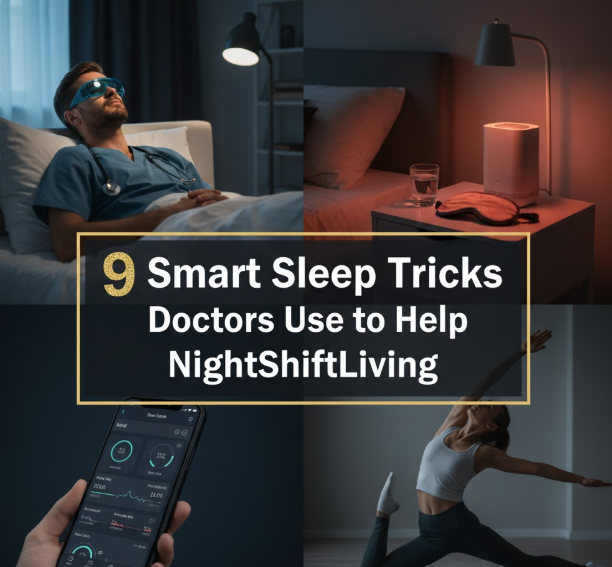
9 Smart Sleep Tricks Doctors Use to Help NightShiftLiving
It’s hard enough on the body working the night shift. When the sun is up, your brain is wired to be awake. So you come home at 7 a.m. and try to sleep, but your body fights back every minute of the way.
That is the central challenge of NightShiftLiving — and millions of nurses, factory workers, security guards, truckers, and emergency responders confront it every single day.
The good news? This problem has been studied by doctors and sleep researchers for decades. They know exactly why workers who skip the sunshine struggle to catch Zs — and they have helpful, science-backed tricks that actually work.
Here are 9 of the most brilliant NightShiftLiving sleep hacks a doctor will ever actually give you. These aren’t hunches or old wives’ tales. They’re grounded in how your body clock, hormones, and brain chemistry really work.
So let’s go through them, one at a time.
The Challenge of Night Shift Sleep (And Why It’s Important)
Before we get into the tricks, it’s important to understand the issue.
Your entire body runs on a circadian rhythm — a 24-hour internal clock that lets you know when it’s time to be awake and when it’s time to sleep. Light is the primary signal that resets this clock. As soon as your eyes register a hint of sunlight, your brain switches off melatonin (the sleep hormone) and turns on cortisol (the wake-up hormone).
Night shift workers defy this natural cycle every day. They sleep when the sun says it’s time to wake up, and they work when the body tells them to rest. Over time, this misalignment — known as circadian disruption — triggers serious consequences:
- Chronic fatigue
- Poor concentration and memory
- Higher risk of heart disease and diabetes
- A weakened immune system
- Increased anxiety and depressive symptoms
To put this in perspective, here’s a quick comparison:
| Factor | Day Shift Workers | Night Shift Workers |
|---|---|---|
| Average sleep duration | 7–8 hours | 5–6 hours |
| Sleep quality | Higher | Lower |
| Melatonin production timing | Evening | Morning (disrupted) |
| Risk of metabolic disorders | Baseline | 40–60% higher |
| Work-related accident risk | Baseline | Up to 2x higher |
The stakes are real. And that’s why achieving quality NightShiftLiving sleep is not simply about waking bright-eyed and bushy-tailed — it’s also about protecting your long-term health.
TRICK #1
Anchor Your Sleep Time
One of the most effective things you can do is choose a set sleep time and consistently adhere to it — even on your off days.

This sounds simple, but virtually all shift workers make one killer error: they attempt to “catch up” on weekends by flipping back to a normal-day schedule. That constant switching back and forth is the quickest way to destroy your body clock.
Why Consistency Is Everything
Your circadian rhythm is like a stubborn employee. It hates change. The more you maintain the same sleep and wake times, the quicker it adjusts.
Dr. Charles Czeisler of Harvard Medical School has long pointed out that consistency in sleep timing is one of the strongest predictors of how effectively shift workers sleep. Your body learns, “We fall asleep at 8 a.m. every day” — and it prepares accordingly by lowering your core temperature, slowing your digestion, and releasing melatonin just on time.
What to do:
- Choose a sleep window that aligns with your shift (for instance, 8 a.m. to 4 p.m.)
- Keep it consistent 7 days a week
- If you have to shift on days off, only shift by 1–2 hours
TRICK #2
Create a Citadel of Darkness
Your bedroom has to turn into a cave. No exceptions.
The number one enemy of sleeping during the day? Sunlight coming through sheer curtains. Even small amounts of light hitting your eyes can inhibit melatonin production and tell your brain to wake up.
The Light-Blocking Toolkit
Sleep experts recommend a multi-layered strategy for keeping out light:
- Blackout curtains or blinds — These are essential. Standard curtains allow too much light in.
- Sleep mask — Provides an extra layer of coverage, and is great for naps or while traveling.
- Door gap cover — Light from hallways seeps under doors. A towel or a door draft stopper solves this.
The science here is clear. A 2019 study published in the Journal of Biological Rhythms found that even low ambient light levels during sleep seriously disrupted melatonin levels and next-shift alertness in night shift nurses.
Your body does not care that it is 9 a.m. outside. If it’s dark in the room, it thinks it’s midnight.
TRICK #3
Be Smart About Caffeine
Caffeine is a night worker’s best friend during a long shift. But it can be your worst enemy when not timed properly.
The problem is: caffeine has a half-life of around 5–7 hours. That means if you drink a cup of coffee at 5 a.m. (one hour before your shift ends at 6 a.m.), half of that caffeine remains in your bloodstream by noon — right when you’re trying to sleep.
The 6-Hour Cutoff Rule
Most sleep doctors suggest cutting off all caffeine at least 6 hours before your intended bedtime. If you are going to sleep at 8 a.m., your last coffee should be no later than 2 a.m.
| Caffeine Source | Approximate Caffeine (mg) | Time to Avoid Before Sleep |
|---|---|---|
| Espresso (1 shot) | 63 mg | 5–6 hours |
| Drip coffee (8 oz) | 95 mg | 6–7 hours |
| Energy drink (16 oz) | 150–200 mg | 8+ hours |
| Black tea (8 oz) | 47 mg | 4–5 hours |
| Dark chocolate (1 oz) | 12 mg | 2–3 hours |
Be careful also of hidden caffeine in sodas, pre-workout drinks, and some headache medications.
TRICK #4
Have a Wind-Down Ritual
Your brain requires a cue that sleep is approaching. Without that signal, it continues to run at full speed even when your body is running out of steam.
A wind-down routine is a series of relaxing activities you do in the 30–60 minutes before sleep. This gives a consistent signal to your nervous system: It’s time to power down.
What a Good Wind-Down Looks Like
- Dim the lights right when you get home
- Avoid screens (or wear blue-light-blocking glasses)
- Take a warm shower — the body temperature drop afterward triggers sleepiness
- Do light stretching or breathing exercises
- Read a physical book (not on a tablet)
The key is repetition. If you do the same thing every day, your brain begins to connect those activities with falling asleep. Soon, merely initiating the routine may make you feel drowsy.
Many night shift nurses found that their greatest NightShiftLiving breakthrough didn’t come from sleep aids or supplements — but from a consistent 30-minute wind-down that they protected fiercely.
TRICK #5
Shut Out the World Around You
Daytime is noisy. Lawn mowers, garbage trucks, children playing outdoors, neighbors chatting — all compete with your sleep.
The trouble is, your mind never really shuts down. It continues to monitor your environment for threats, even while you’re sleeping. A sudden loud sound can rouse you from deep sleep, bringing you back into lighter stages and preventing the rejuvenating rest your body craves.
Your Noise-Fighting Options
White noise machines are among the most doctor-recommended tools for shift workers. They produce a consistent, neutral sound that dampens random noise spikes. Your brain has nothing to respond to because the background “level” remains stable.
Other options:
- Foam earplugs (very effective but can be less comfortable for extended periods)
- Over-ear sleep headphones with white noise or nature sounds
- A fan (the hum creates the same masking effect)
- A “Do Not Disturb” sign on your door stating the hours you sleep
If you live with family or roommates, have a direct conversation about your sleep schedule. Post a simple note: “I work nights. Please keep noise low between 8 a.m. and 4 p.m.” Most people will respect it when it’s made clear.
TRICK #6
Use the Power Nap Before Your Shift
A well-timed nap is one of the most underused tools in the NightShiftLiving playbook.
Research from NASA and the U.S. military has found that a 20-minute nap can revitalize alertness as much as a full cup of coffee — without the caffeine crash. The best timing for night shift workers is about 1–2 hours before the start of your shift.
Nap Length Matters a Lot
| Nap Duration | What Happens | Effect on Alertness |
|---|---|---|
| 10–20 minutes | Light sleep only | Sharp boost in alertness |
| 30 minutes | Entering deeper sleep | Grogginess (sleep inertia) on waking |
| 60 minutes | Deep NREM sleep | Memory improvement, some grogginess |
| 90 minutes | Full sleep cycle | Maximum benefit, minimal grogginess |
The danger zone is 30–45 minutes. That’s when you’re most likely to wake up feeling worse than before — groggy and disoriented. Stick to 20 minutes, or commit to the full 90.
Set a firm alarm. Use an eye mask. Keep the room dark. And avoid napping too close to your primary sleep window — it’ll make falling asleep harder.
TRICK #7
Time Your Meals Like a Sleep Pro
Food has a direct relationship with your body clock. What you eat — and when you eat it — can either enhance or undermine your sleep quality.
Meals loaded with fat take a long time to digest. When your digestive system is being worked hard, your body temperature stays elevated, your heart rate fails to drop, and sleep becomes light and fragmented.
The NightShiftLiving Meal Timing Strategy
- Before sleep: Something light — yogurt, oatmeal, a banana, or a small turkey sandwich. These are easier to digest and won’t spike your blood sugar.
- Throughout your shift: Moderate, balanced meals. Nothing too heavy in the small hours.
- Avoid: Fast food, fried foods, or a heavy meal within 2–3 hours of bedtime.
Some research also suggests that cherries and kiwi fruit have natural melatonin and serotonin precursors. A small study published in the European Journal of Nutrition found that consuming two kiwi fruits one hour before sleep improved sleep onset and duration.
Staying hydrated matters too. Dehydration makes it harder to sleep well, but drinking too much right before bed leads to bathroom trips in the night (or during the day). Find the balance.
TRICK #8
Manage Your Light Exposure Like a Scientist
Light is your strongest ally in resetting your body’s biological clock — and most night shift workers never use it strategically.
Here’s the science: bright light suppresses melatonin and increases alertness. Dim light does the opposite. By controlling when you get bright light and when you avoid it, you can actually train your circadian rhythm to align with your schedule.
A Light Exposure Plan for Night Workers
During your shift:
- Seek out bright, cool-toned light (or use a bright light therapy lamp)
- This keeps you alert and reinforces the “this is my wake time” signal
On the way home after your shift:
- Wear amber-tinted or blue-light-blocking glasses outdoors
- Avoid direct sunlight on your face
- Keep your car visor down and sunglasses on
This is critical: morning light hitting your eyes on the commute home can push your body clock back by hours — making it much harder to fall asleep when you arrive.
Before and during sleep:
- Eliminate all light sources (see Trick #2)
- Avoid bright phone or TV screens in the 30 minutes before sleep
This light management strategy is one of the most consistently recommended tools in chronobiology research for night shift adaptation.
TRICK #9
Protect Your Sleep Like It’s Your Job
Shift workers often feel guilty about sleeping during the day. They answer phone calls. They agree to afternoon plans. They wake up early for family matters. And then they work their next 12-hour shift on 4 hours of sleep.
Here’s the mindset shift: your daytime sleep is as valuable as any night shift worker’s nighttime sleep. It deserves the same protection.
How to Defend Your Sleep Hours
- Tell family and close friends your sleep schedule in advance
- Silence your phone (not just vibrate — silence it entirely, or set “Do Not Disturb” mode with exceptions for true emergencies only)
- Set up an auto-reply on your messaging apps for your sleep hours
- Post a simple note on your front door for deliveries and visitors
- Talk to your employer about shift scheduling that allows room for recovery time
It’s also a good idea to talk to your doctor if you’re consistently getting fewer than 6 hours of sleep. They can evaluate you for Shift Work Sleep Disorder (SWSD) — a recognized clinical condition that may respond to melatonin supplementation, light therapy protocols, or in some cases, short-term prescription sleep aids.
Putting It All Together: A Sample Night Shift Sleep Schedule
Here’s how these 9 NightShiftLiving tricks might look in a real-world daily routine:
| Time | Action | Trick Applied |
|---|---|---|
| 5:00 a.m. | Put on amber glasses for the commute home | Trick #8 |
| 6:00 a.m. | Begin wind-down routine (shower, dim lights, no screens) | Trick #4 |
| 6:30 a.m. | Light breakfast (oatmeal or banana) | Trick #7 |
| 7:00 a.m. | Bedroom: blackout curtains, white noise on, phone silenced | Tricks #2, #5, #9 |
| 7:30 a.m. | Sleep begins | Tricks #1, #3 |
| 3:30 p.m. | Wake up (consistent anchor time) | Trick #1 |
| 4:30 p.m. | 20-minute power nap | Trick #6 |
| 6:00 p.m. | Light, moderate dinner — coffee allowed | Tricks #7, #3 |
| 7:00 p.m. | Bright light exposure begins (shift or lamp) | Trick #8 |
You don’t have to use all 9 tricks right away. Pick 2 or 3 — anchor sleep time, blackout curtains, and caffeine cutoff are the highest-impact starting points. As these become habits, add more.
Sleep Mistakes to Avoid When NightShiftLiving
Even the most well-intentioned shift workers fall into these traps:
- Flipping to a day schedule on days off — This is the biggest mistake. It reverses all the circadian adaptation you’ve built during work nights.
- Using alcohol as a sleep aid — While alcohol does make you fall asleep faster, it greatly compromises sleep quality and REM sleep. You’ll wake up feeling unrefreshed.
- Scrolling your phone in bed — The blue light from screens mimics daylight and suppresses melatonin. As little as 10 minutes of scrolling can push sleep back by 30–60 minutes.
- Skipping the wind-down — Transitioning directly from a stressful shift to bed just doesn’t work. Your nervous system requires time to shift from “fight or flight” to “rest and digest.”
- Expecting overnight results — Adapting your circadian rhythm takes time. Give these strategies at least 2–4 weeks before judging whether they’re working.
FAQs About NightShiftLiving Sleep
Q: What is the actual number of hours that night shift workers need to sleep?
A: Just like anyone else — 7 to 9 hours for most adults. The difficulty is establishing the right conditions for that sleep to occur during the day.
Q: Are melatonin supplements helpful for night shift workers?
A: Yes, but timing matters. Taking melatonin about 30 minutes before your intended sleep time (not at a random time) can help create a stronger association with your daytime sleep window. Always consult your doctor before taking any supplement.
Q: Is working night shifts bad for your health in the long run?
A: It has indeed been shown that chronic shift work carries increased risks of cardiovascular disease, metabolic syndrome, and some cancers. But many of these risks are linked to poor sleep quality — precisely what good NightShiftLiving practices are designed to correct.
Q: What if I can’t fall asleep after working a night shift even when I’m exhausted?
A: This is usually due to cortisol still being elevated, too much light exposure on the commute home, or not having an appropriate wind-down. Begin with the amber glasses trick, extend your wind-down routine to 45 minutes, and keep the room pitch dark. If the issue continues beyond a few weeks, consult a sleep specialist.
Q: Can exercise help people who work nights sleep better?
A: Yes — but timing matters. Exercising within 2–3 hours of your sleep window can be too stimulating and make it harder to fall asleep. For best results, exercise right after waking up — in the afternoon or early evening for night shift workers.
Q: Do these NightShiftLiving sleep tricks also work for rotating shift workers?
A: Rotating shifts are more difficult than fixed night shifts because you can’t pin down your sleep time consistently. Light management (Trick #8), pre-shift napping (Trick #6), and the wind-down routine (Trick #4) are the most important for rotating workers.
Q: How long does it take to fully adjust to night shift work?
A: Full circadian rhythm adaptation to a permanent night shift schedule can take several weeks to months. With consistent habits, partial adaptation generally occurs within 1–2 weeks.
Related Post

9 Sleepless Sleep Tactics for Defeating Fatigue Forever — Smart Strategies for NightShiftLiving
While a good chunk of the world is sleeping, you're clocking in. And when the…