
10 Effective Sleep Tips For NightShiftLiving That Really Work
>> Sleep NightShiftLiving>> 10 Effective Sleep Tips For NightShiftLiving That Really Work
10 Effective Sleep Tips For NightShiftLiving That Really Work
NightShiftLiving — sleep tips for a complete mindset shift. Here are 10 powerful, evidence-based strategies for finally getting that quality, deep sleep during the day.
The strain of working the night shift is hard on your body. Your brain is designed to use sleep time when it’s dark and wake time in the sun. So when your job turns that schedule on its head, sleep becomes an actual struggle.
If you have found yourself lying wide awake at 10 a.m. with your neighbors mowing the lawn — or waking up groggy after only four hours of sleep — then you are not alone. It’s a dilemma that millions of shift workers face every day.
The good news? With these NightShiftLiving sleep tips, you can train your body to slumber soundly during the day. It requires some effort and consistency, but it works. Better sleep means better health, better focus, and a better life — even with a night schedule.
Here are 10 sleep tips that night shift workers really use and swear by.
Just Why Shift Sleep Is So Damn Hard
Understand the problem before jumping to tips.
Your body runs according to a built-in clock known as the circadian rhythm. It runs on a roughly 24-hour schedule and is guided by light and darkness. When morning light enters your eyes, it signals to the brain that it’s time to be awake and alert. When darkness falls, your brain secretes a hormone called melatonin — the “sleep signal.”
Night owls have to sleep against this system. You are trying to sleep when melatonin is at its lowest and cortisol (the alert hormone) is on the rise. Throw in daytime noise, light seeping under the curtains, and a family that isn’t aware of your schedule — and it’s a recipe for constant sleep deprivation.
According to sleep research, shift workers tend to be at higher risk for insomnia, heart disease, and depression — as well as actually gaining weight — largely because of poor sleep quality. The right habits, however, can make a world of difference.
Tip 1: Make Your Sleeping Quarters a Blackout Zone
Light is public enemy No. 1 when it comes to daytime sleep.
Even low light cutting through your eyelids can suppress melatonin production and tell your brain to remain alert. This is why blocking out every last bit of light before you sleep is one of the most vital NightShiftLiving sleep tips.
What actually works:
Blackout curtains — These are absolutely non-negotiable. Regular curtains let in light. Blackout curtains don’t. Install them on each window in your bedroom.
Sleep mask — A blackout curtain may leave a small strip of light along the edges. A sleep mask eliminates that. Select one that does not rest on your eyelids.
Door gaps — Light spills in behind bedroom doors, too. A simple draft stopper or rolled-up towel will fix this.
LED lights — Switch off or cover any device with a glowing LED — routers, chargers, alarm clocks. Even these dim lights can disrupt deep sleep.
Darken your room to the point where, when you are in it, you truly cannot see your hand in front of your face. That’s the goal.
Tip 2: Create a Sleep Schedule and Protect It Like Your Job
Sleep is all about consistency.
Your circadian rhythm is influenced by patterns. If your sleep times vary from day to day, your body has no idea when you’re going to be asleep and needs to release melatonin. However, if you go to bed and get up at the same time every day — including your days off — your internal clock will gradually begin to shift.
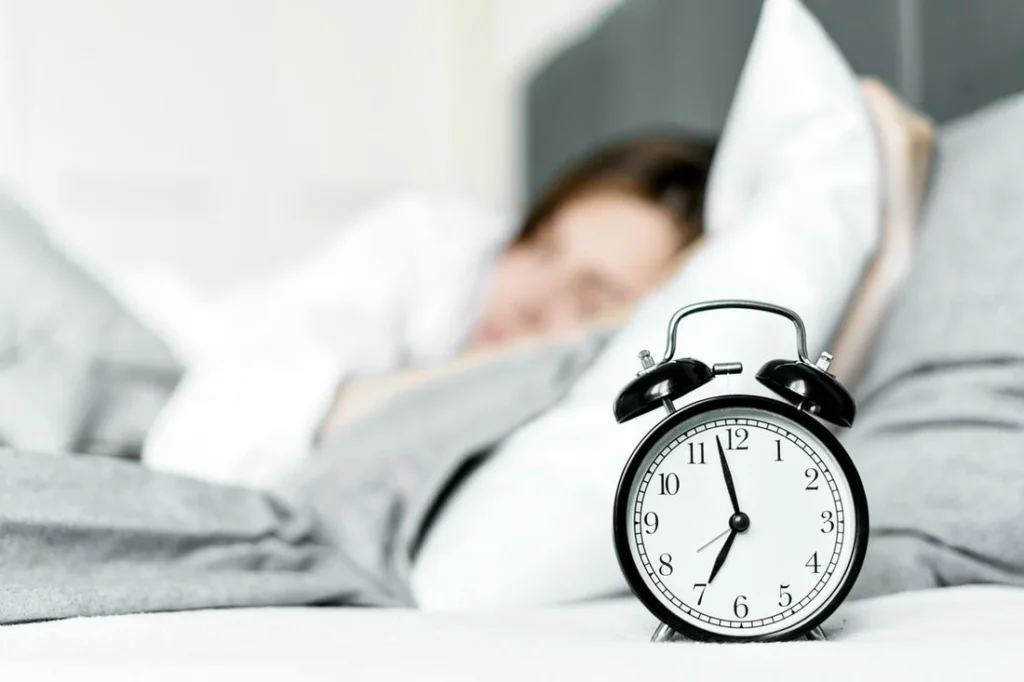
This is one of the toughest NightShiftLiving sleep tips to adhere to, but it pays dividends faster than anything else.
How to build your schedule:
- Choose a specific hour to go to sleep every night after a shift. Maintain that time even during weekends.
- If you cannot get to sleep on your days off at your “night shift bedtime,” do not attempt a full 8-hour reversal flip back to sleeping at nighttime — aim for a compromise time instead.
- Use an alarm for waking up too. Not just for falling asleep. Waking up at a consistent hour anchors your rhythm just as well.
It takes a couple of weeks of doing the same thing for your body to start accommodating. Don’t give up before then.
Tip 3: Sleep in a Cold Bedroom — Colder Than You Think
One of the most underrated sleep hacks at your disposal is temperature.
When you go to sleep, your core body temperature naturally drops. A cooler space assists in getting that process moving quickly. Research consistently shows that around 60–67°F (15–19°C) is the best bedroom temperature for sleep.
This is actually a plus for day sleepers — summer mornings are warm, and controlling your room temperature becomes even more critical.
How to do it:
- Program your AC or thermostat to the low-to-mid 60s Fahrenheit before you go to sleep.
- If you lack AC, point a fan at your body. It creates a chilling effect by blowing air.
- Go for sheets in a breathable fabric — cotton or bamboo. Steer clear of synthetic materials that hold heat.
- If your partner’s heat preferences differ, consider a dual-zone blanket or a cooling mattress pad.
Don’t underestimate this one. Many people can dramatically improve their sleep simply by lowering the thermostat a few degrees.
Tip 4: Curb Caffeine at the Right Time
For a night shift worker, caffeine is what the doctor ordered during a shift — and it is the worst enemy when it comes to sleep.
This poses a problem because caffeine has a half-life of around five to six hours. That means if you drink a coffee at 4 a.m., half of that caffeine lingers in your system at 10 a.m. when you want to sleep. Which is why strategically timing your caffeine consumption is a key NightShiftLiving sleep tip.
The rule of thumb:
- Cut out all caffeine at least 6 hours prior to your desired sleep window. If you go to bed at 8 a.m., your last coffee should be at 2 a.m. at the latest.
- Beware of hidden caffeine in sodas, energy drinks, pre-workout drinks, and even some teas.
- If you’re looking for a pick-me-up toward the end of your shift, try taking a short walk, drinking cold water, or having a caffeine-free herbal tea instead.
Some people are more sensitive to caffeine than others. If you’re not sleeping well, consider pushing your cutoff even earlier — to 7 or 8 hours before sleep.
Tip 5: Silence the World Outside With Sound
You can darken the light, but you can’t mute the neighborhood.
Dogs barking, garbage trucks, lawnmowers, children playing, traffic — daytime is raucous. And unlike nighttime, when most of the world goes quiet, there’s very little you can do to control your acoustic environment.
That’s where white noise and sound masking can help. This is one of the most pragmatic NightShiftLiving sleep tips, and it works fast.
Your sound options:
| Sound type | Best for | Example tools |
|---|---|---|
| White noise | General masking | White noise machine, fan |
| Pink noise | Deeper sleep and relaxation | Apps, YouTube playlists |
| Brown noise | Heavy masking and focus | Apps, speaker setups |
| Earplugs | Maximum silence | Foam earplugs (NRR 30+) |
For most people, a regular box fan on medium speed is surprisingly effective. It’s cheap, cools a room somewhat, and provides an even hum that drowns out irregular sounds.
If you share a home, a white noise machine outside your door can also help cut down on sounds from other rooms.
Tip 6: Eat Wisely Before Sleeping
What you eat — and when you eat it — can influence how quickly, and how deeply, you fall asleep.
Chowing down on a big meal immediately before bed puts your digestive system to work while you attempt to rest. This increases your core body temperature, which is the opposite of what you want for deep sleep.
What to eat (and avoid) before sleeping:
Eat these:
- Lean proteins like turkey, eggs, or cottage cheese — these contain tryptophan, which promotes melatonin production
- Complex carbs in modest portions — oatmeal, whole grain crackers
- Herbal teas such as chamomile or valerian root
Avoid these:
- Greasy or spicy foods (lead to acid reflux while lying down)
- Alcohol (though it can help you fall asleep more quickly, it disrupts REM sleep)
- Large meals within two hours of going to bed
- High-sugar snacks (they cause blood sugar spikes that wake you up)
A small, balanced snack roughly 30–45 minutes before sleep is perfectly fine and may even help — but a big meal will hinder your efforts.
Tip 7: Power Down Screens Before Bed
You might already know this one — but do you really do it?
Blue light from phones, tablets, TVs, and computers mimics daylight and signals your brain to remain awake. This suppresses melatonin release and makes it more difficult to fall asleep. For night shift workers who are already battling a rebellious internal clock, adding blue light exposure right before sleep is a major problem.
This NightShiftLiving sleep tip is one of the hardest to follow, but it is well worth it. According to the National Sleep Foundation, blue light exposure in the hours before bed is one of the leading causes of delayed sleep onset.
How to manage screen exposure:
- Stop using screens at least 30 minutes before sleep — 60 minutes is even better.
- If you can’t avoid your phone, put it on night mode or wear blue light-blocking glasses.
- Leave your phone in another room, or face it down so that notifications don’t illuminate your room.
- If you enjoy winding down with TV, try doing so in another room and walking to bed when you start feeling drowsy.
Swap screen time for a physical book (not an e-reader), stretching, journaling, or any activity that doesn’t involve a glowing display.
Tip 8: Communicate With the People in Your Life
One of the most overlooked NightShiftLiving sleep tips has nothing to do with gear or science — it has to do with communication.
If the people in your home don’t know when you’re supposed to be sleeping, they will wake you up unintentionally. A phone call from a well-meaning parent, a roommate blasting the blender at noon, a delivery person ringing the doorbell — these all wreak havoc on sleep cycles.
How to shield your sleep from others:
- Let everyone in your household know explicitly what times you need to be sleeping — and what that means for noise levels.
- Hang a sign on your bedroom door. Something like “Day Sleeper — Do Not Disturb Until [Time]” goes a long way.
- Put your phone on Do Not Disturb during your sleep window. Restrict allowed callers to emergency contacts only.
- Inquire with neighbors politely about regular noisy activities (lawn mowing, power tools). Most people are surprisingly flexible when they understand the situation.
- If you live in a building with regular daytime maintenance, talk to your building manager.
Building a support network around your sleep schedule pays off more than most people expect.
Tip 9: Develop a Wind-Down Ritual That Prepares You for Sleep
Your brain and body do not just turn off immediately. They need a runway.
A wind-down ritual is a specific series of soothing activities you engage in every day before bed. Eventually, your brain associates these actions with falling asleep — it’s almost a Pavlovian trigger. When you initiate the routine, your nervous system anticipates it and starts to slow down.
This is a powerful NightShiftLiving sleep tip for those who have trouble switching off after a long shift.
Building your ritual (30 minutes):
- Get out of your work clothes — this signals mentally that your shift is over
- Take a warm shower — the body cool-down after a shower simulates the natural pre-sleep temperature drop
- Do light stretching or breathing exercises — even 5 minutes cuts cortisol
- Read a physical book or write in a journal — no screens, minimal stimulation
- Get into bed in your dark, cool room — no scrolling, no TV
The key is consistency. Same ritual, every single day. Your brain will catch on sooner than you think.
Tip 10: Use Melatonin Properly
Melatonin supplements are popular — but most people take them incorrectly.
Melatonin is not a sleeping pill. It doesn’t knock you out. What it does is send a signal to your brain that it’s “nighttime,” which helps shift your circadian rhythm. For night shift workers, it can really come in handy — if done right.
How to use melatonin the right way:
- Timing matters more than dose. Take melatonin 30–60 minutes before you want to feel sleepy, not as soon as you get into bed.
- Use the lowest effective dose. The vast majority of people take far too much. Start with 0.5mg to 1mg. More is not better — high doses (5–10mg) may actually interrupt sleep cycles.
- Don’t use it every day forever. Use it as a reset tool when schedules shift, or on days when you’re feeling off. Most sleep doctors don’t recommend long-term reliance.
- Always consult your doctor before taking melatonin, particularly if you take other medications.
When paired with good sleep hygiene from the other tips in this list, melatonin can be a useful tool — not a crutch.
How These Tips Work Together
None of these tips alone are a cure-all for your sleep. But when you put them together, they create a mighty sleep environment that works with your body rather than against it.
Consider this: blocking the light takes care of the melatonin issue. A regular routine helps train your circadian rhythm. The cool room hastens your entry into sleep. White noise shields your sleep from outside interruption. The wind-down ritual calms your nervous system. Together, they stack.
Start with the three easiest ones — blackout curtains, a sleep schedule, and cutting caffeine after a certain hour. Once those have become habits, layer in the rest.
Night Shift Workers’ Common Sleep Mistakes
Even workers who know the right NightShiftLiving sleep tips fall into these traps:
Mistake 1: Trying to flip back to “normal” on days off This wrecks the consistency your circadian rhythm craves. On your days off, shift your sleep by one or two hours at most — not a full flip.
Mistake 2: Using alcohol to fall asleep Alcohol may help you feel drowsy, but it suppresses REM sleep — the most restorative stage. You will sleep longer but wake up feeling awful.
Mistake 3: Napping too long before a shift A nap of over 90 minutes before your night shift can leave you feeling groggy and make it hard to get to sleep when you get home.
Mistake 4: Staying in bed when you can’t sleep Get up after lying awake for about 20 minutes. Do something calm and screen-free, then go back to bed when you’re sleepy. Staying in bed while awake teaches your brain to link bed with wakefulness — the very thing you don’t want.
FAQs About NightShiftLiving Sleep Tips
Q: How long does it take to adjust to a night shift sleeping schedule? A: It usually takes two to four weeks before the average person starts seeing meaningful progress with consistent habits. Shifts in a circadian rhythm are slow — one or two hours per day at most.
Q: Can you get really restful sleep in the daytime? A: Yes, absolutely. In a dark, quiet, cool environment, your body can reach the same deep and restorative stages of sleep during the day as it does at night.
Q: How many hours of sleep is appropriate for a night shift worker? A: The same as for everyone else — seven to nine hours for most adults. The problem is not the number, it’s the quality. Night shift workers often receive only five to six hours because of disturbances and environment troubles.
Q: Should I go to sleep as soon as my shift ends or wait a few hours? A: It depends on your schedule. Most experts recommend getting to bed shortly after your shift to stay as consistent as possible. But if you notice that a short delay (one to two hours) helps you sleep better, that is perfectly fine too.
Q: Are sleep medications safe for shift workers? A: Prescription sleep medicines should be taken only under medical supervision. They can be appropriate short-term when a schedule changes, but are not a long-term answer. Always consult a doctor.
Q: What’s the one change that would have the biggest impact right now? A: Start with blackout curtains and a consistent sleep time. Just these two changes can meaningfully improve daytime sleep quality within a week.
Q: Does exercise help me sleep better on a night schedule? A: Yes — but timing matters. Working out close to bedtime can actually make it harder to sleep, because it raises your heart rate and body temperature. Aim to exercise at least three to four hours before your sleep window.
Wrapping It All Up
Working night shift is really tough on your body. But it doesn’t have to ruin your health, or your sleep.
The 10 NightShiftLiving sleep tips in this guide are neither fancy nor costly. Many of them have no cost whatsoever. What they need is consistency, intention, and a commitment to treating your sleep with the same level of seriousness you would give your job.
Start small. Choose two or three tips from this list and incorporate them into your routine this week. Once they feel automatic, add more.
Your body wants to sleep. Given the right conditions, it will.
Related Post

9 Sleepless Sleep Tactics for Defeating Fatigue Forever — Smart Strategies for NightShiftLiving
While a good chunk of the world is sleeping, you're clocking in. And when the…