
6 Easy NightShiftLiving Productivity Tricks to Keep You on Task
>> Productivity NightShiftLiving>> 6 Easy NightShiftLiving Productivity Tricks to Keep You on Task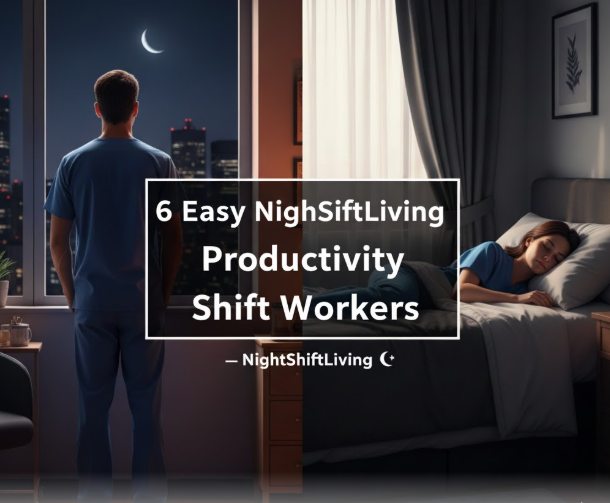
6 Easy NightShiftLiving Productivity Tricks to Keep You on Task
It cannot be easy to work the night shift.
The rest of the world is sleeping — you are punching in. You, a buoy in the fog of “Just close your eyes for a minute.”
The struggle is real. Night shift workers have a special struggle — fighting their body’s natural sleep-wake cycle, dealing with fatigue, and trying to be productive when every biological signal is saying don’t.
But here’s the good news: Being able to remain focused on night shift is a skill. And as with any skill, it can be learned, honed, and improved.
We’ve compiled 6 NightShiftLiving tricks for productivity that actually work. These are not vague tips or common sense. These are practical, research-proven strategies used by nurses, factory workers, security staff, and remote workers around the world.
Let’s get into it.
Why Night Shift Kills Productivity (And What You Can Do About It)
In order to solve a problem, we first need to understand the problem.
Your body operates on an internal clock that runs 24 hours a day, known as the circadian rhythm. It signals your brain when to be alert and when to wind down. It is largely governed by light — sunlight induces alertness, while darkness indicates sleep.
Night shift workers turn this completely on its head.
When you’re at work at 3 a.m., trying to process reports or deal with critical tasks, your brain is literally working against itself. Studies show that night shift workers can experience:
- Slower reaction times
- Reduced memory and concentration
- Increased error and accident rates
- Long-term health problems if sleep is consistently disrupted
The key to NightShiftLiving productivity is never to go against your body. It’s about working with it, strategically, so you can concentrate and deliver peak performance in the hours you are on the clock.
Trick #1 — Anchor Your Sleep Time
This is the most powerful thing one can do as a night worker.
What is a sleep anchor?
A sleep anchor is a consistent wake-up time you adhere to every day of the week, including on your days off. No exceptions.

Many believe sleeping in on days off will “catch up” on lost rest. The problem? It keeps resetting your body clock. You feel jet-lagged without having been on a plane.
By staying consistent with your wake time, you give your brain a steady signal. It begins to figure out when alertness is expected and when sleep should occur. Over time, this consistency decreases grogginess, makes sleep onset easier, and significantly improves focus during your work shift.
How to Pick Your Anchor Time
Consider your work days and when you need to be awake. Next, find your average sleep time and count backwards by 7–9 hours. That is your window.
If you work from 10 p.m. to 6 a.m., for example, your wake time would likely be set for 5 p.m. every day. You sleep from about 8 a.m. to 5 p.m. That 5 p.m. alarm? Never miss it.
Pro tip: Use blackout curtains and an eye mask during your sleep hours to trick your brain into thinking it’s nighttime, even when the sun is shining bright outside.
Trick #2 — Use Light Like a Superpower
Light is more than mere visibility. It acts like the master switch for your brain’s alertness system.

Night shift workers who do not manage light are unnecessarily losing an enormous tool.
Here is the simple breakdown:
Once you get into your shift — try to get as much bright, cool-toned light as possible. Bright overhead lights, a desk lamp, or even a light therapy box can signal your brain to stay awake. Think of it like a fake “daytime” for your body.
After your shift, on the way home — block out as much light as you can. Wear blue-light-blocking glasses. If you drive home when the sun rises, those glasses are essential. Morning sunlight hitting your eyes on the commute home will make it that much more difficult to fall asleep later.
During your sleep hours — total darkness. Any bit of light that creeps in while you sleep tells your brain it’s time to wake up. The winning combo: blackout curtains and an eye mask.
The 3-Phase Light Plan
| Phase | Timing | What to Do |
|---|---|---|
| Alertness Phase | Start of shift | Bright light, cool tones, no dimming |
| Transition Phase | Last 2 hours of shift | Begin dimming, switch to warmer tones |
| Sleep Phase | After shift | Complete darkness, blue-light glasses |
If you can become disciplined about light, this is one of the most underrated NightShiftLiving productivity hacks out there.
Trick #3 — Micro-Break Your Way to Better Focus
Here’s something most people get wrong about taking breaks: they believe fewer breaks mean more work gets done. The opposite is actually true.
The brain’s capacity to focus is not limitless. It runs on a limited fuel tank that needs refilling during the shift. When you grind hour after hour without a break, your performance quietly degrades — and you don’t notice until it’s too late.
Micro-breaks are 5-minute breaks taken every 50 to 60 minutes of concentrated effort. They’re short enough not to interrupt your workflow, but long enough to refresh your mind.
What to Do During a Micro-Break
The goal is to shift what your brain and body are doing — not just sit on your phone.
- Get up and take a short walk
- Do 10–15 light stretches
- Step outside for fresh air if possible
- Try a breathing exercise (box breathing works great: inhale 4 seconds, hold 4, exhale 4, hold 4)
- Focus on something at least 20 feet away for 20 seconds to give your eyes a break
What NOT to do: Scroll social media. This keeps your brain in a constant state of stimulation and reactivity and does not actually rest it.
The 50/5 Rule
A simple framework to remember:
50 minutes of focused work → 5 minutes of deliberate rest.
Set a timer. Stick to it. After four cycles (approximately 3.5 hours), take a longer 20-minute break. This rhythm mirrors natural human focus cycles and works especially well for NightShiftLiving productivity.
Trick #4 — Get Strategic With Your Caffeine
Caffeine is perhaps the most widely used productivity tool on Earth. But most night shift workers are using it wrong.
Here is what typically happens:
A worker comes into the shift tired, chugs coffee right away, and keeps drinking all night. By 4 a.m., they are wired yet unfocused. By the end of their shift, when they want to sleep, the caffeine is still active and sleep becomes impossible.
The smarter approach? Strategic timing.
The Science Behind the Wait
Your body produces a chemical known as adenosine, which accumulates over time and makes you feel sleepy. Adenosine levels are low when you first wake up. Caffeine works by blocking adenosine receptors.
If you drink coffee as soon as you wake up, you are blocking receptors that are not even very active yet. You waste the boost.
Wait 30–90 minutes after waking up before your first caffeine intake. This allows adenosine to build up naturally first, so by the time you have coffee, it actually works.
According to research published by the Sleep Foundation, caffeine’s stimulating effects peak within 30–60 minutes of consumption — making timing everything.
The Night Shift Caffeine Cut-Off Rule
Caffeine has a half-life of around 5–6 hours. That means half of the caffeine from a cup of coffee consumed at 2 a.m. is still in your system by 7 or 8 a.m.
Set a firm caffeine cut-off 6–8 hours before your planned sleep time. If you plan to sleep by 8 a.m., your last cup should come around midnight to 2 a.m. at the latest.
This is a hard-and-fast NightShiftLiving rule. Quality sleep is the foundation of all productivity.
Trick #5 — Front-Load Your Hardest Work
Not every hour of a night shift is equal.
Most night shift workers find their peak cognitive function in the first 2–3 hours after waking. This is your prime window. It’s when your reaction time is quickest, your memory most reliable, and your problem-solving sharpest.
A common mistake is warming up slowly — answering easy emails, tidying a workstation, chatting with colleagues — and saving the real work for later. By the time the tougher tasks roll in, your mental energy has already begun to wane.
Flip that around.
The Priority Block Strategy
At the beginning of your shift, list the three most important tasks that require the most thought and brain power. Target those first, in your prime window.
Save your lower-stakes, repetitive, or administrative tasks for the second half of your shift when your brain naturally starts to slow down.
Here is a task-triage table you can use each night:
| Task Type | When to Do It | Examples |
|---|---|---|
| Deep work | First 2–3 hours | Reports, analysis, complex decisions |
| Collaborative work | Mid-shift | Team check-ins, meetings, problem-solving |
| Routine work | Late shift | Filing, emails, basic data entry |
| Wind-down tasks | Last hour | Handover prep, logging, reviewing notes |
This turns an unpredictable shift into a reliable system. And systems are what drive great NightShiftLiving productivity.
Trick #6 — Build a Consistent Wind-Down Ritual
Your shift is done. You made it through.
But now comes a challenge that many night workers underestimate: switching from work mode to sleep mode when the sun is rising and the world is beginning its day.
Your brain requires a clear, consistent signal that it’s time to transition. Without it, you end up lying in bed replaying the shift over and over — feeling wired, struggling to fall asleep — only to wake up exhausted when your next shift rolls around.
A wind-down ritual is a 15–30 minute routine you do after every shift. The consistency of the ritual is what gives it power. Eventually, your brain begins to pair the actions with sleep and starts winding down automatically.
What to Include in Your Wind-Down Routine
You don’t need anything special. Choose 3–5 simple activities and always do them in the same order:
- Change out of your work clothes immediately (this mentally “ends” the shift)
- Take a warm shower (lowers body temperature afterward, which supports sleep)
- Have a light snack — something small and non-stimulating
- Dim the lights (or put on your blue-light glasses if you haven’t already)
- Do 5–10 minutes of quiet stretching or gentle breathing
- Write 3 things that went well that shift (a small gratitude note — signals safety to the brain)
What to avoid: Checking news or social media, having heavy conversations, eating a big meal, or going straight from work activity to bed.
The wind-down ritual is the bookend to your sleep anchor. Combined, they create a reliable pattern that your brain loves.
Quick Comparison: Night Shift Habits That Hurt vs. Help
| Common Bad Habit | Better NightShiftLiving Alternative |
|---|---|
| Irregular sleep schedule | Fixed sleep anchor time every day |
| Bright phone screen after shift | Blue-light glasses + screen curfew |
| Coffee as soon as you wake up | Wait 30–90 minutes, cut off 6–8 hrs before sleep |
| Powering through without breaks | 50/5 micro-break rule every hour |
| Tackling easy tasks first | Front-load hardest work in peak window |
| Crashing into bed with no routine | Consistent 20-min wind-down ritual |
Putting It All Together: Your NightShiftLiving Productivity System
These 6 tricks work individually. But they work best when combined into a system.
Here’s what an ideal night looks like when you apply all six:
5:00 p.m. — Wake up at your anchor time. No snoozing. 5:30 p.m. — First coffee (30 minutes after waking). Bright light exposure. 9:30 p.m. — Pre-shift prep. Review your priority task list for the night. 10:00 p.m. — Shift begins. Start with your top 2–3 deep-work tasks. 11:00 p.m. — First micro-break. 5 minutes of walking and stretching. 12:00 a.m. — Second cup of coffee (this may be your last, depending on your sleep time). 2:00 a.m. — Transition into mid-priority tasks. Take another micro-break. 4:00 a.m. — Switch to routine or low-demand work. 5:30 a.m. — Last micro-break. Begin dimming lights in the workspace. 6:00 a.m. — Shift ends. Begin wind-down ritual immediately. 6:30 a.m. — Sleep with blackout curtains and an eye mask.
Adjust times to fit your own shift. The pattern is what matters.
Frequently Asked Questions
Q: How long does it take to get used to night shift? It takes most people 1–3 weeks to partially shift their circadian rhythm. Full adjustment, when it occurs, may take months. Using the above tricks — particularly the sleep anchor and controlling light — really accelerates this process.
Q: Is it okay to sleep in two separate blocks on night shift? Yes. This is known as biphasic or polyphasic sleep. Some night shift workers find it helpful to sleep a 4–5 hour chunk after their shift finishes, followed by a 1–2 hour nap before their next shift. It doesn’t work for everyone, but it is a valid strategy worth experimenting with.
Q: Which foods help with night shift focus? Lean proteins (such as eggs, chicken, and legumes), complex carbs (like oats and whole grains), and healthy fats (including nuts and avocado) offer steady energy. Avoid heavy, greasy meals mid-shift — they spike blood sugar and then crash it, which drops focus sharply. Stay well-hydrated with water throughout.
Q: Can I use melatonin to help me sleep after a night shift? Yes, small doses of melatonin (0.5–1 mg) taken around 30 minutes before your desired bedtime can help signal your brain that it’s time to settle down. It works best with a dark sleeping environment. Always consult a doctor before introducing any supplement into your regimen.
Q: What if my schedule changes every week? Rotating shift schedules take the greatest toll on the body. Aim for forward-rotating schedules (day → evening → night) instead of backward rotations, which are more difficult to adjust to. Even with an irregular schedule, the micro-break routine and priority block strategy will still protect your productivity no matter what hours you work.
Q: Are there apps that help with NightShiftLiving productivity? Yes. Apps like f.lux or the built-in Night Mode on most devices help manage screen light. Time-blocking apps such as Todoist or Notion can also help structure your priority blocks. For the 50/5 micro-break rule, a simple free timer works just fine.
Final Thoughts
Working night shifts is genuinely hard. It asks so much of your body and your mind.
But the workers who thrive — those who remain sharp, finish strong, and still have energy for life outside of work — are not superhuman. They have simply built better habits.
The 6 NightShiftLiving productivity tricks in this article are not complicated. They require no costly devices or ideal conditions. They ask for consistency, a bit of self-awareness, and the discipline to treat your body as the finely-tuned instrument that it is.
Try one new trick this week. Then add another. By the time you’ve incorporated all six into your routine, you won’t just be surviving the night shift. You will be owning it.
Related Post
24/7 Lifestyle: 9 NightShiftLiving Hacks for Productivity
Working the late shift is no laughing matter. You're clocking in, getting sharp, getting stuff…