
NightShiftLiving | 7 Hacks to Help Night Workers Feel Better
>> Lifestyle NightShiftLiving>> NightShiftLiving | 7 Hacks to Help Night Workers Feel Better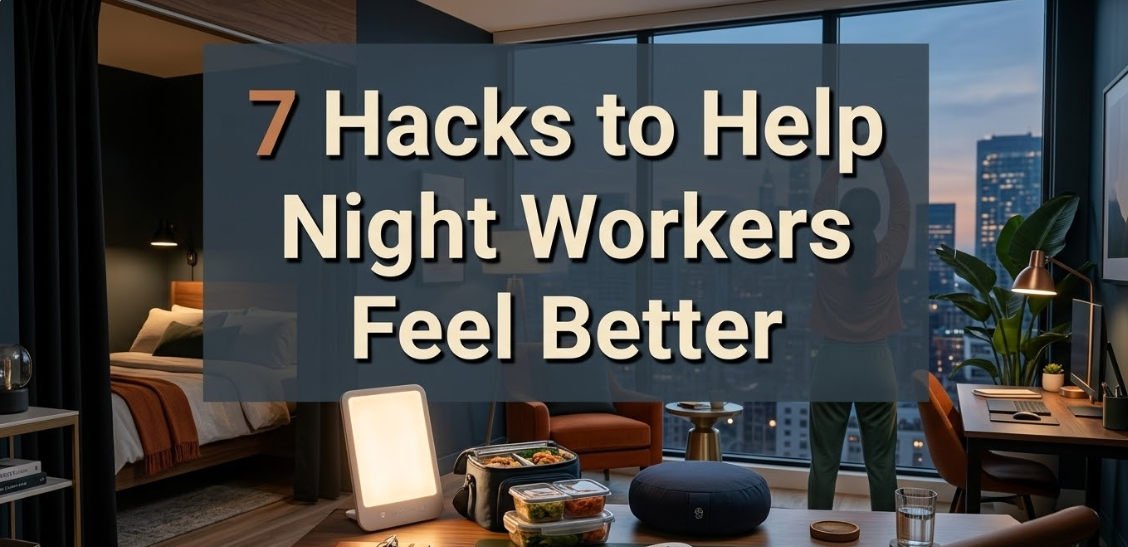
NightShiftLiving | 7 Hacks to Help Night Workers Feel Better
Working the night shift is not easy. Your body wants to slumber when the world is dark, and be awake when the sun is out. But people do it every day — millions of them: nurses, security guards, factory workers, truck drivers, call center agents and others.
If you’re a night worker, you know the drill. You come back home dead tired and aren’t able to sleep well. You eat at weird hours. You feel like you’re off-rhythm with family and friends. Your health worsens over the years.
That’s precisely what NightShiftLiving is about — learning to live well when your schedule turns the clock upside down.
This article shares 7 simple, no-nonsense hacks that workers on the night shift can really use. No fancy products or complex routines. Just clever tweaks that actually work.
Why Working Overnight Is So Tiring
Before we jump into the how-to hacks, let’s talk about what makes working nights so hard on the body.
Your body operates on something known as a circadian rhythm. It’s sort of like an “internal clock.” It cues your body when to sleep and eat, when to release hormones, and when to perk up. This clock runs on light and dark.
When you’re working nights and sleeping during the day, you’re battling that clock nonstop. Over time, this can lead to:
- Poor sleep quality
- Digestive problems
- A weakened immune system
- Higher risk of heart disease
- Mood swings and depression
- Weight gain
The good news? With the correct habits, you can handle most of these issues. Let’s break them down.
Hack #1 — Create a Sleep Fortress (And Defend It)
For a night worker, sleep is everything. But it’s often the first to go.
The rest of the world is cacophony during daytime. Dogs bark. Kids play outside. Neighbors mow lawns. Your phone buzzes. Sunlight sneaks through the curtains. All of these things erode the quality of your sleep.

Block Out Light Completely
When darkness falls, a hormone called melatonin gets released by your brain. This hormone makes you sleepy. In the daytime, sunlight inhibits the production of melatonin — making it extremely difficult to fall asleep or remain asleep.
The fix: Use blackout curtains. They are the single best investment any night shift worker can make. Heavy blackout drapes that block nearly all light can turn your bedroom from a sun-drenched afternoon room into a dim sleeping cave.
If curtains alone don’t do the trick, you can also try wearing a sleep mask.
Kill the Noise
Daytime noise is unavoidable. But you can drown it out.
- Play white noise, or run a fan. The constant hum cancels sharp, sudden sounds.
- Try foam earplugs. They’re cheap and effective.
- Hang a “Do Not Disturb — Night Shift Worker Sleeping” sign on your door. Sounds simple, but it works.
Protect Your Sleep Schedule
Go to sleep and wake up at the same times each day — even on your days off. Your body loves consistency. If you keep changing your sleep time, it never settles down.
NightShiftLiving tip: Get 7 to 9 hours of quality sleep. Most night workers get by on considerably less. Even an additional hour can have a huge impact on how you feel.
Hack #2 — Your Secret Weapon Is Light
Light is the most powerful environmental cue you have to manage your body clock. The majority of night workers completely neglect this.
Here’s how it works. When you’re bathed in bright light, your brain assumes it’s daytime. Your brain thinks it’s nighttime when it’s dark. You can turn this to your advantage.
Get Bright Light During Your Shift
Get plenty of bright light when your night shift is starting up. This instructs your brain to be awake and alert. Some offices already have bright fluorescent lighting — but if yours doesn’t, try having a light therapy lamp on your desk.
These lamps replicate natural sunlight and can keep you sharper during your shift.
Avoid Bright Light Before Sleep
This is where most people working nights go wrong. After a shift that ends at 7 AM, they drive home with sunlight streaming through the car windows. Then they lie in bed scrolling through their phone. All of this signals “daytime” to your brain — making sleep a lot harder.
Try this instead:
- Wear wraparound sunglasses on your way home. They sound a touch strange, but they work like magic.
- Give up your phone or TV at least 30 minutes before bed.
- Wear blue light-blocking glasses if you have to be in front of screens after your shift.
Controlling your light exposure can considerably improve sleep quality and is THE core habit of NightShiftLiving.
Hack #3 — Eat Like Your Shift Depends on It (It Does)
Food is fuel. But working night shifts completely scrambles your digestive cycle.
Your digestive tract also has a clock. It’s meant to handle large meals during the day and rest at night. Your gut is not prepared when you’re stuffing it with big, heavy meals at 2 AM. The result? Bloating, heartburn, sluggishness, and weight gain over time.

What to Eat — and When
Follow this simple structure:
Before your shift (“breakfast”): Eat a solid meal with protein and complex carbohydrates. Think eggs, oatmeal, chicken-and-rice, or a big salad with beans. This provides stable energy for the first half of your shift.
During your shift (mid-shift snacks): Keep it light. Nuts, fruit, yogurt, hummus with veggies, or a small sandwich. Avoid heavy, greasy, or sugary foods — they cause an energy spike followed by a crash.
After your shift: Have a light meal before sleep. Something easy to digest — a banana, toast with peanut butter, or a small bowl of oatmeal. Skip a big meal right before bed, because that makes sleep more difficult.
Foods to Ditch on Night Shift
- Sugary drinks and energy drinks (the crash hits hard at 3–4 AM)
- Fast food or fried meals during the shift
- Alcohol before sleep (it’s really bad for sleep quality)
- Caffeine in the last 4 hours of your shift
NightShiftLiving is not about dieting — it’s about eating smarter on the right schedule.
Hack #4 — Master the Pre-Shift Nap
Here’s a trick that real sleep scientists recommend: the pre-shift nap.
Take a 90-minute nap around 2–3 hours before your shift starts. This wakes your body up with a fresh sleep cycle and almost instantly reduces fatigue during the first couple of hours of your shift.
Why 90 Minutes?
Sleep occurs in cycles of approximately 90 minutes. Each cycle includes light sleep, deep sleep, and REM (dream) sleep. Getting woken at the end of a complete cycle — not in the middle — ensures that you wake up feeling refreshed rather than groggy.
If you don’t have that time to spare, even a 20–30 minute nap (often called a “power nap”) will help improve focus and lower tiredness. Set an alarm so you don’t end up sleeping too long — naps longer than 30 minutes but shorter than 90 generally leave you feeling worse.
The Coffee Nap Trick
This sounds strange, but it’s effective. Drink a cup of coffee, then go to sleep for 20 minutes. It takes about 20 minutes for caffeine to kick in. So you wake up right as the caffeine hits — coming out of a refreshing nap. The pairing is more powerful than either by itself.
For NightShiftLiving optimization, the pre-shift nap is one of your highest-impact habits.
Hack #5 — Shake It Out — Even If You Don’t Want To
When your schedule is already turned on its head, it’s hard to fit in exercise. But it is also one of the most potent tools for improving sleep, energy, and mood on night shift.
You don’t have to go for a full-on gym workout. Even a tiny bit of movement makes a massive difference.
When to Work Out on Night Shift
Best time: Before your shift. A moderate workout 2–3 hours before your shift starts boosts alertness and enhances mood without disrupting sleep later.
Avoid intense exercise right before sleep. Heavy workouts increase your heart rate and body temperature — both of which cue your body to remain awake.
What Type of Exercise Works Best?
Any movement helps. But here are some solid choices for night workers:
- A 30-minute walk outside before your shift (bonus: also gets you natural sunlight exposure!)
- Yoga or stretching after your shift, before sleep (calms the nervous system)
- Body-weight exercises like squats, push-ups, and planks during a break at work
- A quick cycle or jog between getting up and your pre-shift meal
The secret is consistency, not intensity. A 20-minute walk five days a week is far better than one killer gym workout per week and nothing else.
Hack #6 — Preserve Your Mental Health and Social Life
One of the toughest aspects of NightShiftLiving is not physical — it’s emotional. Night shift workers often feel isolated from the outside world.
Your friends and family are asleep when you’re working. By the time you get up, they’re winding down. Holidays, dinners, weekend plans — it all seems to be happening without you.
This isolation is real, and it impacts mental health very deeply. Studies show night workers experience anxiety and depression at far higher rates than day workers. According to the Sleep Foundation, shift workers are significantly more likely to experience mood disorders, making mental health care a non-negotiable part of any night shift routine.
Stay Connected Without Sacrificing Sleep
You don’t have to sacrifice sleep for your relationships. Here are a few practical ways to stay in touch:
Schedule overlap time. Map out the 2–3 hours of your day that overlap with your loved ones’ schedules. Even if it’s right before your shift, guard that time for connection.
Use voice notes and messages. Send a voice message to a friend after you wake up. They’ll listen when they’re free. It’s more personal than texting and keeps relationships alive without needing to be in the same time zone.
Plan one shared meal a week. Choose one day when you shift your sleep slightly and have dinner with your family or friends. Not every day — that will wreck your sleep schedule — but once a week is manageable.
Take Your Mental Health Seriously
Night shift workers are at greater risk for burnout. Watch for these warning signs:
- Constant irritability or mood swings
- Feeling hopeless or unmotivated
- Loss of interest in things you used to enjoy
- Crying without knowing why
If you’re experiencing these signs, don’t endure them alone. Speak with a doctor, counselor, or a trusted coworker. Many employers have employee assistance programs (EAPs) that provide free counseling.
NightShiftLiving is about taking care of your brain, not just your calendar.
Hack #7 — Build a Smart Caffeine Strategy
Coffee and energy drinks are the night worker’s best friends — and worst enemies.
Caffeine is critically important for staying alert during the night shift. But most people who work at night misuse it. They drink too much too late, which then destroys their ability to sleep after the shift.
The Caffeine Half-Life Rule
Caffeine has a half-life of about 5–6 hours. This means that if you drink a coffee at 4 AM, half of that caffeine is still in your system by 9–10 AM. If you’re trying to sleep at 7 AM, that caffeine is working against you.
Here’s how to use caffeine smartly:
Early in the shift: Go ahead, have your coffee. One or two cups between 10 PM and 1 AM is fine and helpful.
Mid-shift (around 2–3 AM): This is when drowsiness peaks — it’s called the “circadian trough.” A small amount of caffeine here can help. Half a cup of coffee or tea is better than a full energy drink.
After 3 AM: Cut it off. Nothing with caffeine. Switch to water, herbal tea, or a light snack.
What to Drink Instead of Caffeine
When you need to push through without more caffeine, try:
- Cold water splashed on your face (actually works)
- A brisk 5-minute walk or some light stretching
- A piece of fruit — natural sugar provides a gentler, shorter energy bump
- Peppermint tea — even the aroma has been shown to increase alertness
This smart caffeine strategy is one of the easiest NightShiftLiving tweaks you can make tonight.
Quick Reference: All 7 Hacks at a Glance
| # | Hack | Key Action | Impact Level |
|---|---|---|---|
| 1 | Build a sleep fortress | Blackout curtains + white noise | ⭐⭐⭐⭐⭐ |
| 2 | Control light exposure | Sunglasses on commute home, lamp at work | ⭐⭐⭐⭐⭐ |
| 3 | Eat smarter on shift | Right foods at the right times | ⭐⭐⭐⭐ |
| 4 | Master the pre-shift nap | 20–90 min before your shift | ⭐⭐⭐⭐⭐ |
| 5 | Move your body | 30-min walk before shift | ⭐⭐⭐⭐ |
| 6 | Protect mental health | Schedule connection time, watch for burnout | ⭐⭐⭐⭐ |
| 7 | Use caffeine smartly | Stop caffeine after 3 AM | ⭐⭐⭐⭐⭐ |
A NightShiftLiving Game Plan: Putting It All Together
You do not have to do every one of the seven hacks perfectly from day one. That’s way too much, and it’s not going to stick.
Instead, choose just two or three that seem most doable for your circumstances and begin there. Perhaps you sleep well but lack energy during your working hours. Focus on hacks 4 and 7 first.
Perhaps your sleep is a mess. Start with hacks 1 and 2 — they have the highest impact on sleep quality.
Add another hack to your routine after 2–3 weeks, once those habits become natural. Gradually, you’ll create a complete NightShiftLiving system designed for your body and your lifestyle.
Night shift doesn’t have to mean a broken life. With the right habits, you can sleep well, feel good, foster relationships, and stay healthy — even when most of the world is in slumber.
Frequently Asked Questions
Q: When do I get used to night shift work?
It takes the average person 2–4 weeks to partially adapt to night shift. Full adaptation is rarely possible because the body’s circadian rhythm is heavily influenced by light. But using the above hacks — especially light control and consistent sleep times — can go a long way toward speeding up adjustment and lessening symptoms.
Q: Is it fine to return to a “normal” schedule on days off?
It is one of the biggest mistakes that night workers make. Completely flipping your schedule on days off makes it much harder to readjust on work days. On your days off, try to limit the hours you diverge from your normal sleep time to two or less. If you have to shift, do it gradually — sleep one hour later each day instead of making a sudden full leap.
Q: Is it possible for night shift work to permanently damage health?
Working nights long-term does carry significant health risks — increased rates of cardiovascular disease, metabolic problems, and some cancers. But those risks are greatly mitigated by good sleep hygiene, healthy eating, exercise, and stress management. If you’ve been working night shift for years, consult your doctor about regular health screenings.
Q: What are the best sleep positions for night workers?
Sleep position doesn’t vary much for night workers compared to anyone else. Sleep quality and duration matter more. But sleeping on your side is almost always better for digestion and airway health. Avoid sleeping on your stomach if you have back or neck pain.
Q: What should I do about kids or family responsibilities when I need to sleep during the day?
This is one of the most difficult NightShiftLiving challenges. A few tips that help: talk to your partner or family clearly about your sleep schedule, put up a “Do Not Disturb” sign or door signal, use earplugs and white noise, and try napping at consistent times so kids are aware of your sleeping window. If possible, arrange for childcare or a trusted adult during your core sleep hours.
Q: Are melatonin supplements safe for night shift workers?
Melatonin supplements are regarded as quite safe for short-term use and can be useful for night shift workers who find it difficult to fall asleep during the day. A low dose (0.5 to 3 mg) taken approximately 30 minutes before your intended sleep time works for most people. Always consult with a doctor before beginning any supplement, especially if you take other medications.
Q: Do I have to eat breakfast foods when I wake up, even if it’s in the afternoon?
Yes — think of the first meal after you wake as your “breakfast,” no matter what the clock says. Focus on what that meal should do for your body: provide sustained energy to power you through your next shift. This generally includes protein, healthy fats, and complex carbs — whether it’s scrambled eggs at 2 PM or overnight oats at 3 PM.
In Conclusion: Life on the Night Shift Is a Skill — Not a Sentence
Night shifts don’t have to equal bad health and burnout. Millions of night workers live full, healthy, happy lives. The difference is almost always in the habits.
The 7 NightShiftLiving hacks in this guide are not magic. They’re practical, evidence-based tactics that actually work when you implement them consistently. Sleep fortress, smart light exposure, timed eating, pre-shift napping, movement, mental health care, and strategic caffeine — these seven things can radically change how you feel on night shift.
Start small. Be patient with yourself. And remember: your schedule may be upside down, but your quality of life doesn’t have to be.
Related Post
11 NightShiftLiving Lifestyle Ideas for Shift Workers
Working nights or rotating shifts is, without question, one of the most physically and mentally…